Cambodia is making a concerted push to diversify its manufacturing base by attracting South Korean investment in advanced sectors—a strategic move that signals the kingdom's determination to escape the economic constraints of its long-standing dependence on garment exports and low-wage assembly work. The campaign gained momentum during Deputy Prime Minister Sun Chanthol's visit to South Korea in June, where he led senior officials and business leaders on an investment promotion mission that showcased Cambodia's readiness for higher-value industrial partnerships. The roadshow in Incheon on June 16 underscored Phnom Penh's commitment to welcoming Korean capital, with Chanthol declaring that the Royal Government stands prepared to provide comprehensive facilitation to international investors eyeing opportunities in the kingdom.
The mission targeted specific sectors that align with regional economic trends and Cambodia's long-term diversification goals. Automotive components, electric vehicle systems, logistics, energy, construction and digital healthcare emerged as priority areas where Korean companies could establish or expand operations. This targeting reflects Cambodia's recognition that the global automotive industry is undergoing a fundamental transformation toward electrification and smart mobility, creating windows of opportunity for countries positioned to integrate into these emerging supply chains. By focusing on these sectors rather than casting a wide net, Cambodia demonstrated a sophisticated understanding of where value creation increasingly occurs within regional manufacturing ecosystems.
Central to the mission's success was engagement with companies already embedded in Cambodia's investment landscape. Daejoo KC Group, a major South Korean conglomerate operating across metallurgy, chemicals, logistics, construction, automotive components and energy, received special attention. The group's Cambodian subsidiaries—Camko Motor, which assembles Hyundai vehicles for the domestic market and manufactures automotive wire harnesses for export, and Camko Infracore, which distributes vehicles and provides maintenance services—have created nearly 500 jobs while building brand recognition and supply-chain relationships. By revisiting these established players, Cambodia aimed to encourage them to deepen their commitment by expanding into additional sectors where they already maintain operations in South Korea, leveraging their existing expertise and management structures.
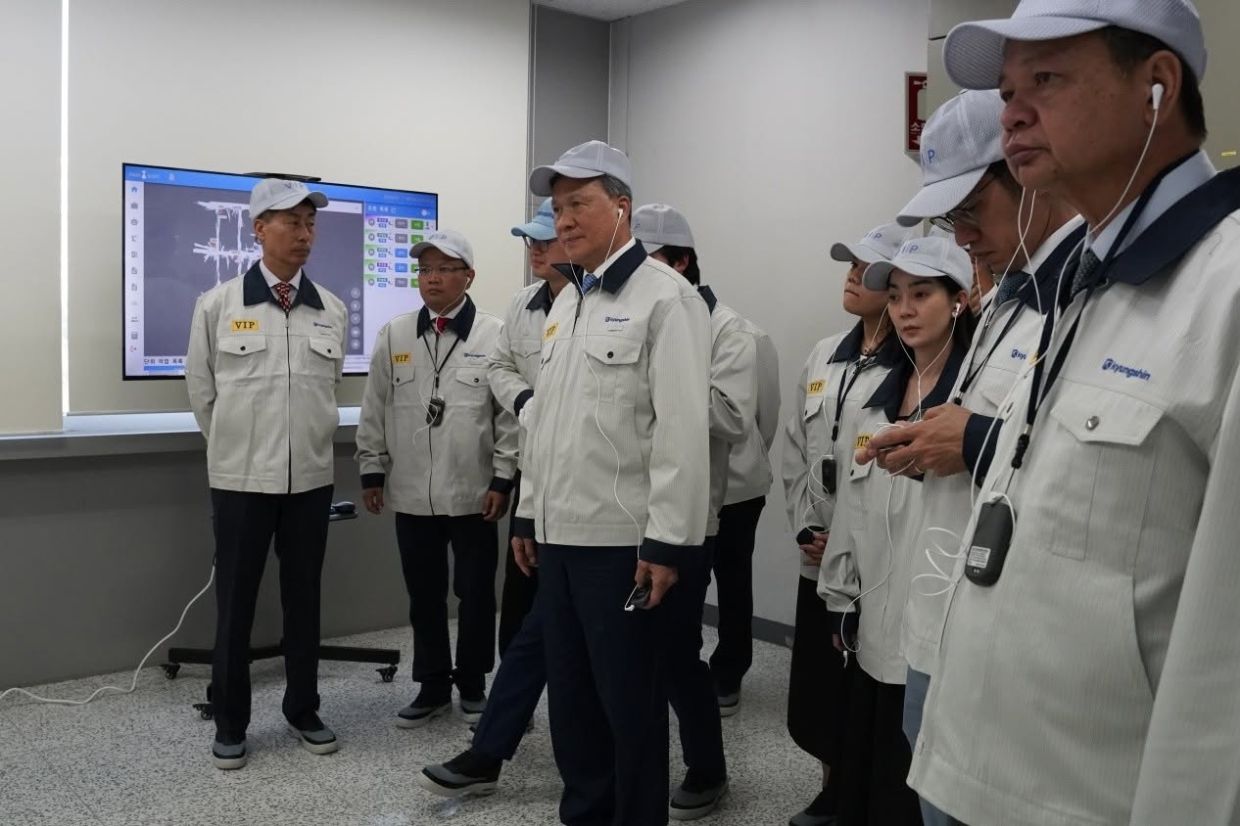
Kyungshin Co., Ltd., a specialist in automotive electronic components and wire harness manufacturing, represented another key partner in Cambodia's strategy. Founded in 1974, Kyungshin has operated a factory in Kandal province since 2012, investing approximately US$20 million and employing 1,467 workers in the production of wiring harnesses, connectors, junction blocks and electrical systems for electric vehicles. The company's long presence in Cambodia demonstrated that the kingdom could successfully host complex manufacturing operations requiring technical precision and skilled labour. Kyungshin's focus on developing advanced technologies for electric vehicles and future mobility solutions positioned it at the forefront of global automotive trends, making it an ideal reference point for attracting similar companies seeking locations within Southeast Asia.
The presence of these established manufacturers provides Cambodia with a tangible foundation for arguing its capability to support sophisticated industrial operations. Rather than remaining a location primarily known for labour-intensive assembly, Cambodia can now point to existing facilities producing world-class automotive components and systems for major international brands. This track record helps overcome investor hesitation about whether the kingdom possesses the necessary workforce training, supply-chain infrastructure and quality management systems required for higher-value manufacturing. The successful operation of these Korean firms demonstrates that Cambodia's business environment can sustain complex, technology-dependent production.
Beyond manufacturing, Cambodia's investment promotion mission highlighted healthcare technology and digital systems as growth areas. Chanthol's visit to Incheon Baek Hospital signalled that Cambodia views healthcare not merely as a domestic development priority but as a sector where Korean expertise and technology transfer could create mutual benefits. The government seeks partnerships involving advanced medical technology, digital healthcare management systems, and training exchanges that could strengthen both Cambodia's public health infrastructure and potentially create a platform for private medical services catering to regional demand. This dimension of the mission revealed Cambodia's ambitions extending beyond factory construction into services, training and institutional capacity-building.
The formal investment roadshow, organised by the Council for the Development of Cambodia in cooperation with the Incheon Chamber of Commerce and Industry, provided a platform for explaining Cambodia's new investment law and the incentive packages it offers. Chanthol emphasized the availability of competitive fiscal benefits, macroeconomic stability assurances and investment protection mechanisms designed to reduce perceived risks. The presence of Cambodia's ambassador to South Korea, officials from the Ministry of Commerce, representatives from both the Korean Chamber of Commerce in Cambodia and the Cambodia Chamber of Commerce, and members of the influential Oknha Association underscored the alignment of diplomatic, government and private-sector efforts behind the investment promotion campaign. This multi-stakeholder approach demonstrated institutional commitment to attracting and supporting Korean investors.
Cambodia's economic evolution reflects pressures common across much of Southeast Asia. For decades, garments, footwear and travel goods have anchored the kingdom's export economy, generating substantial employment and foreign exchange. Yet policymakers increasingly recognize that reliance on these labour-intensive sectors exposes Cambodia to wage competition from lower-cost producers and leaves limited room for productivity gains that could drive rising incomes. Global supply-chain shifts, heightened trade tensions and evolving consumer preferences for sustainability have further underscored the vulnerability of an economy over-dependent on a narrow manufacturing base. Diversification toward higher-value, technology-intensive production represents both an economic imperative and a development strategy.
South Korea itself represents an instructive model for this transition. Over recent decades, Korean manufacturers transformed the country from a low-wage assembly hub into a global centre for automotive, electronics and advanced technology manufacturing. Korean companies now operate across Cambodia, establishing supply chains and transferring some operational capacity to lower-cost locations while retaining design, quality control and advanced manufacturing at home. Cambodia's strategy of attracting Korean investment in automotive electronics and EV systems positions the kingdom to become a node within these regional networks rather than remaining peripheral to global value chains. The automotive sector particularly offers potential, as major manufacturers including Hyundai expand EV production and suppliers race to develop compatible component ecosystems.
The mission also reflects Cambodia's geographic advantages within Southeast Asia. Located between major markets including Thailand, Vietnam and Indonesia, and connected to regional trade networks, Cambodia can serve as a production location for companies serving both the domestic and broader regional markets. Korean companies already familiar with operating in Asia can expand efficiently from existing bases in South Korea, China or Vietnam into Cambodia, accessing lower labour costs while remaining close to demand centres. The establishment of Korean industrial zones and the participation of Korean chambers of commerce suggest that infrastructure for supporting Korean investors is developing, reducing barriers to entry for new entrants.
The emphasis on electric vehicle systems particularly signals Cambodia's attempt to position itself within transformative global trends rather than remaining locked in mature, lower-growth industries. As major automotive manufacturers worldwide commit to electrification, suppliers specializing in EV components, battery management systems, and smart vehicle technologies face explosive demand. Companies like Kyungshin, which already produces systems for electric vehicles, validate that Cambodia can participate in this shift. Attracting more EV component suppliers could position Cambodia as a manufacturing hub for this critical growth sector, creating employment and technology transfer opportunities for decades.
Looking forward, the success of Cambodia's diversification strategy will depend on sustained commitment to workforce development, infrastructure investment and stable governance. South Korean companies making long-term commitments to Cambodia will expect reliable electricity supplies, functional port facilities, trained technical workforces and predictable regulatory environments. Investment in vocational education and technical training will prove critical to supporting the more complex manufacturing operations that Cambodia seeks to attract. Additionally, Cambodia must maintain the policy stability and rule-of-law protections necessary for Korean companies to confidently invest capital and technology in the kingdom.
The Cambodia investment mission represents a calculated bet that high-value sectors offer pathways to sustained economic growth that labour-intensive manufacturing alone cannot provide. By demonstrating existing Korean industrial presence, offering concrete incentives, and positioning itself within regional supply chains, Cambodia has begun articulating a compelling case for the next generation of investment. Whether this strategy succeeds will depend on follow-through—on ensuring that infrastructure supports new entrants, that workforce capabilities keep pace with technical requirements, and that Cambodia remains an attractive alternative to other Southeast Asian locations competing for the same Korean capital and expertise.