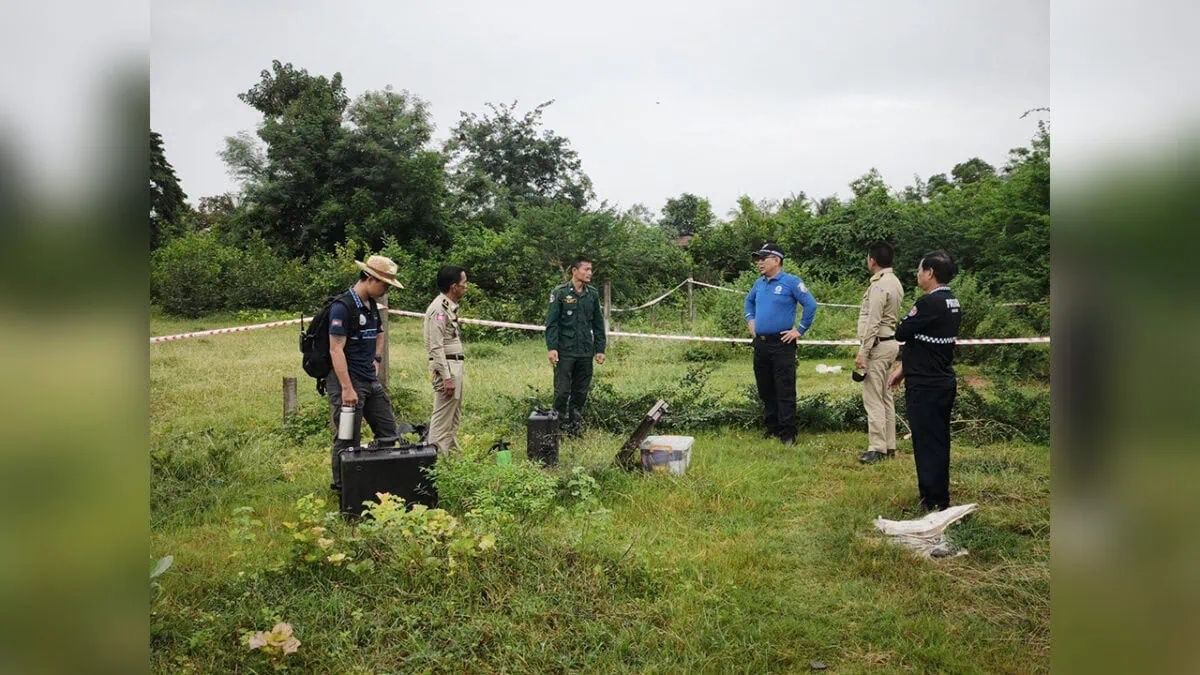
Cambodia's law enforcement agencies have mobilised a multi-institutional response following the discovery of two children's bodies in Banteay Meanchey province in late July, triggering separate homicide investigations that have drawn the attention of the Cambodian National Police, the Child Protection Unit, and the Interior Ministry's technical investigative division. The tragic discoveries underscore ongoing concerns about child safety in rural Cambodian communities and have prompted authorities to commit substantial investigative resources to both cases.
The sequence of events unfolded on July 28, when authorities in Mongkol Borei district discovered the remains of a 15-month-old child in a pond in the early morning hours. Within hours of that discovery, in what police have emphasised as an unrelated incident, the body of a five-year-old child was located in Teuk Thla commune, roughly in the same timeframe. The five-year-old had been reported missing three days earlier on July 25, prompting an initial search effort before the body was recovered.
Though discovered on the same day and in the same province, the Child Protection Unit clarified in a statement released on August 3 that the two cases remain entirely separate investigations with distinct circumstances and no apparent connection between them. Each death is being formally classified and handled as an independent child homicide, requiring separate forensic analysis, witness interviews, and investigative pathways. This distinction is significant for investigators, as it prevents potential contamination of evidence or conflation of separate criminal matters.
The investigative apparatus deployed to these cases reflects the seriousness with which Cambodian authorities are treating such crimes. The provincial police force in Banteay Meanchey works in tandem with the specialised Child Protection Unit, which brings dedicated expertise in cases involving minors. Additionally, the Department of Technical and Scientific Police, operating under the Minister of Interior, has contributed forensic examination capabilities and scientific analysis resources. This collaborative structure suggests a recognition that child homicides require the most rigorous investigative standards available within Cambodia's law enforcement ecosystem.
Forensic teams immediately secured both crime scenes and conducted examinations to establish preliminary findings about the circumstances surrounding each child's death. While authorities have not disclosed specific forensic details or the suspected causes of death, the preliminary investigative work and crime scene analysis led officials to formally determine that both incidents constituted child homicides rather than accidental deaths or other classifications. The forensic work also laid the groundwork for identifying potential evidence and directing investigative direction in coming weeks.
James McCabe, director of the Child Protection Unit, issued a formal statement emphasising the commitment of both his organisation and the Cambodian National Police to pursuing comprehensive investigations. McCabe stressed that investigative resources and capabilities would be fully deployed to ensure both cases received thorough examination and that prosecutorial pathways would be pursued to their complete extent. He also articulated a clear message that anyone determined to bear responsibility for either death would face judicial proceedings.
The commitment to prosecution carries particular weight in the Cambodian context, where child protection advocacy groups have historically raised concerns about the consistency and rigour of investigations and prosecutions in sensitive cases. By publicly pledging to bring charges against responsible parties, McCabe and senior police officials appear to be signalling intent to pursue cases through to conviction, rather than allowing investigations to stall or charges to be abandoned. This public accountability statement itself functions as a form of reassurance to families and child welfare organisations observing these developments.
For Malaysia and other Southeast Asian nations, the Cambodian cases serve as a reminder that child safety remains a cross-border regional concern requiring sustained attention. While Malaysia maintains its own sophisticated investigative apparatus, the successes and challenges faced by neighbouring jurisdictions in pursuing child homicide cases inform broader regional conversations about best practices, capacity-building, and inter-agency coordination. Cambodia's deployment of multi-agency investigative teams mirrors approaches increasingly recognised as necessary across Southeast Asia for handling the most serious crimes affecting children.
The authorities have indicated that no further operational details or investigative progress will be disclosed publicly while both cases remain active. This approach balances the public's right to information with the legitimate operational need to protect ongoing investigative work from compromise. Families of the two children, and the broader community in Banteay Meanchey, face an uncertain waiting period as forensic analysis continues and investigative leads are pursued, while the broader question of child safety in provincial Cambodia remains a matter of public concern that will likely prompt continued scrutiny from civil society organisations and international observers.
The cases highlight vulnerabilities that extend across the region, particularly in contexts where rural communities may face resource constraints in child protection services, parental supervision challenges, and limited reporting mechanisms for suspected abuse or neglect. As Cambodia proceeds with these investigations, the outcomes will carry implications for how neighbouring countries approach similar cases and whether regional cooperation mechanisms are activated to address any transnational dimensions that may emerge during investigation.

