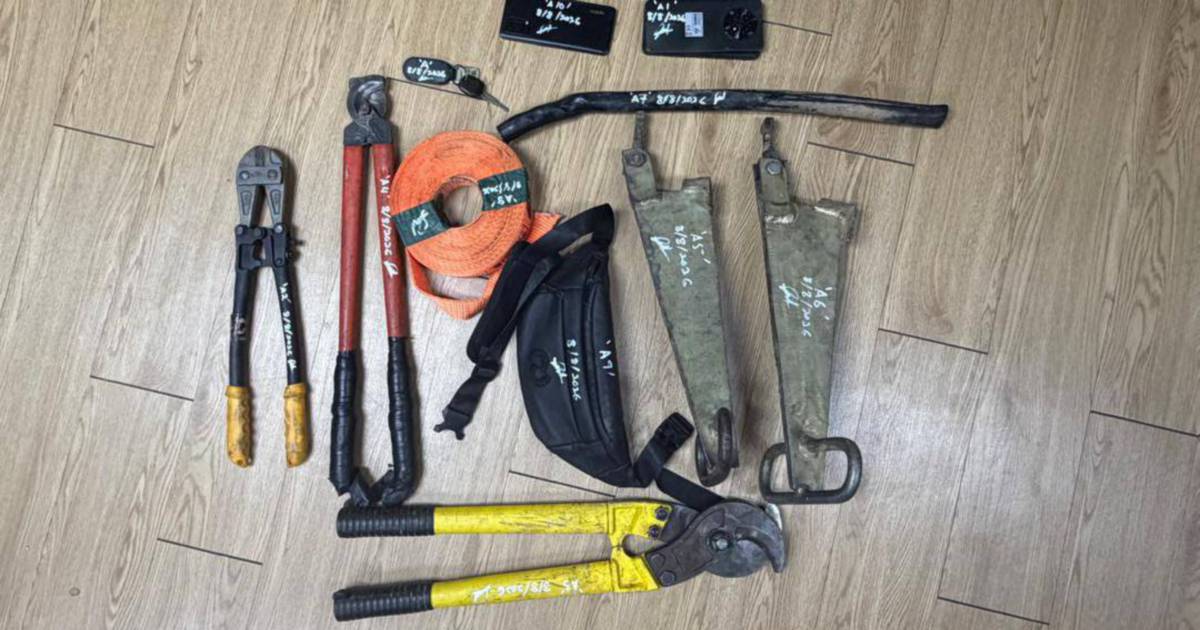
Law enforcement authorities in Melaka have successfully arrested a man believed to be involved in cable theft after an extended high-speed chase that covered nearly 50 kilometres before ending in a traffic incident in Jasin. The dramatic pursuit, which unfolded in the predawn hours, represents the culmination of a determined police operation to apprehend a suspect engaged in systematic cable pilferage—a persistent crime problem that continues to plague the state and broader regions across Malaysia.
The arrest comes as municipal authorities and utility companies grapple with the escalating menace of cable and metal theft. These crimes have far-reaching consequences beyond the immediate financial losses incurred by utility providers, affecting essential services that Malaysian households and businesses depend upon daily. The theft of cables disrupts telecommunications infrastructure, electrical distribution networks, and other critical systems that underpin modern economic activity throughout the peninsula.
The chase that resulted in today's arrest underscores the operational challenges law enforcement faces in pursuing suspects engaged in organised metal and cable theft rings. Officers initiated pursuit after identifying the suspect operating in areas targeted by thieves seeking valuable copper and aluminium conductors. The determination displayed by police to maintain the chase across such a substantial distance reflects the priority authorities place on combating this form of organised crime, which often finances larger criminal enterprises.
The suspect's vehicle ultimately collided with a support cable structure in Sungai Chohong as the pursuit reached its conclusion. The crash, which occurred during early morning hours when traffic volume remained low, prevented potential harm to other road users. Such accidents arising from high-speed pursuits carry inherent risks that law enforcement agencies must carefully evaluate when deciding whether to engage in active chases—a calculation that becomes increasingly complex in densely populated areas.
Cable theft has emerged as a significant challenge for utility companies across Southeast Asia, where demand for copper and other valuable metals on international commodity markets drives criminal activity. Thieves frequently target telecommunications infrastructure, power distribution equipment, and railway systems, selling recovered materials to scrap metal dealers who may operate without adequate verification of legitimate sources. This supply chain vulnerability has prompted utility providers and regulatory bodies across the region to implement enhanced tracking and verification systems.
For Malaysian readers, the incident highlights the direct connection between street-level crime and service disruptions affecting communities. When copper cables disappear from telecommunications infrastructure or power networks, repair costs ultimately burden consumers through increased utility charges. The theft also creates temporary blackouts and communication failures that can impact business operations, emergency services coordination, and household comfort—consequences that extend well beyond the immediate crime scene.
The Melaka police operation demonstrates sustained commitment to addressing metal theft at the enforcement level, yet experts acknowledge that comprehensive solutions require multi-faceted approaches. Collaboration between utility companies, scrap metal dealers, financial institutions, and law enforcement agencies has proven effective in other jurisdictions by creating transparency in the scrap metal supply chain and reducing the financial incentive driving cable theft networks.
The arrest in Jasin also reflects growing coordination among state police forces in pursuing organised theft operations that frequently cross district and state boundaries. Suspects engaged in systematic cable pilferage typically operate across wide geographic areas, necessitating intelligence sharing and joint operations that transcend traditional police jurisdictions. The 50-kilometre chase itself suggests the suspect may have been attempting to evade authorities across multiple administrative zones.
Utility companies operating throughout Malaysia have increasingly invested in prevention technologies, including cable covers, alarm systems, and enhanced perimeter security at vulnerable infrastructure points. Yet resource constraints mean such protective measures cannot shield all installations, particularly in rural areas where monitoring capabilities remain limited. The arrest outcome may provide temporary relief but addresses only one individual within broader criminal networks engaged in systematic theft operations.
The successful apprehension also raises important questions about bail and sentencing frameworks for cable theft offences. Legal experts across the region have debated whether existing penalties sufficiently deter criminal activity, given the potentially substantial proceeds thieves obtain from stolen materials. Malaysia's position as a regional economic hub with valuable infrastructure assets makes the jurisdiction particularly attractive to organised metal theft networks seeking profitable targets.
Looking forward, the incident reinforces the necessity for Malaysian authorities to pursue integrated anti-theft strategies combining enforcement action, prevention infrastructure, and supply chain regulation. The dramatic nature of this morning's chase—spanning nearly 50 kilometres before concluding in a crash—vividly illustrates the determination suspects display in evading capture, suggesting the underlying economic drivers motivating cable theft remain robust.

