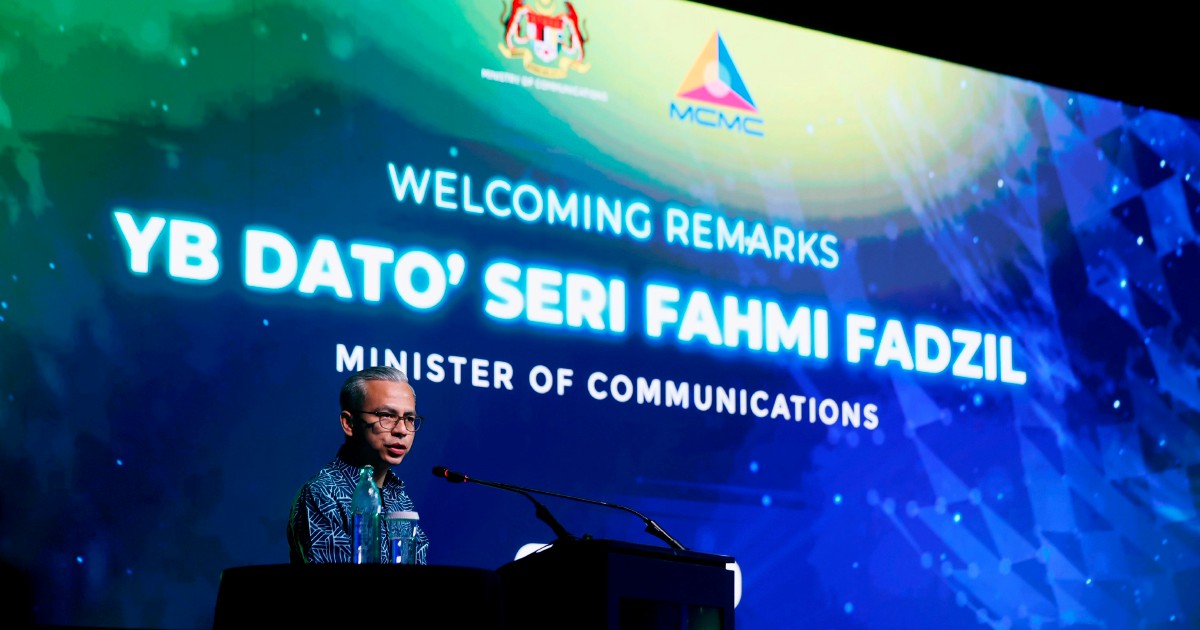
The Malaysian Cabinet has weathered recent tensions without fracturing, Communications Minister Datuk Seri Fahmi Fadzil asserted during an appearance in Kuala Pilah today, pushing back against speculation that internal divisions threaten the government's stability. His remarks come at a moment when public exchanges between senior officials over the conduct of ministers during the state election campaign have drawn scrutiny, prompting observers to question whether the ruling coalition's leadership operates with sufficient cohesion to govern effectively.
Fahmi's statement represents an explicit effort to contain damage from what some political analysts view as an unusual public airing of ministerial grievances. In Malaysia's hierarchical political culture, such exchanges are typically resolved behind closed doors, making recent public comments notable for their visibility and apparent frustration. By characterising the situation as a non-issue and emphasising the Cabinet's fundamental unity, the minister appears to be attempting to reset the narrative and assure stakeholders that the government functions as intended despite surface-level disagreements.
The timing of Fahmi's intervention is significant given Malaysia's electoral calendar. The Negri Sembilan state election, which triggered the underlying tensions between government officials, represents a critical test of the ruling coalition's electoral appeal and organisational discipline. State elections serve as important barometers of federal government performance, particularly in states with historically competitive politics. Any perception of Cabinet weakness or internal strife could undermine campaign messaging and voter confidence, making Fahmi's reassurance strategically important for protecting the government's electoral prospects.
The specific disputes centred on ministerial discipline raise deeper questions about executive governance in Malaysia's coalition system. When Cabinet members operate across multiple political parties and alignments—as Malaysia's government structure necessitates—maintaining consistent messaging and enforcing disciplinary standards becomes inherently complex. Ministers may feel justified defending their party's interests during state campaigns, potentially creating tensions with broader Cabinet objectives. Resolving these tensions without public controversy requires sophisticated political management and clear internal protocols.
Fahmi's reference to informal Cabinet interaction—noting that ministers "sat down for lunch"—reflects a deliberate humanising approach to political storytelling. Rather than addressing substantive disagreements head-on, he emphasises collegial relationship-building as evidence of underlying unity. This rhetorical strategy suggests that the disagreements, while real enough to generate comment, remain manageable and subordinate to the Cabinet's larger shared purpose. It also implies that personal relationships and informal communication channels function adequately to prevent policy paralysis.
The Malaysian political context renders Fahmi's reassurance somewhat more credible than it might appear in isolation. The current ruling coalition, formed through multiple alignments and negotiations, operates with institutional checks designed to manage precisely these kinds of internal tensions. Coalition partners understand that public displays of discord threaten the entire government's legitimacy and electoral prospects. This structural reality creates powerful incentives for leaders like Fahmi to contain and de-escalate tensions publicly, even when significant disagreements exist.
However, the very fact that Fahmi felt compelled to address Cabinet unity suggests that concerns about cohesion carry genuine weight among observers and perhaps within government circles themselves. Malaysian politics has witnessed multiple instances of Cabinet dysfunction preceding broader governmental crises. The government's willingness to have these conversations publicly, rather than maintain complete silence, could indicate either increasing transparency or increasing difficulty managing internal disputes discreetly. Either interpretation carries implications for the government's long-term stability.
The Negri Sembilan context adds particular importance to Fahmi's statement. The state occupies a geographically central position in Peninsular Malaysia and holds historical significance in Malaysian politics. Electoral performance there serves as a bellwether for broader sentiment towards the federal government. If the ruling coalition performs poorly in Negri Sembilan, observers might attribute the result partly to visible internal divisions. Conversely, a strong showing would validate Fahmi's assertion that the government remains functionally unified despite disagreements.
For Malaysian voters and businesses, Cabinet unity matters significantly. Government effectiveness in economic policy, infrastructure development, and social programmes depends substantially on ministerial coordination and clear policy direction. When Cabinet ministers appear at odds over fundamental questions of discipline and conduct, stakeholders may question whether the government can implement complex policies requiring sustained coordination. This uncertainty can translate into delayed investment decisions and reduced business confidence during critical economic periods.
The broader principle that Fahmi's statement affirms—that Malaysia's Cabinet system depends on underlying unity even amid disagreements—reflects mature coalition governance. All multiparty governments contain internal tensions between partners with distinct ideological positions and electoral bases. The question is not whether tensions exist, but whether institutional mechanisms and political relationships can manage them without precipitating governmental collapse. Fahmi's public reassurance, while perhaps dismissive of legitimate questions about ministerial discipline, attempts to anchor confidence in those institutional mechanisms.
Looking ahead, the real test of Cabinet cohesion will emerge not in political leaders' public declarations of unity, but in whether the government can coordinate effectively around major policy initiatives and electoral campaigns. The Negri Sembilan election results themselves will provide important evidence about whether Fahmi's assessment accurately reflects the Cabinet's functional reality or represents aspirational rhetoric masking deeper fractures. Voters and investors will watch closely to assess whether the government's self-declared unity translates into effective governance and electoral success.

