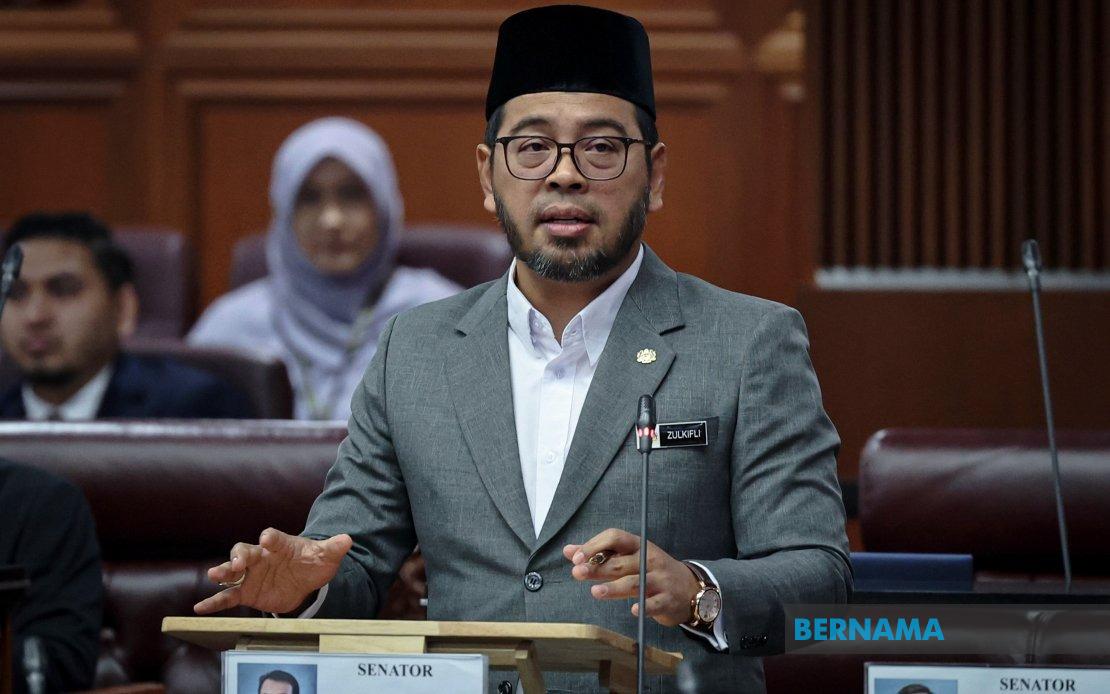
The Malaysian Cabinet will weigh a proposal to release the final Royal Commission of Inquiry report on Tabung Haji to the public, according to Minister in the Prime Minister's Department (Religious Affairs) Dr Zulkifli Hasan, who addressed the matter in Parliament on July 22. The announcement comes amid persistent public confusion and allegations regarding the controversial restructuring of the Islamic pilgrimage savings institution, particularly centring on claims that strategic assets belonging to Tabung Haji were sold by a former Treasury secretary-general.
Zulkifli moved swiftly to refute what he characterised as false and misleading claims about asset disposals, asserting instead that the 2018 government intervention represented a coordinated rescue operation designed to stabilise a systemically important financial institution serving the Muslim community. The minister's forceful denial underscores the sensitivity surrounding Tabung Haji's troubled history and the need to reshape public perception of the restructuring decisions taken during that critical period. The distinction he drew between asset sales and a financial bailout reflects the government's preferred framing of what many observers view as a complex and contentious episode in Malaysia's institutional management.
According to Zulkifli, the financial difficulties that necessitated intervention originated from significant misappropriation of depositor funds that occurred before 2018, with the institution's balance sheet severely compromised by the time the current government assessed the situation. This historical context proves crucial to understanding why the Cabinet authorised the transfer of underperforming and problematic assets to Urusharta Jamaah Sdn Bhd, a government-owned special purpose vehicle established to manage the restructuring process. The minister emphasised that this asset transfer represented a collective Cabinet decision made in 2018, not an unilateral action by any individual official.
The depth of Tabung Haji's financial crisis became apparent when both the Auditor-General and Bank Negara Malaysia independently documented the institution's precarious condition. The asset-liability deficit reached RM10.9 billion in 2018, a staggering shortfall that immediately signalled systemic distress. Compounding this structural problem, depositors withdrew approximately RM6 billion in funds within a compressed timeframe, reflecting the loss of confidence that threatened to cascade into a broader institutional collapse. Simultaneously, the government's attempts to secure a standby loan to bridge the funding gap proved unsuccessful, eliminating what might have been an alternative pathway to stabilisation.
Had the government permitted Tabung Haji to fail under these circumstances, the fiscal consequences would have been catastrophic. The minister disclosed that the state faced potential liability exposure of RM74.5 billion should the institution collapse, given that government guarantees covered all deposits held by the approximately 9 million Tabung Haji account holders. This exposure represented a significant proportion of the federal budget and would have necessitated emergency fiscal measures. The rescue intervention, therefore, functioned as a prudent containment strategy that prevented what would have been a severe shock to public finances and the retirement security of millions of Malaysians saving for the hajj pilgrimage.
Subsequent developments suggest the rescue operation achieved its primary objectives, at least according to official metrics. Tabung Haji's deposit base recovered substantially, growing from RM69.4 billion in 2019 to more than RM95.1 billion by the middle of 2025, demonstrating renewed depositor confidence and the institution's capacity to attract fresh inflows. This recovery trajectory indicates that the restructuring, whatever its controversies, succeeded in restoring the institution's attractiveness to account holders and stabilising its funding position. The expansion of the deposit base represents a fundamental measure of institutional rehabilitation and suggests that the worst of the crisis phase has passed.
Beyond deposit recovery, Tabung Haji has improved its profitability metrics substantially. The profit distribution rate climbed from 1.25 per cent in 2018 to 3.5 per cent for 2025, constituting the institution's highest return to investors in eight years. This improvement matters greatly to account holders who depend on these distributions to supplement their hajj savings. Simultaneously, the government has maintained the cost of performing the hajj pilgrimage unchanged across three consecutive years from 2024 to 2026, a significant achievement given inflationary pressures that have affected virtually every other sector of the Malaysian economy. This price stability reflects government commitment to preserving hajj accessibility for ordinary Muslims despite broader economic headwinds.
The decision to publish the Royal Commission of Inquiry report carries substantial implications for public understanding of the Tabung Haji crisis and the government's response. A public release would allow independent analysts, parliamentarians, and informed citizens to scrutinise the factual basis for decisions made during the 2018 intervention. Full transparency could help resolve lingering ambiguities about asset transfers and definitively establish whether the restructuring constituted sound crisis management or problematic asset stripping, as critics occasionally suggest. For policymakers and institution builders across Southeast Asia, the Tabung Haji experience offers important lessons about the risks of inadequate governance frameworks and the techniques available for rescuing troubled financial institutions that serve disadvantaged populations.
The timing of this disclosure proposal reflects broader trends in Malaysian governance toward greater transparency and public accountability, though implementation remains uncertain pending Cabinet review. Releasing the RCI findings would demonstrate governmental confidence in the rescue operation's fundamental legitimacy and perhaps help move past the reputational damage that persistent allegations have inflicted on Tabung Haji's institutional standing. Conversely, continued secrecy might perpetuate suspicions and undermine efforts to restore full public confidence in the institution. The Cabinet's forthcoming deliberation will signal whether the government views transparency as an asset or liability in managing this sensitive institutional legacy.

