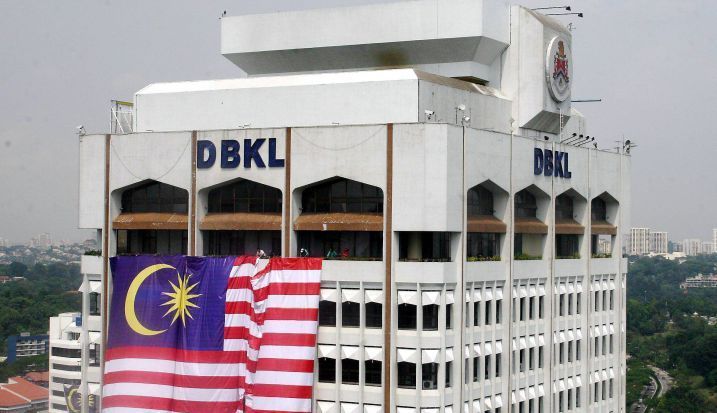
The Malaysian Cabinet has signalled a cautious approach to reforming Kuala Lumpur's administrative structure, directing the Federal Territories Department to prioritise internal governance improvements over legislative changes to the Federal Capital Act 1960. The decision, announced by Minister in the Prime Minister's Department (Federal Territories) Hannah Yeoh, comes after a four-month feasibility study commissioned from the International Islamic University Malaysia examined the city authority's operational challenges and reform options.
The study, which ran from December 2023 to March 2024, investigated the administrative framework of Kuala Lumpur City Hall (DBKL) through detailed consultations with lawmakers and management officials. Rather than endorsing sweeping legal amendments, the research team concluded that many of the city authority's difficulties stemmed not from legislative gaps but from absent or unclear internal procedures. This finding shapes the government's cautious stance, suggesting that operational solutions could address current challenges without requiring changes to the foundational 1960 Act that governs the capital.
Two distinct reform proposals had circulated prior to the study. The Policy Advisory Committee to the Prime Minister had mooted restructuring the mayor's office through establishing a Supreme Council with formal authority. Meanwhile, Kuala Lumpur's seven elected MPs had proposed creating a City Council comprising themselves to serve in an advisory capacity to the mayor. Both approaches sought to enhance oversight and incorporate elected representation into DBKL's decision-making hierarchy, reflecting broader concerns about accountability in the city's governance.
The IIUM study firmly rejected the councillor model, arguing that introducing elected representatives with formal administrative powers would create ambiguity about accountability. Adding another institutional layer to decision-making processes could generate overlapping responsibilities and obscure which office-holder bears responsibility for failures. This reasoning appears to have convinced the Cabinet, which has embraced the study's more conservative stance. The decision preserves the mayor's position as the "corporation sole" under Section 5(1) of Act 190, meaning legal authority remains concentrated in the mayoral office rather than distributed across a council structure.
Instead of structural overhaul, the study recommends strengthening DBKL's existing Advisory Board through clearer governance frameworks. A formal structure defining appointment criteria, professional quotas, meeting procedures, and reporting requirements would provide the transparency and operational discipline currently absent. The framework would clarify how the board interacts with the mayor, the Federal Territories minister, and DBKL management, reducing the informal decision-making that has apparently contributed to governance problems. This incremental approach aims to improve accountability without dismantling the legal architecture that has governed the capital since independence.
Parliamentarians seeking greater involvement in city affairs need not be excluded entirely. The study suggests expanding MPs' monitoring roles through regular consultation meetings, dedicated committees for budget oversight, and formal mechanisms for residents to raise concerns and development proposals. However, these enhanced functions would remain advisory and consultative rather than executive. MPs would represent constituents' interests without wielding administrative authority, preserving the distinction between political representation and day-to-day city management. Clearly documenting the scope, frequency, and reporting procedures for such engagement would prevent mission creep and clarify expectations on all sides.
The careful framing of DBKL's status reflects Kuala Lumpur's unique position as both a national capital and federal territory. The study notes that Act 190 embodies a specific constitutional arrangement: transferring the capital to federal administration under a 1974 agreement. Introducing a council with executive or voting powers could technically convert Kuala Lumpur into a conventional local authority under the Local Government Act 1976, potentially conflicting with the original constitutional intent. This constitutional layer explains the Cabinet's hesitation to rush into amendments without thorough consideration of implications for the nation's capital governance.
The immediate priority is assembling a comprehensive transformation plan articulating how DBKL will implement governance improvements through administrative action. The Federal Territories Department and city hall management are tasked with designing clearer guidelines, operating procedures, and meeting protocols that reflect best practices in institutional management. The Cabinet will receive periodic progress updates, suggesting this will become a multi-stage process rather than a one-off exercise. This sequenced approach allows the government to demonstrate that internal reforms can meaningfully address governance gaps before opening the more contentious question of amending legislation.
For Malaysian stakeholders, the decision carries several implications. Residents and businesses dealing with DBKL should eventually benefit from clearer internal procedures and more transparent decision-making, though improvements will depend on implementation rigour. Kuala Lumpur MPs gain formal recognition of an enhanced monitoring role, though without the direct administrative powers they may have hoped for, reflecting an attempt to balance democratic accountability with operational efficiency. The decision also preserves institutional continuity at the capital, avoiding disruptive restructuring while signalling that governance is neither static nor beyond improvement.
The study's emphasis on administrative solutions over legislative change reflects growing international recognition that institutional performance depends as much on internal practices as on formal structure. Many governments have discovered that rewriting laws proves simpler than embedding new procedures and accountability standards. By prioritising implementation of better guidelines, clearer decision-making frameworks, and transparent reporting mechanisms, DBKL can potentially address governance concerns at lower political cost than passing Act 190 amendments through Parliament. If this strategy succeeds, it may provide a model for other federal territories and city authorities wrestling with similar challenges across Southeast Asia, where balancing efficient administration with democratic accountability remains an ongoing tension.

