Malaysia's Cabinet has directed the Ministry of Home Affairs (KDN) and Ministry of Transport (MOT) to produce a comprehensive airport security enhancement plan within the next two weeks, responding to growing concerns over breaches that have damaged the nation's security reputation. Home Minister Datuk Seri Saifuddin Nasution Ismail made the announcement during an official visit to Sabah, signalling that Cabinet-level authorities view the deteriorating security posture at airports as a critical governance issue requiring immediate intervention and systemic overhaul.
The directive follows a series of embarrassing incidents that have exposed gaps in Malaysia's aviation security infrastructure and raised questions about the effectiveness of existing screening protocols. Most notably, the recent arrest of a Malaysian pilot at Indonesia's Soekarno-Hatta Airport after Indonesian authorities discovered approximately 25kg of MDMA—a controlled substance—highlighted how individuals connected to Malaysian aviation can evade detection and become involved in international drug trafficking operations. These cases have collectively created an impression among international observers and fellow Southeast Asian nations that Malaysia's airport security mechanisms contain significant vulnerabilities, undermining confidence in the country's ability to manage border integrity and protect against transnational criminal activities.
Saifuddin emphasised that the Cabinet's concern extends beyond individual incidents to the broader strategic implications of perceived security weaknesses. He stated that the incidents have generated impressions of breached security controls across Malaysian airports, a perception that could have long-lasting consequences for tourism, aviation commerce, and Malaysia's standing as a reliable regional partner. The government is treating the matter with considerable urgency, assembling various agencies to collaborate on drafting detailed improvement measures rather than relying on incremental adjustments to existing frameworks. This comprehensive approach suggests recognition that the security gaps are systemic rather than isolated operational failures.
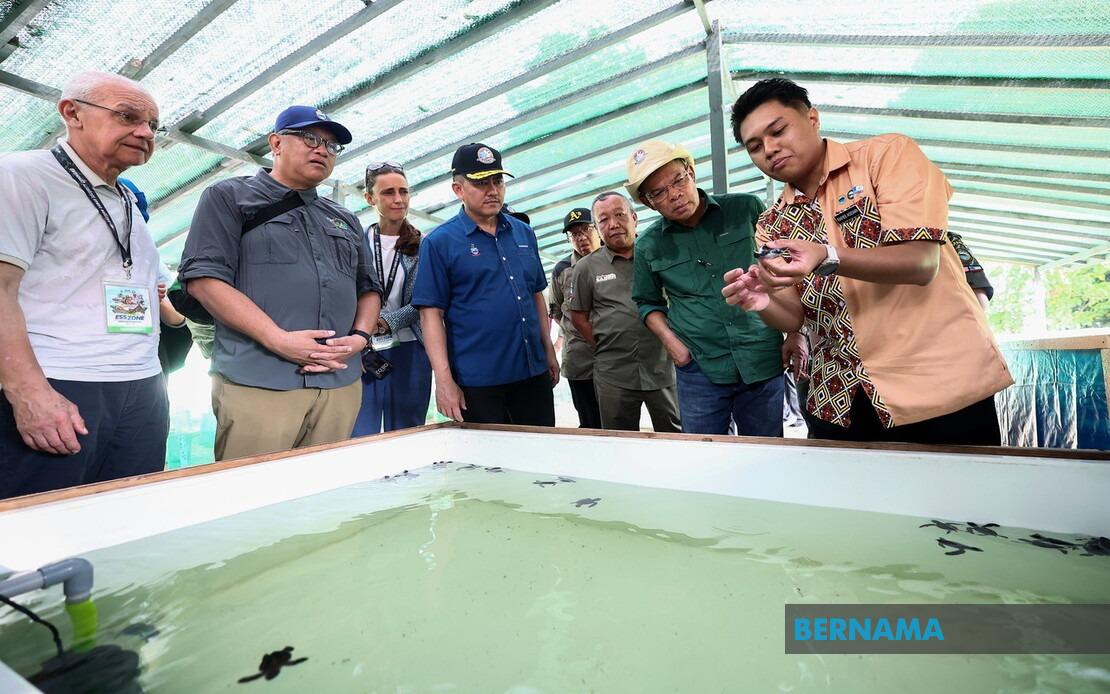
The announcement came during Saifuddin's official engagement with diplomatic representatives in Sabah's Eastern Security Zone, where he was accompanied by senior security officials including ESSCOM commander Datuk Victor Sanjos and chief executive Datuk Dr Jamaluddin Mohd Ali. The timing of the security plan directive during this diplomatic visit underscores the government's awareness that security perceptions directly influence international confidence in Malaysia and impact bilateral relations with key trading partners and allies.
Beyond the airport security directive, Saifuddin revealed that KDN is simultaneously pursuing a parallel diplomatic initiative to persuade foreign governments to revise their travel advisories concerning Sabah's east coast. Several nations, including Japan and Switzerland, have already updated their travel warnings based on recent security briefings and evidence of improved conditions in the Eastern Sabah Security Zone. This revised diplomatic positioning reflects genuine improvements in regional stability achieved through sustained security operations and intelligence coordination, though foreign governments remain cautious in their overall assessments of the area.
To demonstrate these improvements tangibly, the government has organised familiarisation visits for 14 diplomatic representatives, enabling them to observe security infrastructure, assess tourism potential, and gather first-hand evidence of normalised conditions. Rather than relying solely on official statements, this approach allows foreign diplomats to form independent judgements based on direct observation, a strategy designed to generate more credible and balanced reporting in international media and official government assessments.
The Eastern Sabah Security Zone's operational track record provides quantifiable evidence supporting the government's claims of improved security management. Between January and June 30, ESSCOM conducted 897,293 inspections across the zone while executing 307 arrests related to security threats. Enforcement operations during this six-month period achieved 38 seizures of contraband valued at RM23.37 million through intensified controls at land borders and within state waters, demonstrating consistent interdiction of smuggling activities and transnational crime operations.
Underscoring the government's financial commitment to long-term security consolidation, Saifuddin noted that federal allocations to the Eastern Sabah Security Zone have totalled RM723 million across ESSCOM's thirteen years of operation. These resources have funded asset acquisition, operational expenses, and logistics, representing sustained government investment in maintaining sovereignty and security infrastructure across one of Malaysia's most strategically sensitive regions.
The dual-track approach—simultaneously addressing airport security weaknesses while rehabilitating international perceptions of Sabah—reflects sophisticated understanding that Malaysia's security challenges operate across multiple domains requiring integrated solutions. The airport security plan will likely focus on strengthening screening technologies, enhancing personnel vetting procedures, and tightening protocols for aviation staff access to restricted areas. Success in implementing these measures within the two-week submission deadline will test the coordination capacity of KDN and MOT, two ministries with distinct operational cultures and bureaucratic procedures that must now collaborate on a compressed timeline.
For Malaysia and Southeast Asia, the implications extend beyond immediate security governance. Neighbouring countries including Indonesia, the Philippines, and Thailand face comparable challenges in aviation security as criminal networks exploit transportation infrastructure for drug trafficking and contraband smuggling. Malaysia's response to these breaches may establish benchmarks for regional cooperation and knowledge-sharing regarding airport security best practices, particularly if the comprehensive plan incorporates emerging technologies and intelligence-sharing protocols that could be adapted across the Association of Southeast Asian Nations.
The Cabinet's decisive action also signals to international investors and aviation operators that Malaysia is responsive to security concerns and willing to implement remedial measures when gaps are identified. This responsiveness is crucial for maintaining flight operations, tourism flows, and commercial confidence at a time when aviation recovery from pandemic impacts remains fragile across the region.
As Malaysia awaits the KDN and MOT submission in two weeks, the broader test will lie in implementation. Security plans require sustained funding, inter-agency coordination beyond the submission deadline, and measurable performance metrics that can be independently verified. International confidence in Malaysia's airports ultimately depends not on plans submitted to Cabinet but on observable improvements in actual security practices and zero-tolerance enforcement that prevents breaches from recurring.

