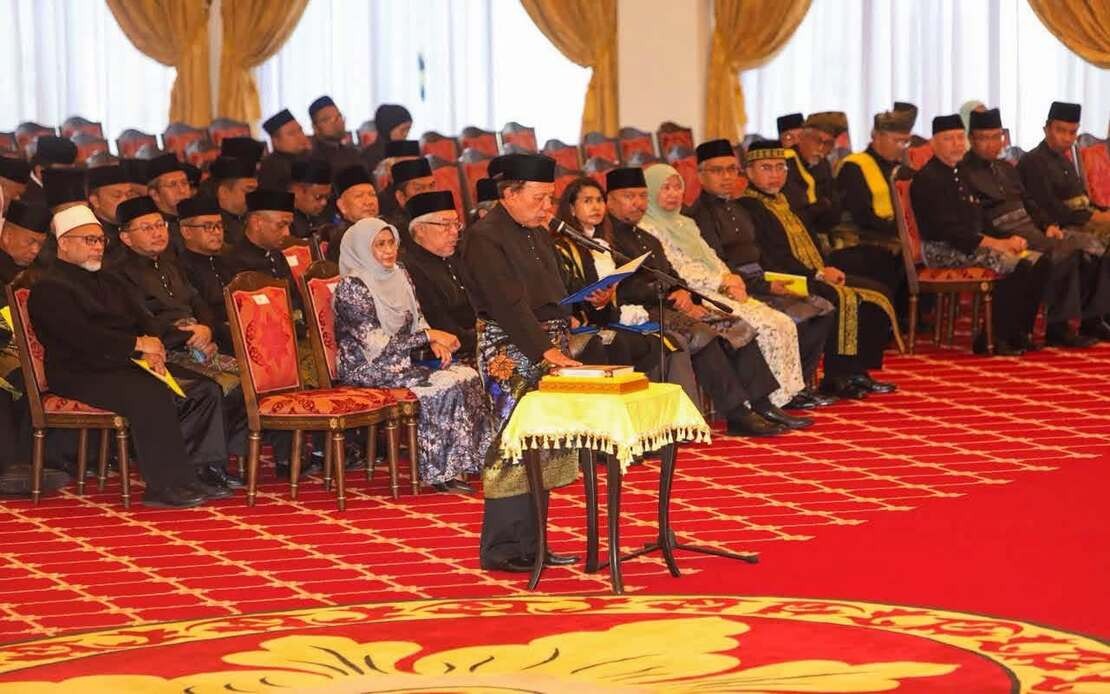
The federal Cabinet has thrown its weight behind Datuk Ismail Lasim, the newly sworn-in Menteri Besar of Negeri Sembilan, with senior ministers publicly endorsing his appointment and pledging support for his administration. The 67-year-old Juasseh assemblyman was formally invested with his office before Tuanku Muhriz Tuanku Munawir, the Yang Dipertuan Besar of Negeri Sembilan, at Istana Besar Seri Menanti's Balairong Seri on August 2.
Deputy Prime Minister Datuk Seri Dr Ahmad Zahid Hamidi, who also holds the Rural and Regional Development portfolio, was among the first to congratulate Ismail, using his Facebook platform to express his confidence in the appointment. Zahid characterised the responsibility entrusted to Ismail as substantial, underscoring his belief that the new leader possesses the capacity to fulfil his duties for the betterment of Negeri Sembilan's citizens and the state's broader advancement. His public endorsement carries particular significance given Zahid's standing within the federal administration and his influence over rural and regional affairs.
The Defence Minister, Datuk Seri Mohamed Khaled Nordin, similarly extended his good wishes, though his statement placed particular emphasis on the notion that electoral trust constitutes a weighty obligation rather than merely an honour. Mohamed Khaled framed Ismail's appointment within the context of continuity, specifically hoping that the incoming leadership would preserve the momentum of developmental initiatives while maintaining the stability that Negeri Sembilan residents expect. His invocation of religious blessing for Ismail's tenure reflected a common practice among Malaysian political leaders when addressing transitions of state authority.
Plantation and Commodities Minister Datuk Seri Dr Noraini Ahmad interpreted Ismail's appointment as representing a watershed moment for the state, suggesting that his leadership inaugurates a fresh chapter in Negeri Sembilan's governance and trajectory. She emphasised the spiritual dimension of public service, characterising administrative actions as opportunities for earning divine favour through service to the population. Her intervention underscores the degree to which Ismail's appointment has achieved traction across the federal Cabinet, extending beyond ceremonial acknowledgment to substantive expressions of support.
Ismail's political pedigree stretches back nearly three decades, establishing him as one of Negeri Sembilan's more seasoned political operators. His entry into electoral politics occurred in 1999 when he first secured a state assembly seat, commencing a trajectory that would eventually position him within the upper echelons of state administration. This longevity in political life suggests familiarity with the institutional landscape of Negeri Sembilan governance and relationships cultivated across successive administrations.
During the period spanning 2004 to 2018, Ismail held membership in the state executive council, where he wielded considerable influence over educational policy formulation and implementation. His portfolio encompassed not only immediate educational concerns but also the broader canvas of human capital development, indicating exposure to the policy dimensions that underpin long-term state competitiveness. This fifteen-year stretch of continuous administrative involvement, spanning three consecutive state elections, establishes him as someone versed in the mechanics of state governance and capable of navigating the political complexities that characterise Malaysian federalism.
For Malaysian observers, Ismail's appointment represents a test case in whether individuals with substantial experience in state-level administration can effectively translate that expertise into executive leadership at the highest subnational level. His background in education and human capital development aligns with contemporary discussions about skills training and workforce development, matters of considerable importance to states seeking to participate in Malaysia's economic transformation. The question of whether his previous experience preparing educational policy will inform a broader vision for state development remains to be seen.
The cordial nature of federal Cabinet responses suggests that Ismail's appointment has encountered no significant friction within the ruling federal establishment, an important consideration given potential tensions that can arise when state and federal authorities operate under different partisan arrangements. The absence of any discordant voices from the Cabinet implies a baseline of political consensus around his suitability for the role, though this official unanimity masks whatever internal negotiations may have preceded his formal appointment.
Ismail's appointment also carries implications for understanding succession patterns within Negeri Sembilan's political structure and the broader mechanisms through which the Agong system facilitates or constrains leadership transitions in Malaysia's monarchical framework. The appointment of someone with nearly three decades of state-level political experience suggests that institutional continuity and demonstrated administrative capability continue to weigh heavily in determining who gains access to the state's highest executive office.
Looking forward, observers will monitor whether Ismail can harness the momentum of federal support to establish a governing agenda that addresses the specific developmental challenges confronting Negeri Sembilan. The state's geographical position within the Klang Valley periphery and its role as both a manufacturing and agricultural centre present distinct opportunities and constraints that will test whether his previous educational policy experience translates into broader economic governance capacity. His administration's early policy pronouncements and resource allocation decisions will provide clearer signals regarding the direction he intends to chart for the state.

