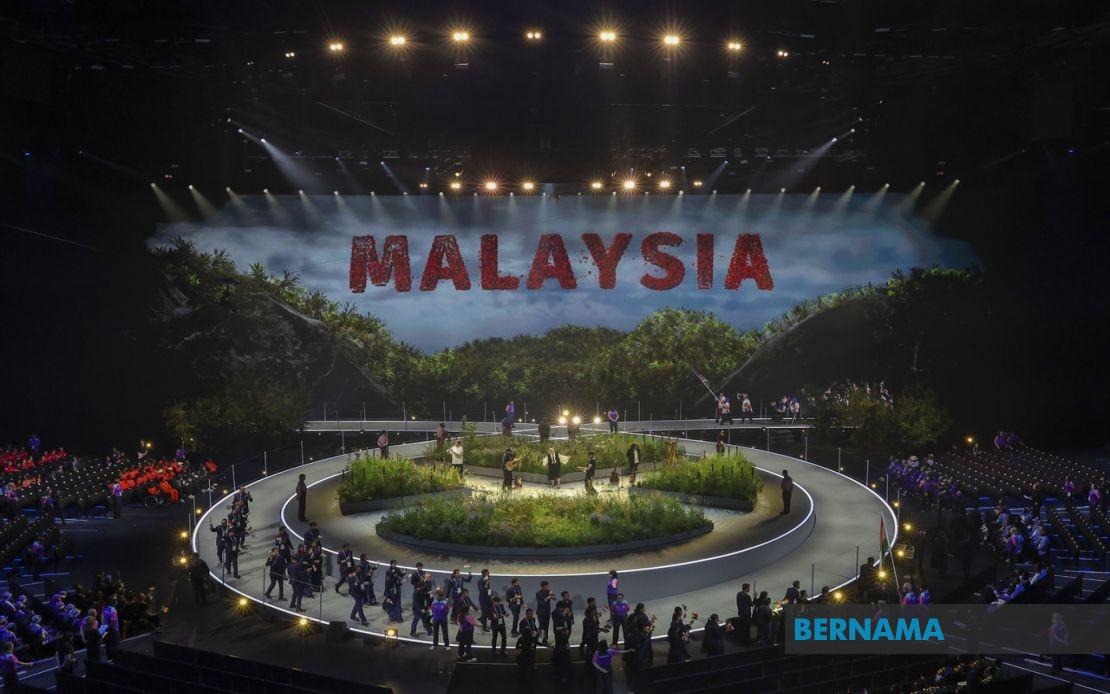
The Malaysian government has formally recognised the strong showing of its contingent at the Glasgow 2026 Commonwealth Games, with Cabinet members offering their congratulations for an achievement that has lifted national pride. Communications Minister Datuk Seri Fahmi Fadzil, speaking as spokesman for the MADANI Government, confirmed the Cabinet's acknowledgement at a post-Cabinet press conference in Putrajaya on August 5, emphasising that the nation's athletes have delivered an outcome that extends beyond initial targets.
The medal haul of eight gold, three silver and five bronze represents a significant overperformance against the government's original projection of five gold medals. This distinction carries particular weight given the competitive nature of Commonwealth Games competition, where every medal reflects months or years of training, sacrifice, and strategic investment by both individual athletes and the supporting ecosystem of coaches, medical staff, and facilities. The contingent's success in Glasgow marks Malaysia's finest Commonwealth Games performance since New Delhi 2010, when the nation captured twelve gold medals—a benchmark that has stood for nearly two decades and one the government would have been eager to approach or surpass.
Fahmi articulated the Cabinet's perspective that such achievements serve a purpose extending beyond the immediate celebration of victory. The government views outstanding international sporting performances as catalysts for broader national inspiration, particularly in motivating other athletes across different sports and disciplines to pursue excellence and contribute to Malaysia's global sporting reputation. This reflects an understanding that medal-winning performances create a demonstrable pathway to success, making international achievement feel attainable rather than aspirational for younger or emerging competitors within the Malaysian system.
The financial recognition of this achievement comes through the Sports Victory Incentive Scheme, commonly known by its Malay acronym SHAKAM. The government has allocated RM1.1 million as rewards distributed among the Malaysian athletes responsible for exceeding the target. This monetary incentive carries multiple implications: it acknowledges the financial sacrifices athletes make during preparation, provides immediate economic benefit to competitors who often operate on modest salaries or sponsorship arrangements, and signals to the broader athletic community that government support is tangible and responsive to demonstrated excellence. For many Malaysian athletes competing at Commonwealth level, such bonuses represent meaningful income that can sustain their professional sporting careers.
The Commonwealth Games context merits consideration within the broader Southeast Asian sporting landscape. As a regional competition bringing together nations with shared colonial history and institutional structures, the Games offer a distinctive platform where Malaysian athletes can compete against familiar rivals while accessing a competition level that sits between domestic championships and the Olympics. Success at Glasgow has positioning implications for the lead-up to future international competitions, including subsequent Commonwealth Games cycles and the Olympic Games, where momentum and demonstrated competitive capability influence team selection decisions and athlete confidence.
Malaysia's performance also reflects the success of targeted investment and strategic focus on specific sporting disciplines where the nation has built competitive advantages. The distribution of medals across multiple sports—rather than concentration in one or two disciplines—suggests a more broadly distributed strength across the Malaysian sporting ecosystem. This diversification matters for sustainability, as it reduces vulnerability to individual athlete retirement or injury and demonstrates that competitive excellence is not accidental but the product of systematic development.
The Cabinet's formal recognition through Fahmi carries institutional weight. When a government communications minister explicitly announces Cabinet-level acknowledgement of sporting achievement, the message extends beyond congratulations to encompass official validation of the athletes' contribution to national standing. This institutional blessing can influence subsequent policy decisions regarding sports funding, facility development, and the political priority assigned to athletic development within broader government programmes. It also provides political cover for continued investment in sporting infrastructure during budget deliberations, where sports funding often competes with healthcare, education, and defence allocations.
The narrative of exceeding targets deserves scrutiny, however. While surpassing an internal projection of five gold medals is genuinely impressive, it raises questions about how targets are set within Malaysia's sports administration. Conservative target-setting can inadvertently create situations where strong performances appear exceptional, whereas more ambitious initial projections might better reflect actual capacity and create more meaningful benchmarks for future Games. The fact that the Glasgow performance marks the best result since New Delhi suggests either significant improvement in Malaysian sports development over sixteen years, or potentially that previous targets were calibrated conservatively.
Looking forward, the Glasgow 2026 result establishes a new reference point for Malaysian athletic capability. Future Commonwealth Games will inevitably be measured against this benchmark, creating both opportunity and pressure. The athletes who delivered these medals provide tangible proof that Malaysian competitors can succeed against international opposition, a psychological asset that may prove as valuable as the medals themselves in recruitment and development of future talent pipelines. The government's willingness to allocate substantial reward funds demonstrates political commitment to translating sporting success into sustained competitive advantage, though sustained improvement will require continued infrastructure investment and systematic athlete development beyond the immediate post-Games period.

