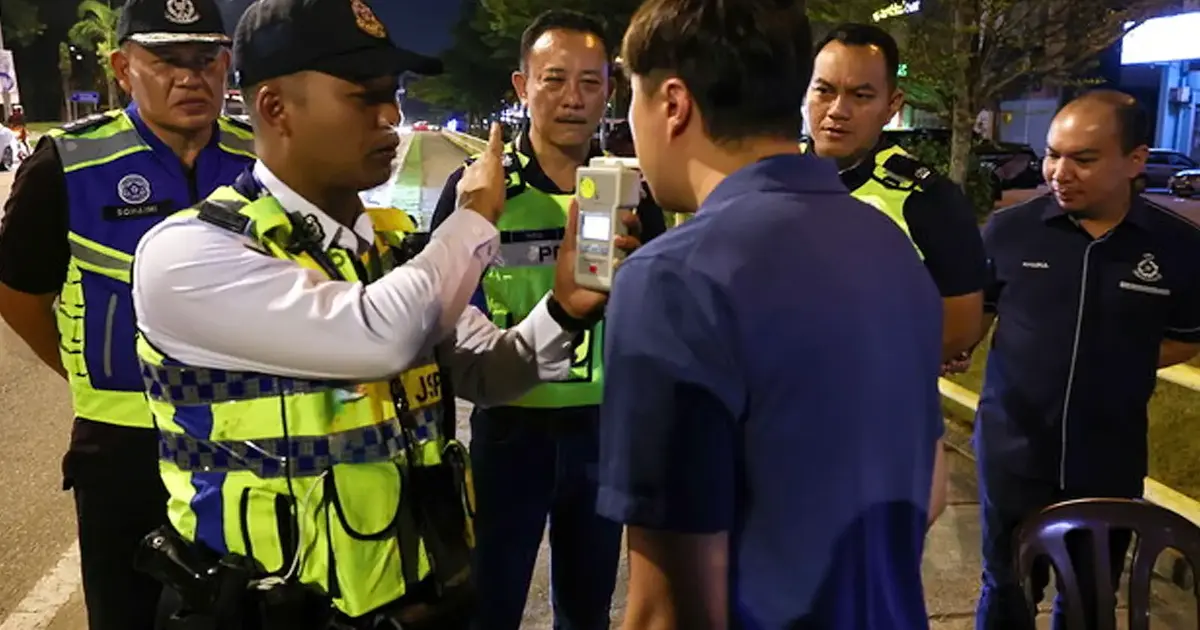
Malaysia's Cabinet has given its approval to a new compensation framework designed to provide financial redress to victims of drink-driving incidents, Transport Minister Loke Siew Fook announced. The mechanism represents a significant step toward addressing the broader impact of impaired driving on Malaysian society, shifting the focus beyond merely punishing offenders to actively repairing the harm caused to innocent parties.
Under the approved framework, courts will be empowered to impose court-ordered compensation payments on top of the existing criminal penalties already prescribed for drink-driving offences. This dual-layer approach means that offenders will face both traditional judicial consequences—including fines, imprisonment, or driving bans—and additional financial accountability to their victims. The structure acknowledges that current punitive measures, while necessary, do not adequately address the financial devastation experienced by victims and their families.
The compensation mechanism addresses a longstanding gap in Malaysia's road safety legislation. Currently, victims of drink-driving accidents bear the primary financial burden of medical treatment, rehabilitation, vehicle repairs, and lost income, with limited recourse to systematically recover these costs from those responsible. This new framework transforms victim support from a matter of civil litigation, which often proves costly and protracted, into an integral component of criminal proceedings themselves.
Loke's statement emphasises that the compensation orders will function as a mandatory consideration within the judicial process rather than as an optional additional penalty. This distinction is important, as it shifts the onus from victims to initiate separate civil suits toward a proactive judicial system that automatically evaluates and determines appropriate compensation levels. Such an approach reduces the secondary burden on victims, who might otherwise face substantial legal expenses to pursue claims against offenders.
The timing of this Cabinet decision reflects growing pressure on Malaysian authorities to strengthen road safety measures. Drink-driving remains a persistent contributor to fatal and serious injury accidents on Malaysian roads. The World Health Organization has consistently highlighted impaired driving as a major public health concern in Southeast Asia, and Malaysia has faced increasing scrutiny regarding its effectiveness in reducing alcohol-related road fatalities. By introducing a compensation framework, the government signals recognition of both the preventive and restorative dimensions necessary for comprehensive road safety policy.
Implementation of this mechanism will likely require amendments to existing traffic and criminal legislation, as courts must have explicit statutory authority to impose such compensation orders. The specifics of how compensation amounts will be calculated—whether based on documented losses, statutory schedules, or judicial discretion—remain to be clarified through subsequent regulatory guidance. These details will prove crucial in determining whether the framework delivers meaningful assistance to victims or merely creates a bureaucratic layer without substantive impact.
For Malaysian insurers and the broader insurance industry, the compensation framework carries important implications. The extent to which compensation awards will interact with existing third-party liability coverage, personal accident insurance, and compulsory motor vehicle insurance policies requires careful coordination. Insurers may need to adjust their business models and claims procedures to accommodate court-ordered compensation flowing through the criminal justice system.
The mechanism also sends a powerful social message about accountability in road safety. By institutionalizing compensation within criminal proceedings rather than relegating it solely to civil court, Malaysia elevates the principle that drink-driving causes real, quantifiable harm deserving of systemic recognition. This framing may contribute to behavioral change among potential offenders, particularly in contexts where additional financial consequences carry greater deterrent weight than traditional penalties.
Regionally, Malaysia's move aligns with international best practices in victim-centric road safety policy. Several developed nations have implemented comparable systems whereby criminal courts possess authority to impose restitution or compensation orders on traffic offenders. The Malaysian government's adoption of this approach suggests growing alignment with global standards around victim rights and comprehensive accident prevention strategies.
The practical effectiveness of the compensation mechanism will depend substantially on enforcement mechanisms and the adequacy of compensation awarded relative to actual victim losses. Courts will require clear guidelines to ensure consistent and fair determination of compensation amounts across different cases and circumstances. Additionally, provisions must address scenarios where offenders lack financial resources to pay awarded compensation, as the framework risks creating substantial judgment debts that remain uncollected.
Stakeholders including road safety advocacy groups, victim support organizations, and legal professionals will play critical roles in translating the Cabinet's approval into workable legislation and judicial practice. Their input during the regulatory development phase will prove invaluable in ensuring the framework achieves its intended goals of providing meaningful support to victims while maintaining legal integrity and proportionality in sentencing.
The Cabinet's endorsement represents a significant policy evolution for Malaysia's approach to traffic offences. By recognizing that criminal liability should encompass financial accountability to victims, the government moves toward a more holistic understanding of justice in road safety matters. As implementation details emerge, this framework will warrant close monitoring to assess whether it successfully delivers its promise of meaningful compensation to those harmed by impaired driving.

