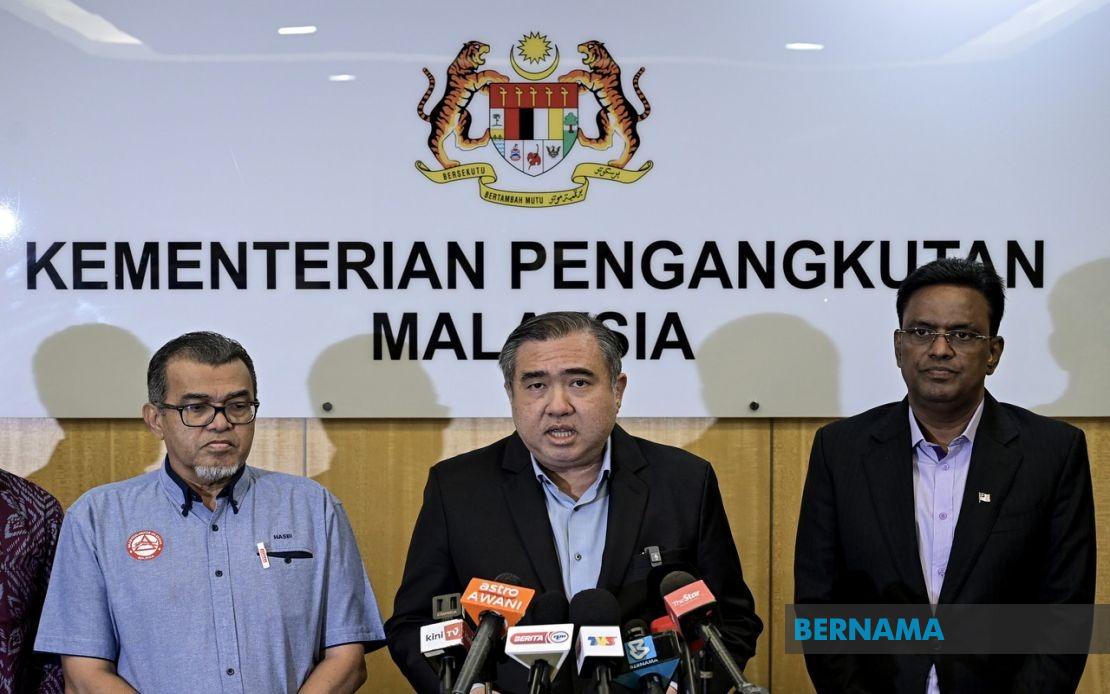
In a significant move aimed at holding road offenders financially accountable for their actions, Malaysia's Cabinet has endorsed in principle amendments to the Road Transport Act 1987 (Act 333) that would establish a court-ordered compensation mechanism for accident victims and their dependents. Transport Minister Anthony Loke announced the decision on Wednesday in Putrajaya, framing the initiative as a comprehensive response to the human and economic toll of traffic violations.
The proposed framework represents a substantial shift in how Malaysia's legal system addresses road offences. Rather than relying solely on traditional penalties—imprisonment, fines, and driving bans—courts would gain authority to impose compensation orders reflecting the actual harm suffered by victims and their families. This dual-punishment approach seeks to bridge a critical gap where offenders faced criminal consequences but often bore no direct financial responsibility for the devastation they inflicted. Loke emphasised that compensation would function as a supplementary measure, not a replacement for existing penalties, ensuring that the full weight of the law remains intact.
Crucially, the minister clarified that compensation amounts would not be determined by administrative formula or governmental decree. Instead, individual court judgments would weigh multiple factors unique to each case: the severity of the offence, the nature and extent of injuries or fatalities, documented losses borne by victims or their next of kin, and the offender's financial capacity to pay. This case-by-case approach reflects recognition that road tragedies vary enormously in their circumstances and consequences, and rigid compensation schedules would fail to serve justice. The methodology also acknowledges practical realities—not all offenders possess means to pay substantial sums, and courts must balance accountability with proportionality.
The proposed amendments would apply broadly across multiple categories of road offences, with particular emphasis on high-risk violations including driving under the influence of alcohol or drugs and reckless driving. These infractions carry disproportionate casualty rates, and their inclusion signals governmental acknowledgment that the most dangerous drivers should face heightened financial accountability. The expanded scope addresses a long-standing frustration among victim advocacy groups and grieving families who have watched offenders receive nominal sentences while suffering families bore overwhelming medical, funeral, and livelihood costs.
Importantly, the mechanism does not curtail victims' existing legal remedies. Those injured or bereaved in road accidents would retain full rights to pursue insurance claims through established channels and file civil lawsuits seeking damages. The compensation orders would operate alongside these mechanisms rather than displacing them, providing an additional avenue for recovery while avoiding legal conflict with insurance arrangements. This clarification matters significantly for insurers and legal practitioners, as it preserves contractual frameworks and established claims procedures.
The ministry has committed to an extensive consultation process before finalising the legislative text. Engagement sessions will involve relevant government agencies, insurance industry representatives, and other stakeholders to refine operational details and address practical implementation challenges. Among key questions requiring resolution are the precise scope of offences triggering compensation eligibility, technical definitions of serious injury thresholds, and protocols for situations where offenders genuinely lack capacity to pay. These granular issues could substantially affect the law's effectiveness and fairness in practice.
Minister Loke also announced plans to propose establishment of a special parliamentary committee to scrutinise the bill in depth, explicitly seeking cross-party support rather than pursuing partisan advantage. This consultation approach signals recognition that road safety represents a national interest transcending political divisions and that sustainable reform benefits from broad legislative consensus. The strategy reflects lessons from other jurisdictions where traffic safety initiatives achieve stronger public compliance and enforcement when they enjoy multiparty backing.
The timeline projects bill tabling during the year-end parliamentary session, contingent on completing drafting and stakeholder engagement processes. This schedule requires rapid but thorough work by the Ministry of Transport to incorporate feedback and produce legislative text suitable for detailed parliamentary scrutiny. The compressed timeframe reflects government urgency around the issue, though it also raises questions about whether adequate consultation can occur within such constraints, particularly given the proposal's technical complexity and implications for multiple sectors.
A critical practical consideration involves enforcement mechanisms and implementation capacity. Courts would require clear guidance on compensation assessment methodologies, and judicial training may prove necessary to ensure consistent application across different jurisdictions. Additionally, mechanisms for enforcing compensation orders—particularly against offenders with limited assets or those who abscond—will determine whether the framework delivers meaningful financial accountability or remains largely symbolic. The engagement process should address whether additional resources for court administration or victim liaison services are required.
For Malaysian accident victims and their families, these amendments could prove transformative. Road accidents impose catastrophic financial burdens on survivors, with medical treatments consuming life savings and loss of earning capacity pushing families into poverty. While compensation orders cannot restore lost lives or reverse paralysis, they could provide material support for rehabilitation, education for orphaned children, and temporary income replacement. The psychological impact of seeing offenders held financially accountable may also offer some measure of justice when criminal sentences feel inadequate to the harm inflicted.
The initiative also carries broader implications for Southeast Asian road safety policy. Malaysia's approach—combining enhanced demerit points systems with financial accountability mechanisms—represents a sophisticated response to the region's chronic traffic casualties. Other nations facing similar road safety crises may observe this experiment with interest, potentially adopting comparable frameworks. The emphasis on court discretion rather than administrative formulas could become a model for balancing accountability with proportionality across the region.
From an economic perspective, the proposal creates incentives for offenders to modify risky behaviour while potentially generating funds that, through restitution to victims or redirection to road safety programs, could circulate benefits beyond individual cases. Insurance industry responses will prove crucial—insurers may adjust risk assessments or premiums in response to the new legal landscape, though clarifications regarding interaction with insurance claims should mitigate major disruption.
The road ahead requires careful legislative drafting and genuine stakeholder collaboration to transform this in-principle approval into effective law. The ministry faces substantial work refining technical definitions, consultation schedules are tight, and parliamentary approval remains uncertain despite government backing. Nevertheless, the Cabinet's endorsement signals serious commitment to fundamentally reconceiving how Malaysia's legal system addresses road offences, moving beyond punishment toward accountability that meaningfully acknowledges victims' suffering and losses.

