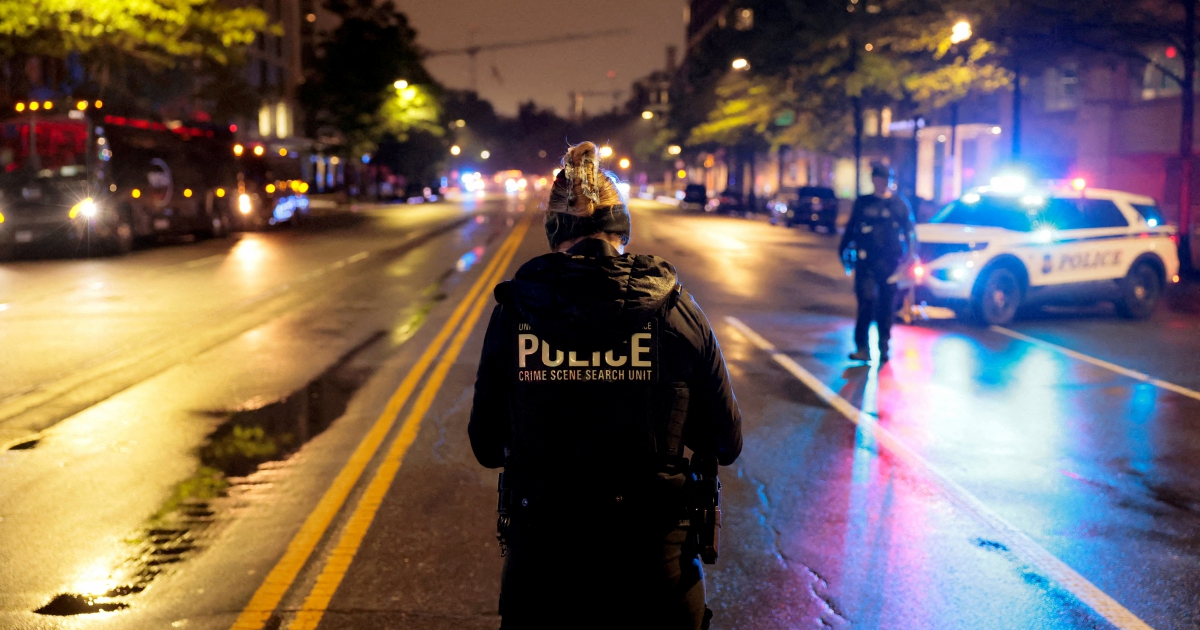
A bystander wounded during an armed encounter between US Secret Service personnel and a suspect near the White House in May is preparing to take legal action against the federal agency. The individual's legal team has indicated their intention to file a personal injury lawsuit, marking a significant development in an incident that sparked questions about civilian safety protocols during security operations at one of America's most heavily protected locations.
The May incident unfolded when Secret Service agents engaged with an armed individual in close proximity to the White House. During the confrontation, the bystander—who was in the vicinity but not directly involved in the encounter—sustained injuries. The exact circumstances of how the civilian was wounded during the exchange have raised concerns about the adequacy of protective measures and tactical procedures employed by security personnel in densely populated areas.
Legal experts suggest that personal injury cases against federal agencies represent a complex area of law, typically requiring plaintiffs to navigate the Federal Tort Claims Act framework. This legislation governs how injured parties can seek compensation from the US government, establishing specific procedural requirements and limitations that differ markedly from standard civil litigation against private defendants. The timing and substance of this particular case may establish important precedent regarding Secret Service liability in civilian injury scenarios.
The decision to pursue litigation reflects growing scrutiny of how law enforcement and security agencies balance threat response with civilian protection in high-profile locations. The White House, as the official residence and workplace of the US President, maintains one of the most intensive security perimeters in the world, yet incidents involving collateral harm to innocent parties underscore the inherent tensions between rapid threat neutralisation and minimising unintended consequences.
For Malaysian observers and regional security practitioners, this case illustrates broader international concerns about civilian safety during counter-threat operations. Nations throughout Southeast Asia, including Malaysia, frequently grapple with balancing public venue security with the protection of ordinary citizens who may find themselves inadvertently caught in dangerous situations. Heightened security at government buildings, diplomatic installations, and public gatherings always carries some risk of civilian involvement in emergency responses.
The bystander's legal challenge may encourage greater accountability mechanisms and refined operational guidelines within security services globally. Questions emerging from such incidents typically focus on whether personnel received adequate training in de-escalation techniques, whether the response was proportionate to the threat level, and whether civilian areas were adequately cordoned off before engagement commenced. These procedural questions matter not only for the injured party seeking compensation but for the broader public interest in maintaining safe urban environments.
The lawsuit also highlights the intersection of security imperatives and constitutional protections. While governments have legitimate responsibility for safeguarding national institutions and officials, individuals retain rights to seek redress when governmental actions result in injury. Federal agencies like the Secret Service face ongoing pressure to develop tactical approaches that achieve security objectives while minimising harm to bystanders who happened to be present at the wrong time.
Securityanalysts note that such litigation typically prompts agencies to review incident response protocols, training standards, and communication procedures. Internal assessments often examine whether personnel clearly identified threats, whether proportional force was applied, whether warnings were issued, and whether civilian evacuation or sheltering procedures functioned effectively. The resulting recommendations frequently influence operational doctrine across similar agencies.
The broader implications for diplomatic and governmental security worldwide merit consideration. As terrorist threats and security challenges evolve, authorities everywhere must respond swiftly to potential dangers. Yet responsive capability must remain grounded in rigorous standards that protect innocent parties. The balance between these competing imperatives remains contested terrain in security studies and law enforcement practice.
For the injured bystander, the lawsuit represents not only a bid for financial compensation but also an opportunity to contribute to systemic improvements in how security operations are conducted. Successful cases of this nature can incentivise agencies to adopt more stringent safety protocols, invest in better training, and implement more sophisticated threat assessment frameworks. Such outcomes benefit the broader public by potentially reducing future incidents where innocent people sustain injuries during security operations.
The case is likely to draw significant attention from civil rights advocates, security experts, and government accountability watchdogs monitoring federal agency conduct. As the lawsuit proceeds through federal courts, it will provide opportunity for thorough examination of the May incident's circumstances and may illuminate whether existing protocols were followed, or whether procedural gaps contributed to the civilian injury. Outcomes and judicial findings could reshape how federal security agencies approach similar scenarios moving forward.

