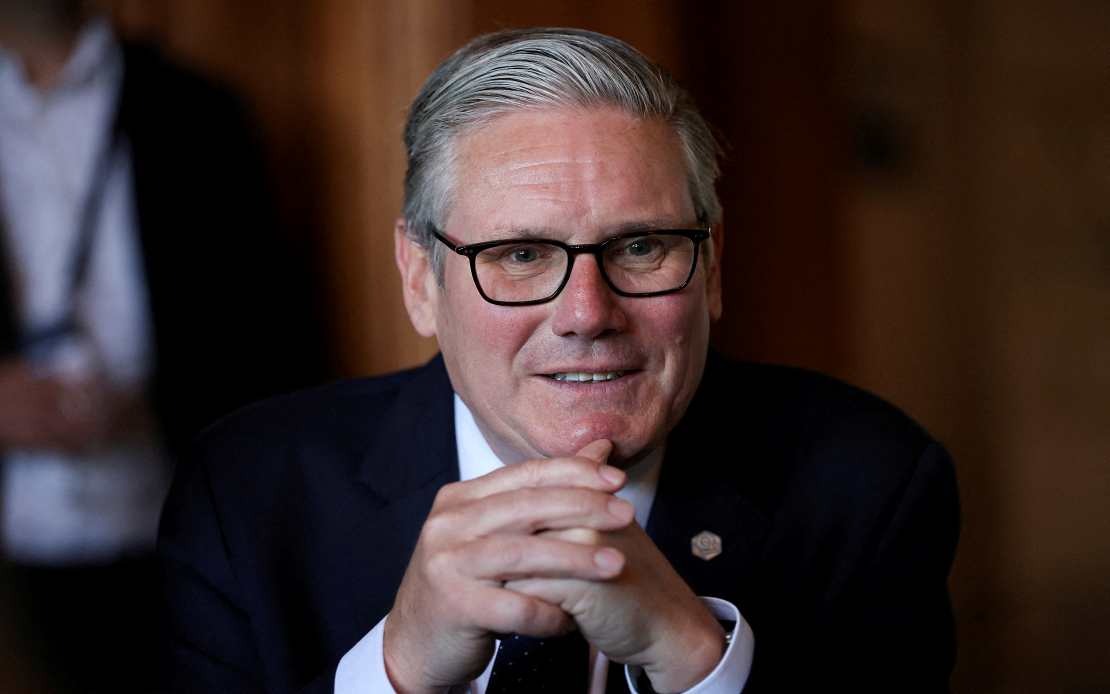
Andy Burnham, the former Manchester mayor widely expected to become the United Kingdom's next prime minister, has signalled a more assertive approach to the Israeli-Palestinian conflict by threatening to impose fresh sanctions on Israel. Burnham announced his candidacy for the Labour Party leadership on Thursday, positioning himself as the sole declared candidate at present. Should no rival candidates emerge, he could assume the office of prime minister as early as July 20, marking a significant transition in British political leadership.
Burnham's hardline stance on the Middle East represents a notable shift in emphasis for potential UK government policy. In a video message shared on X (formerly Twitter), he articulated concerns about Israel's ongoing military operations and settlement policies that he characterised as violations of international agreements. His commentary reflects growing pressure within the Labour Party and among British voters regarding the humanitarian situation in Gaza and the status of Palestinian territories, issues that have become increasingly prominent in UK political discourse.
The Manchester politician specifically cited three areas of concern: continued Israeli military operations undermining ceasefire arrangements in Gaza, a documented surge in settler violence across the West Bank and East Jerusalem, and the persistent expansion of Jewish settlements that he described as illegal and displacing Palestinian communities. These points align with international legal positions held by numerous countries and human rights organisations, though they remain contentious issues that pit Israeli security perspectives against Palestinian territorial claims and humanitarian considerations.
Burnham explicitly accused Israeli Prime Minister Benjamin Netanyahu of actions that weaken prospects for establishing an independent Palestinian state, a two-state solution that has been the cornerstone of international peace efforts for decades. This criticism carries particular weight as it suggests that any future British government under his leadership would align itself more closely with this internationally endorsed framework, potentially influencing diplomatic efforts within the European Union and beyond.
The prospective prime minister also called for accountability mechanisms to address what he termed war crimes committed during the recent Gaza conflict. This position resonates with findings from various international human rights bodies and United Nations investigations that have documented allegations of violations by both Israeli and Palestinian armed groups. His emphasis on justice and international law suggests that Britain might pursue more robust positions at international courts and forums should he take office.
In his video statement, Burnham pledged to collaborate with international partners to alleviate suffering in the region, ensure Israeli government compliance with international legal obligations, and maintain the viability of a two-state solution. This multilateral approach indicates recognition that British influence operates within a broader network of international stakeholders, including European allies and potentially Middle Eastern actors, whose combined pressure might prove more effective than unilateral action.
The United Kingdom has already implemented targeted sanctions against high-ranking Israeli officials, including National Security Minister Itamar Ben-Gvir and Finance Minister Bezalel Smotrich, as well as against individuals and organisations classified as radical settlers. These existing measures provide a foundation upon which additional sanctions could be built, suggesting that Burnham's threatened action would not occur in a vacuum but would extend Britain's existing policy framework.
Burnham's ascendancy to the Labour leadership carries implications for Malaysia and Southeast Asia's diplomatic relationships with the United Kingdom. As a major Commonwealth member and trading partner, Malaysia maintains close ties with Britain, and any shift in British foreign policy orientation could influence regional positions on Middle Eastern issues. Malaysia has historically been vocal in supporting Palestinian causes at international forums, and a more aligned British position could strengthen multilateral advocacy.
The timing of Burnham's statement coincides with broader international scrutiny of Middle Eastern conflicts and renewed emphasis on humanitarian law compliance. For Southeast Asian observers, his comments underscore how leading democratic nations are grappling with balancing security interests against accountability for civilian harm—issues that resonate with regional experiences of internal conflicts and international justice mechanisms.
Burnham's prospective leadership also signals potential continuity or evolution in Labour's approach compared to current Prime Minister Keir Starmer. While Starmer has maintained relatively measured positions on Israeli-Palestinian issues, Burnham appears prepared to adopt a more critical stance, potentially reflecting shifts within the party base and among younger voters increasingly concerned about Gaza's humanitarian situation.
The absence of challengers to Burnham's candidacy, at least at the announcement stage, suggests broad party consensus on the direction he represents. This unity could facilitate rapid implementation of his policy agenda should he assume office, though parliamentary dynamics and international diplomatic considerations may constrain the pace and scope of sanctions escalation.
For analysts tracking British foreign policy, Burnham's emergence as likely successor represents a potential inflection point in how the United Kingdom engages with Middle Eastern geopolitics. His explicit commitment to international law, humanitarian concerns, and the two-state framework positions Britain to potentially lead European diplomatic efforts on these issues, particularly if other major democracies show similar inclinations.
The question of whether Burnham's threatened sanctions would prove effective or merely symbolic remains open. Effectiveness depends on whether other nations and the European Union coordinate sanctions policies, creating sufficient economic pressure on Israeli decision-making. Without international coordination, British action alone may have limited impact, highlighting the continuing importance of multilateral approaches to complex international disputes.

