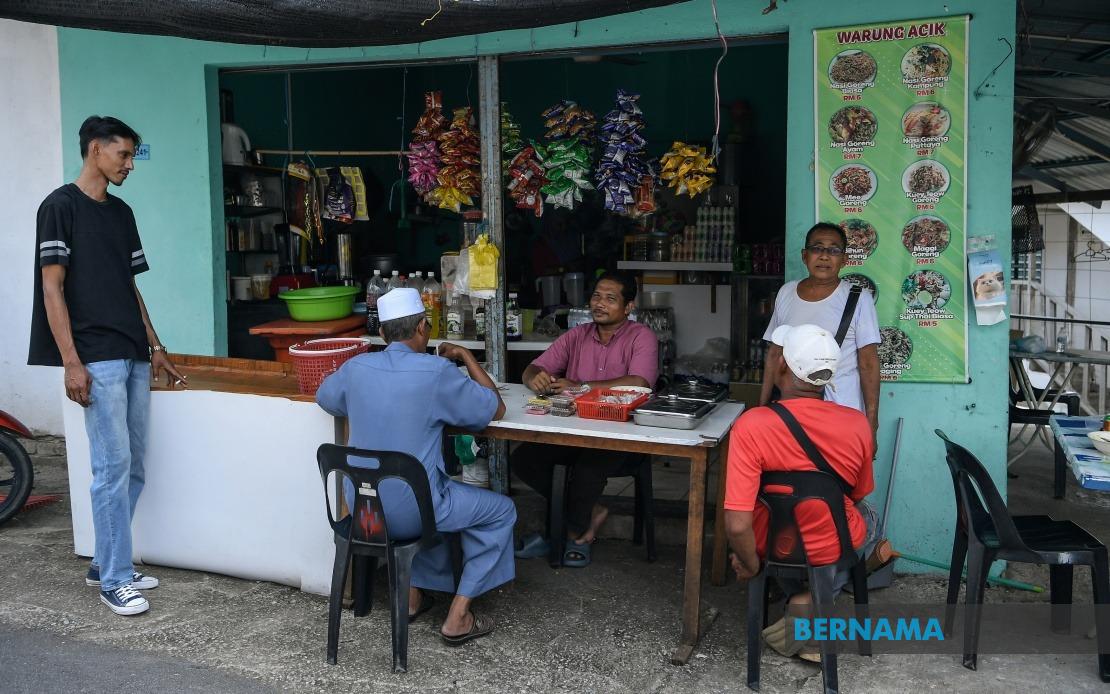
The waterfront neighbourhood of Bukit Malut in Langkawi is fighting an uphill battle against a reputation that residents say bears no connection to reality. Community leaders and long-time inhabitants are now speaking out openly to counter persistent claims that their settlement serves as a covert entry point for undocumented migrants fleeing Myanmar, a narrative they contend has created an unjust stigma that threatens their social standing and their children's futures.
Mohamad Fadzli Abdullah, chairman of the Bukit Malut Neighbourhood Watch, articulated the frustration of residents who say they have become convenient scapegoats whenever refugee-related news breaks in the island district. He explained that the community has endured repeated accusations without substantive evidence, with outsiders automatically assuming involvement whenever maritime arrivals of undocumented persons are reported. This pattern of blame, he argued, reflects a troubling tendency to leap to conclusions based on geography and rumour rather than facts.
The settlement's physical location actually undermines such allegations, according to community representatives. Bukit Malut sits in close proximity to multiple Malaysian enforcement installations, including the Maritime Enforcement Agency's operational base, the Royal Malaysian Customs Department's facilities, and the Royal Malaysian Navy's presence. This concentration of security apparatus makes clandestine smuggling operations extraordinarily difficult to execute undetected, they contend. The authorities' continuous monitoring would make the area an illogical choice for illegal landings, suggesting that the allegations stem from misunderstanding rather than any actual evidence of wrongdoing.
Community safety and accessibility remain other points of contention. Residents firmly deny that Bukit Malut is either restricted or dangerous, emphasizing that the public can enter freely and that security conditions are actively managed by authorities. The narrative of a closed-off, dangerous neighbourhood exists primarily in social media discourse rather than in lived experience, they argue. This disconnect between perception and reality reflects how misinformation circulates unchecked in digital spaces, often without anyone troubling to verify claims or visit the location themselves.
The demographic composition of Bukit Malut tells a different story from the one circulated online. Approximately 85 percent of residents work in fishing—an occupation deeply rooted in Malaysia's maritime heritage—while the remainder pursue varied livelihoods including small-scale trading, vehicle rental operations, civil service positions, and professional employment across multiple sectors. This economic diversity suggests an established, integrated community rather than a transient settlement of undocumented persons. The presence of uniformed service members and government employees further indicates deep institutional connections to Malaysian society.
Hasanah Zakaria, a 42-year-old resident with more than two decades of residence in the community, issued a direct invitation to skeptics: visit Bukit Malut and observe conditions firsthand rather than accepting unverified social media allegations. She described the neighbourhood as functionally identical to any other Malaysian village, noting the absence of the elevated crime rates or serious security incidents one might expect if the alleged activities were actually occurring. Her experience over 20 years provides ground-level perspective on the actual nature of daily life in the settlement, contrasting sharply with the alarming narratives that circulate among those who have never actually been there.
The stigma carries concrete repercussions that extend into the next generation. Hasanah disclosed that her child, currently attending a boarding school elsewhere in Langkawi, has faced the spillover effects of the neighbourhood's tainted reputation. She must actively encourage her child to disregard the allegations and maintain focus on education—an additional emotional burden that reflects how community-level stigma permeates family relationships and educational experiences. This intergenerational impact suggests that the reputational damage extends far beyond adult social standing into formative years of young people's development.
Abas Salam, 62, represents the founding generation of Bukit Malut settlers, having lived in the area for over three decades since its early days. He directly confronted a specific accusation that has apparently taken root: that residents are ethnic Rohingya rather than Malaysian citizens. He identified himself unambiguously as Kedah Malay-Muslim and a legitimate Malaysian citizen, explicitly rejecting the ethnic mischaracterization that appears to underpin some of the stigma. His three decades of residence provide historical perspective on the community's actual composition and development trajectory, contradicting notions that large numbers of foreign nationals suddenly materialized in recent years.
The founders' experience carries particular relevance given Malaysia's immigration sensitivities and regional refugee crises. Abas recounted how the original settlers constructed homes, mosques, and religious schools through their own labour and resources, demonstrating the deep institutional roots and self-directed development of the community. This narrative of self-reliant community building stands in stark contrast to depictions of an area dependent on or organized around illegal migration activities. The physical infrastructure of religious and educational institutions reflects commitment to permanence and integration into Malaysian social fabric.
The broader context involves Malaysia's navigation of complex refugee and immigration pressures stemming from Myanmar's internal conflicts and the broader Rohingya humanitarian crisis. Langkawi, as a maritime entry point, legitimately experiences refugee arrivals, and authorities must balance humanitarian obligations with security concerns. However, this legitimate policy challenge has apparently created an environment where coastal communities become subject to suspicion. Bukit Malut residents argue they have become collateral damage in this broader narrative, bearing reputational costs for challenges that extend well beyond their community.
The residents' push-back against the stigma reflects broader Malaysian concerns about how misinformation spreads through social media and becomes calcified into accepted narrative, despite lacking evidentiary support. The persistence of allegations against Bukit Malut despite its location adjacent to multiple enforcement agencies suggests that factual refutation alone may not suffice to counter entrenched perceptions. Community leaders appear to recognize that rebuilding reputation requires sustained public engagement and perhaps media intervention to provide accurate counternarrative to the versions circulating online.
For Langkawi's broader development and social cohesion, the resolution of such stigmatization matters significantly. If marginal communities become isolated through reputational damage rather than actual wrongdoing, social fragmentation and distrust intensify. The residents of Bukit Malut's appeals for fair treatment and for the public to distinguish between rumour and reality reflect a larger democratic imperative to base public discourse on verifiable fact rather than unsubstantiated allegation, particularly when such allegations carry potential consequences for vulnerable communities.

