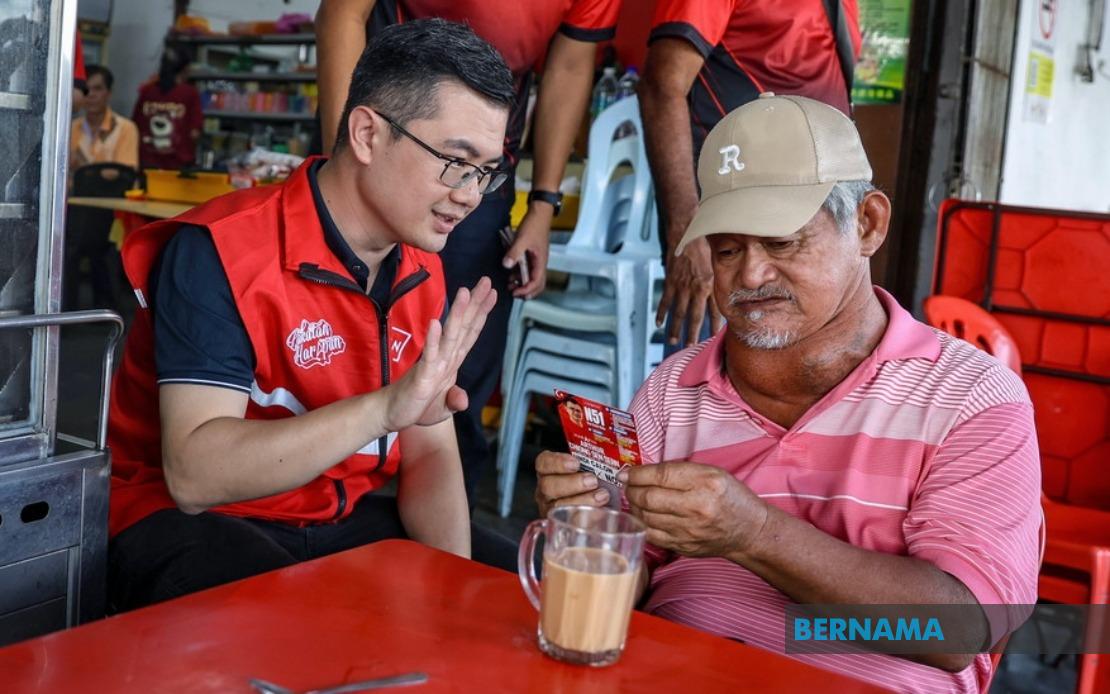
Arthur Chiong Sen Sern, the Pakatan Harapan contender in the Bukit Batu state constituency race, has expressed dismay at what he characterises as deliberate acts of vandalism targeting his campaign infrastructure. The incidents, which occurred in residential areas of Johor, represent a troubling trend of physical disruption during the state election campaign period, raising questions about electoral conduct standards in the state.
The destruction has taken multiple forms across different neighbourhoods. In Kampung Sri Paya, party flags belonging to Chiong's campaign were thrown into drainage systems, while several prominent campaign billboards were torn down or defaced. Separately, similar incidents unfolded in Taman Putri, where additional signage and flags associated with his campaign were sabotaged. These coordinated-seeming attacks suggest a pattern rather than isolated incidents of vandalism, though the identity of those responsible remains unclear at this stage.
Responding to these developments, Chiong initiated formal action by lodging a police report at the Air Bemban police station. This step opens an official investigation channel through which law enforcement can gather evidence, identify perpetrators, and potentially establish whether these acts form part of a broader campaign of intimidation. The formal documentation is crucial in creating an official record that may inform electoral observers and authorities monitoring campaign conduct standards throughout the Johor election process.
Despite the provocation and disruption, Chiong maintained a measured public stance, emphasising that such incidents would not deter his campaign efforts in defending the Bukit Batu seat. His resilience reflects a strategic decision to focus public messaging on his positive campaign agenda rather than allowing sabotage attempts to dominate the narrative. This approach mirrors how established political candidates typically navigate electoral disruptions, treating them as background noise rather than central campaign issues.
Chiong's public appeal for elevated standards of electoral conduct addresses a broader concern about the tone and tactics employed during the campaign season. His call for all political participants to practise mature politics and campaign in a harmonious manner, free from hostility or underhanded tactics, reflects frustration with what appears to be normalising destructive behaviour. In a competitive five-way contest, such appeals to civility carry particular weight, as they implicitly challenge the assumption that escalating provocations represent acceptable campaign strategy.
The Bukit Batu contest represents one of the more crowded races in the Johor election, featuring Arthur Chiong for PKR-backed Pakatan Harapan, R. Kumaran representing Barisan Nasional through the Malaysian Indian Congress, M. Premanand standing as the MUDA candidate, G. Tamili contesting for Bersama, and Kamaruzaman Ali competing as an independent. This five-way split creates multiple pressure points and competing campaign dynamics that may contribute to the intensity of electoral activities on the ground.
The broader Johor state election landscape encompasses 56 state assembly constituencies across the entire state, with polling day scheduled for July 11. A total of 172 candidates are contesting these seats, representing various coalitions and independent candidacies. The scale of the electoral exercise underscores the complexity of managing campaigns across diverse communities and the challenge of maintaining standards when large numbers of candidates are simultaneously conducting ground-level political activities.
Early voting is scheduled for July 7, providing an opportunity for voters with mobility constraints or schedule conflicts to participate in the democratic process before the main polling day. This staggered voting arrangement is becoming increasingly standard in Malaysian state and federal elections, accommodating working voters and those with prior commitments while maintaining the integrity of the electoral process through robust security and verification procedures.
The incidents involving Chiong's campaign materials gain added significance within the context of increasingly competitive Malaysian electoral politics. While campaign disruptions occur periodically, the reported pattern in Bukit Batu highlights how resource disparities and differing commitment levels among candidates can translate into ground-level tensions. The involvement of multiple candidates in a single constituency creates competition not only for voter attention but also for physical campaign space, sometimes generating friction when candidates or supporters perceive that others are monopolising public areas or engaging in unfair advantages.
Electoral observers monitoring the Johor polls will likely pay attention to whether such incidents proliferate across other constituencies or remain localised to Bukit Batu. The pattern and frequency of campaign sabotage can serve as an indicator of the overall health of electoral competition and the extent to which candidates and their supporters respect established conventions around fair campaign conduct. Repeated incidents across multiple constituencies would suggest systemic issues requiring attention from election management authorities.
For Malaysian voters assessing the fitness of candidates for office, such incidents invite reflection on the calibre and character of those seeking elected positions. Chiong's public handling of the sabotage attempts—choosing to respond through formal channels while maintaining campaign momentum—provides one data point for voters evaluating his suitability for the representative role. The broader question of whether candidates deploy resources to address such provocation constructively or whether they escalate tensions through counter-attacks weighs on voter perceptions of candidates' judgment and temperament.
The timing of these incidents during the campaign period also raises practical questions about campaign logistics and security. Candidates operating in competitive races must balance the need for visible campaign infrastructure to reach voters against the vulnerability of such materials to vandalism. The concentration of incidents in specific residential areas may indicate either particular intensity of competition in those neighbourhoods or specific vulnerability of campaign materials to damage in those locations, warranting targeted security measures by campaign teams.

