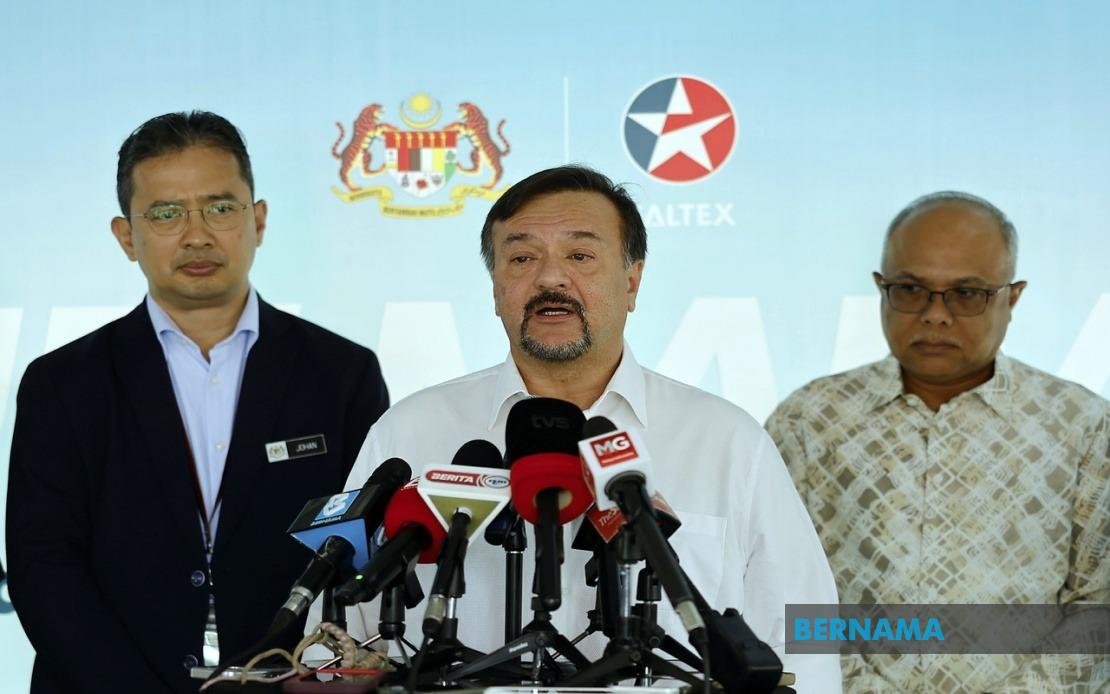
The Ministry of Finance has formally commenced a nationwide consultation drive to develop the 2027 Budget ahead of its scheduled presentation to Parliament this October, Finance Minister II Datuk Seri Amir Hamzah Azizan announced on Tuesday. Speaking in Putrajaya after reviewing the BUDI Diesel programme, Amir Hamzah highlighted that these engagement sessions represent a comprehensive effort to solicit feedback from various government departments and locations throughout the country, ensuring the forthcoming budget reflects input from across the nation's administrative machinery.
The consultation framework demonstrates the government's methodical approach to budget formulation, moving beyond internal ministry deliberations to incorporate perspectives from multiple stakeholders within the federal bureaucracy. By conducting these sessions nationwide rather than centralising the process, the government signals its intention to ground the budget in ground-level realities and departmental priorities. This decentralised engagement model allows individual ministries to articulate their spending requirements and policy objectives directly to budget architects, creating a two-way dialogue that can better inform fiscal allocation decisions.
Central to the 2027 Budget's guiding philosophy remains the MADANI Economy framework, which the finance minister emphasised will continue directing the government's fiscal priorities. This framework operates on a dual-track principle: simultaneously elevating the economy's upper echelon by enhancing competitiveness and innovation while strengthening the base through expanded opportunity and targeted support programmes. This approach reflects a deliberate policy choice to pursue inclusive growth that benefits both high-performing sectors and economically vulnerable populations, avoiding the trap of trickle-down assumptions that leave lower-income segments behind.
The minister's articulation of raising both ceiling and floor carries particular significance for Malaysia's development trajectory. The ceiling-raising agenda encompasses support for high-technology manufacturing, digital transformation, and export-oriented sectors that position Malaysia competitively within regional and global value chains. Simultaneously, the floor-strengthening component addresses affordability, skills development, and economic participation for lower-income households, recognising that sustained growth requires broad-based purchasing power and human capital investment. This dual emphasis distinguishes the current administration's fiscal philosophy from narrower approaches that concentrate benefits among already-advantaged segments.
Several recently announced strategic frameworks will inform the budget's shape and substance. The 13th Malaysia Plan, which outlines the nation's development blueprint through 2030, provides the overarching strategic context. The National Semiconductor Strategy responds to Malaysia's ambition to strengthen its position within global semiconductor value chains, an increasingly critical sector for advanced economies. The National Energy Transition Roadmap, meanwhile, reflects Malaysia's commitment to meeting climate obligations while managing the economic transition away from fossil fuel dependence. These three frameworks collectively establish policy guardrails within which budget priorities must operate.
Amir Hamzah deliberately refrained from previewing specific allocations or policy emphases within the forthcoming budget, noting that detailed announcements would come during the official October presentation. However, his confirmation that the government's structural approach remains anchored in established frameworks provides clarity regarding the budget's general direction. This consistency offers predictability to stakeholders planning investments and policy responses, though it also signals continuity rather than dramatic policy reorientation.
The government's stated commitment to achieving developed-nation status by 2030 provides the ultimate framing for budget priorities. This aspiration—often referenced as Vision 2030 within policy circles—encompasses income, infrastructure, institutional, and human development dimensions. Fiscal policy must therefore serve this multi-dimensional objective, allocating resources not merely to immediate expenditure requirements but to long-term capability building. The 2027 Budget, as the penultimate pre-2030 budget, assumes particular significance in demonstrating concrete progress toward this target.
Context from the previous fiscal year illuminates the scale of Malaysia's budget operations. Budget 2026 totalled RM419.2 billion, divided between RM338.2 billion in recurrent operating expenditure and RM81 billion in development investment. Beyond these conventional budget allocations, the government mobilised an additional RM50.8 billion through government-linked investment companies, federal statutory bodies, and public-private partnerships. This tri-channel financing approach—budgetary allocations plus quasi-governmental and partnership financing—represents the complete scope of government fiscal stimulus, a nuance often overlooked in public discourse focused solely on the headline budget figure.
The RM50.8 billion in alternative financing mechanisms deserves particular attention for Malaysian policy observers. This channel allows the government to pursue development objectives without fully populating the main budget, effectively expanding fiscal capacity while managing deficit metrics. Government-linked companies can borrow against future revenue streams; statutory bodies hold their own financing authority; public-private partnerships distribute investment obligations across public and private sectors. Collectively, these mechanisms provide policy flexibility, though they also complicate transparency regarding actual government financial commitments and obligations.
The nationwide engagement approach also reflects political considerations within Malaysia's federal system. With substantial governance responsibilities vested in state governments and federal territories maintaining distinct interests, ensuring ministry-level buy-in becomes crucial for budget implementation effectiveness. When ministries participate in budget development rather than receiving allocations unilaterally, implementation fidelity typically improves. Furthermore, this collaborative process surfaces spending constraints and opportunities that centralised analysis might miss, ultimately producing more effective resource distribution.
For businesses and investors monitoring Malaysia's fiscal direction, the emphasis on consultation and framework consistency offers reassurance regarding predictability. The MADANI Economy framework has now sufficiently matured that market participants can factor its principles into strategic planning. However, the refusal to preview specific policies maintains necessary suspense around detailed allocations, preventing early-mover advantages that could distort market dynamics or create unsustainable speculation in particular sectors.
The October presentation timeline means budget development must accelerate through August and September, compressing the typical deliberation period. This compressed schedule places premium value on the current engagement sessions, as they represent the primary opportunity to surface issues requiring high-level arbitration before formal budget closure. By launching these sessions in early July, the Finance Ministry ensures adequate processing time for input received, though participation quality ultimately depends on agency preparedness and engagement seriousness.
Malaysia's budget consultation process exemplifies how modern fiscal governance balances technical efficiency with political stakeholder management. The engagement sessions serve not merely informational purposes but legitimise the eventual budget by demonstrating that diverse institutional perspectives contributed to its formulation. As regional observers consider Malaysia's governance approaches, the deliberate, consultative model evident in Budget 2027 preparation contrasts with more opaque or centralised alternatives, potentially enhancing both budget effectiveness and public confidence in fiscal stewardship.

