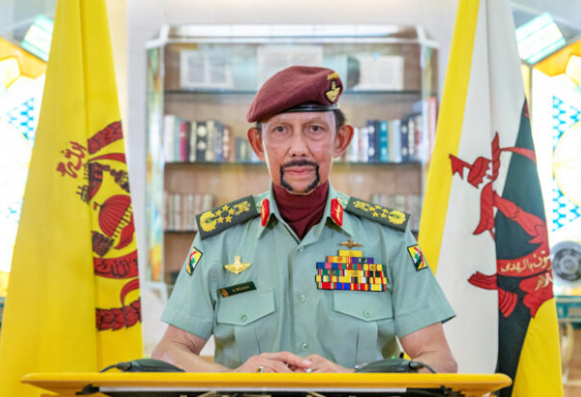
Brunei's Sultan Hassanal Bolkiah has used the occasion of the Islamic New Year 1448 Hijrah to deliver a message centring on national unity, continuous self-improvement and the need for vigilance against rising crime. In his address, the Sultan framed the turning of the calendar year not merely as a symbolic moment but as a crucial opportunity for individuals and institutions to recommit themselves to their obligations both in worldly affairs and spiritual development. This dual emphasis reflects a governing philosophy that views material progress and religious observance as inseparable pillars of a functioning society.
The Sultan's remarks underscore that genuine advancement—whether economic, infrastructural or social—demands sustained effort rather than sporadic bursts of activity. He cautioned against the notion that new year celebrations should mark the beginning of meaningful work, suggesting instead that people should view this period as a time to strengthen resolve already in place. This distinction carries practical weight: it implies that long-term planning and consistent execution matter more than motivational speeches timed to calendar events. For Malaysia's business and policy communities watching Brunei's governance approach, the message serves as a reminder that institutional discipline and continuity drive outcomes.
Acknowledging the turbulent global landscape, the Sultan observed that conflict and war have become endemic features of international relations, creating widespread suffering that respects no boundaries. He did not elaborate extensively on geopolitical specifics, but his reference to global instability forms the backdrop against which he positioned Brunei's domestic achievements. The nation's freedom from both armed conflict and natural disasters represents, in his estimation, a blessing earned through collective spiritual devotion—a framing that emphasises the role of faith-based practices in underpinning social stability.
Yet beneath this expression of gratitude lies an implicit concern: that stability cannot be taken for granted. The Sultan pivoted sharply to address what he identified as an emerging threat to the nation's wellbeing and international standing. Crime—particularly drug-related offences and theft—has begun to erode social cohesion and damage Brunei's reputation. By highlighting this issue during a major national occasion, the Sultan signalled that law enforcement remains an urgent priority requiring coordinated action across multiple government sectors.
The religious dimension of the Sultan's crime prevention strategy warrants particular attention. Rather than positioning law enforcement purely as a technical or administrative matter, he framed it as fundamentally a religious concern. Drugs and crime violate Islamic principles, and therefore combating them constitutes a form of worship and communal obligation. This theological framing has practical consequences: it enlists religious scholars, mosque leaders and faith-based organisations as partners in crime prevention, transforming the fight against criminality into a spiritual endeavour rather than merely a state function.
The Sultan specifically called upon religious institutions and agencies responsible for Islamic education to intensify their efforts in raising societal awareness about the incompatibility of drug use and criminality with Islamic teaching. This represents a shift in emphasis from purely punitive responses toward preventive education. By strengthening dakwah—religious outreach and teaching—authorities aim to build intrinsic cultural resistance to criminal behaviour rather than relying solely on deterrence through punishment. For policymakers across Southeast Asia grappling with drug trafficking and addiction, Brunei's approach offers a model of how religious infrastructure can complement law enforcement.
Centrally important to the Sultan's message is the concept of shared responsibility. He did not present crime prevention as the exclusive domain of government agencies but characterised it as a collective duty binding all citizens and residents. This invocation of communal obligation attempts to mobilise society at large as partners in safeguarding the nation. The Sultan encouraged continuous vigilance, warning against complacency or negligence. Such language suggests concern that initial successes in crime prevention might breed overconfidence, leading to relaxed guard.
The Sultan's appeal to prayer and divine protection reflects Islamic theological understanding but also serves a social function. By framing safety and security as blessings contingent upon spiritual devotion, he motivates adherence to religious practices while simultaneously reinforcing the idea that collective welfare depends on individual piety. This integration of spiritual practice with national welfare offers an alternative to purely secular approaches to governance, though its effectiveness remains empirically debatable.
For Malaysia and other ASEAN nations, Brunei's leadership response carries several implications. The small sultanate's focus on strengthening religious education as a counterweight to crime demonstrates how Islamic institutions can be leveraged as agents of social stability. Additionally, the Sultan's explicit acknowledgment that material progress and spiritual development must advance together challenges the sometimes dichotomous thinking that positions economic growth and religious observance as competing priorities. The message also reflects growing recognition across the region that transnational criminal networks—particularly drug trafficking operations—require responses beyond traditional law enforcement, necessitating cultural and educational interventions.
The Sultan's remarks, delivered during a significant religious calendar moment, also function as a broader statement about governance philosophy. By connecting Islamic New Year celebrations to practical governance concerns, he demonstrated how religious traditions can serve as vehicles for articulating and reinforcing national priorities. The approach suggests that appeals to shared faith may strengthen public compliance with government initiatives in predominantly Muslim societies.
As Brunei marks 1448 Hijrah, the Sultan's emphasis on both gratitude for existing stability and concern about emerging threats reveals a nation attempting to consolidate gains while remaining attentive to new challenges. The call for unity, vigilance and sustained commitment reflects not complacency but an acknowledgment that social order requires constant attention and collective investment. For the sultanate and its neighbours, this message reinforces that progress—material and spiritual—demands the best efforts of institutions and citizens alike.