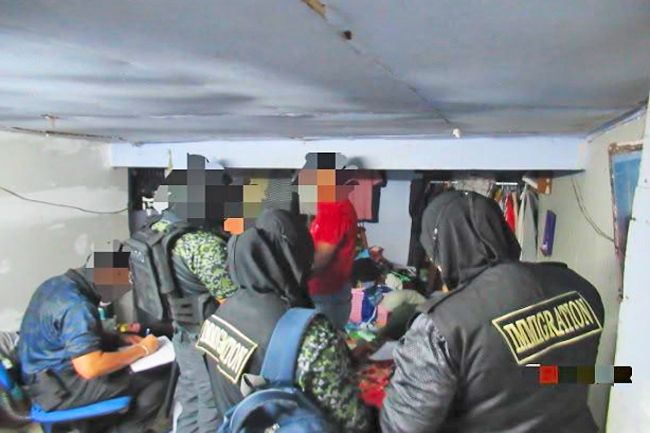
Brunei's immigration authorities have launched a series of targeted enforcement sweeps across the country, resulting in the detention of numerous foreign nationals suspected of violating the nation's immigration regulations. The Immigration and National Registration Department (INRD), operating under the Ministry of Home Affairs, is implementing 'Operasi Kakas 2026', a coordinated initiative designed to systematically address compliance failures and immigration offences throughout the sultanate. The operations reflect an escalating commitment to tightening border and residency controls in a region where labour mobility and irregular migration remain persistent policy concerns.
The most significant action occurred during 'Operasi Kakas 86/2026' at a market locale in Mukim Sengkurong, where enforcement personnel screened 13 foreign nationals. Seven individuals were apprehended and transferred to the Law Enforcement Division for formal investigation after authorities determined they had been engaging in employment while holding only visitor documentation. This violation falls under Regulation 9(4) of the Immigration Regulations, Chapter 17, and represents one of Brunei's most commonly prosecuted offences among migrant workers. The scale of detentions at a single commercial location underscores how widespread such violations may have become within Brunei's informal economy.
A parallel operation designated 'Operasi Kakas 87/2026' focused on residential rental properties in Mukim Berakas 'A', examining three foreign nationals residing in rented accommodation. Two were detained following preliminary findings that they too had violated employment restrictions by working whilst classified as visitors. The targeting of residential areas suggests authorities are widening their investigative net beyond obvious commercial settings, recognising that many irregular workers operate from private addresses or engage in informal economic activities not easily detected through conventional workplace inspections.
The third major operation, 'Operasi Kakas 88/2026', revealed more serious documentation failures when enforcement officers inspected eight foreign nationals at another rented residence within Mukim Berakas 'A'. Six were detained after failing to present original immigration documents to officers, a fundamental procedural requirement. Subsequent investigation uncovered that five of these individuals faced multiple infractions: overstaying their valid immigration passes following expiration, in breach of Section 15(1) of the Immigration Act, Chapter 17, and simultaneously working for employers other than those originally authorised, violating Regulation 15(2) of the Immigration Regulations. These compounded violations suggest a pattern of prolonged irregular status rather than isolated infractions, indicating individuals may have deliberately circumvented immigration protocols over extended periods.
The implications of these overlapping offences merit scrutiny. Workers who overstay whilst changing employers without authorisation demonstrate conscious evasion of regulations, creating vulnerabilities that potentially expose them to exploitation by unscrupulous employers and complicating Brunei's ability to monitor its foreign labour force. From a policy perspective, such patterns indicate that single-point enforcement interventions may prove insufficient; sustained monitoring and employer accountability mechanisms deserve greater attention to prevent recidivism.
A fourth operation, 'Operasi Kakas 89/2026', conducted at a separate rented property in Mukim Berakas 'B', yielded a different outcome. All four foreign nationals inspected possessed valid documentation and current immigration passes, demonstrating that targeted enforcement operations do occasionally encounter compliant individuals. This variation underscores the heterogeneity within Brunei's migrant population and suggests that whilst some foreign residents maintain proper legal standing, substantial segments remain in violation.
The geographic concentration of these operations within Mukim Berakas and surrounding areas, combined with the targeting of market and residential zones, reflects enforcement strategy prioritising densely populated districts where migrant communities cluster. This approach maximises detection probability whilst deploying limited resources efficiently. However, the reliance on periodic sweeps rather than continuous monitoring may allow violators to resume irregular activities between operations, prompting questions about the deterrent effect and sustainability of such initiatives.
For Malaysia and the broader Southeast Asian region, Brunei's enforcement intensity carries instructive lessons. As a smaller sultanate with comparatively manageable migration volumes, Brunei's capacity to conduct sustained, coordinated operations across multiple districts offers a model that larger nations with more complex migration landscapes might adapt. Conversely, Brunei's experiences also illuminate structural challenges: the persistence of workplace violations despite active enforcement suggests that labour-demanding sectors—construction, hospitality, domestic work—continue attracting undocumented or visa-violating workers, often because regulatory burdens on employers or wage differentials make irregular employment economically rational for both parties.
The INRD's public emphasis on compliance and the systematic naming of distinct operations indicate an institutional commitment to transparency and accountability in enforcement activities. By documenting and publicising specific operations with consistent nomenclature, authorities create an audit trail and demonstrate governmental responsiveness to immigration concerns. This transparency may also serve a deterrent function, signalling to potential violators and complicit employers that authorities maintain active surveillance capacity.
Looking ahead, the sustainability of 'Operasi Kakas 2026' depends partly on whether detention and investigation translate into meaningful prosecutions and penalties. If enforcement actions result merely in brief detentions followed by administrative deportation without creating lasting deterrents or addressing root causes—such as employer demand for low-wage labour unencumbered by regulatory compliance—the cycle of violation will likely persist. Addressing the supply side of irregular migration through enhanced employer accountability, workplace inspections targeting hiring practices, and clearer communication of penalties may prove as important as reactive enforcement sweeps.

