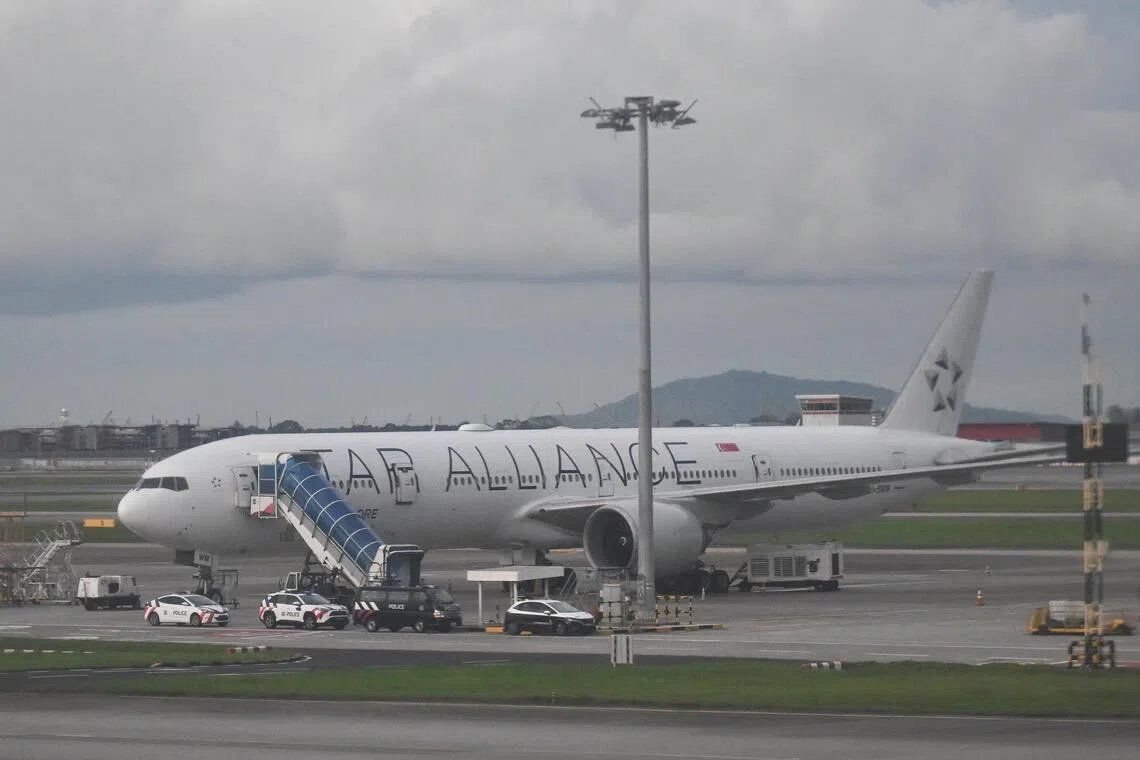
Linda Kitchen, a 74-year-old British woman, has launched legal proceedings against Singapore Airlines at Britain's High Court following the death of her husband during a catastrophic turbulence event aboard Flight SQ321 in May 2024. The lawsuit seeks financial compensation to support her recovery from severe spinal injuries sustained during the incident, which claimed her husband's life and injured dozens of other passengers and crew members.
Geoffrey Kitchen, a theatre director with whom Linda had shared 52 years of marriage, suffered a fatal heart attack when the aircraft encountered extreme turbulence while travelling from London to Singapore. The couple had embarked on what was intended to be a six-week holiday across Southeast Asia and Australia when the tragedy unfolded. The incident has transformed what should have been a cherished travel experience into a trauma with lasting physical and emotional consequences for Linda and her family.
On 21 May 2024, Flight SQ321 descended approximately 54 metres in just five seconds while cruising over Myanmar airspace. The sudden drop occurred without warning during the aircraft's breakfast service, causing severe disruption throughout the cabin. Passengers and crew members were thrown about violently, with loose items becoming dangerous projectiles. During this chaos, Geoffrey Kitchen fell on top of his wife, crushing her against the seat's armrest with force that fractured her spine. Other passengers subsequently assisted in moving him, and a physician travelling on the flight began emergency cardiopulmonary resuscitation efforts, though these proved unsuccessful.
The aircraft, carrying 211 passengers and 18 crew members, was immediately diverted to Suvarnabhumi Airport in Bangkok for an emergency landing. The incident left 79 people with injuries of varying severity. Linda was hospitalised in Thailand for ten days before being airlifted back to Bristol, where she received a further week of hospital treatment. The emotional devastation compounded her physical suffering when she learned of her husband's death two days after the emergency landing. "When I got separated from Geoff, I knew he was in a bad way, but nothing prepared me for hearing he had died. It was absolutely devastating," she recounted to British media outlets including The Independent.
Following her discharge from hospital, Linda required substantial assistance at home to manage her recovery from spinal injuries that have created long-term mobility and health challenges. Her legal representative, Anthe Korelidou, a specialist aviation lawyer, emphasises that the family continues to seek comprehensive investigation into what occurred and whether preventive measures could have mitigated the injuries. Korelidou stated that the High Court proceedings represent a significant step towards obtaining thorough answers about the incident and ensuring the family receives the accountability they deserve.
The court papers filed in Britain contain dual claims submitted on behalf of Linda Kitchen—one addressing her personal injuries and another representing Geoffrey Kitchen's estate. Beyond the Kitchen family, British court records indicate that six other passengers have similarly initiated legal action against Singapore Airlines. These include Bradley Richards, Jack Jenkins, Hannah Fullerton, Andrew Dawood, Bryan Matthews, and the couple Pauline and Michael Rainey. The scale of litigation underscores the serious nature of injuries sustained and the multiple parties seeking redress.
Singapore Airlines responded to inquiries from The Straits Times on 29 August, declining to comment on matters currently before the courts, citing ongoing legal proceedings. However, the airline had previously issued compensation offers to affected passengers in 2024. Those with minor injuries received offers of US$10,000, whilst passengers who sustained serious injuries requiring long-term medical treatment received advance payments of US$25,000. The airline additionally committed to providing complete refunds of airfares for all passengers aboard the flight and issued a formal apology acknowledging the traumatic experience of those affected.
An official investigation by Singapore's Transport Safety Investigation Bureau revealed that storm clouds responsible for the severe turbulence were not detected by the aircraft's onboard weather radar system, effectively surprising the captain. The weather radar failure to identify the hazardous conditions raises important questions about aviation safety protocols and equipment reliability. However, the TSIB—operating under Singapore's Ministry of Transport—concluded that it remains unclear whether the radar system itself suffered technical malfunction or whether the atmospheric conditions exceeded the system's detection capabilities. This inconclusive finding has prompted further scrutiny of whether additional safety measures or enhanced radar technology might have prevented the incident.
The case carries significant implications for aviation safety standards across Southeast Asia and beyond. It highlights the unpredictable nature of severe clear-air turbulence and the limitations of current detection systems, matters of particular concern given the region's tropical climate and weather patterns. For Malaysian and regional passengers, the litigation serves as a reminder of airlines' duty of care and the importance of robust safety protocols and equipment maintenance. The outcome may influence how carriers across the region approach weather radar technology upgrades and emergency response procedures.
Linda Kitchen's pursuit of justice extends beyond financial compensation; her family seeks transparency and assurance that comprehensive measures will prevent similar tragedies. The legal action represents not merely a compensation claim but a broader call for accountability and improved safety standards within commercial aviation. As the case progresses through Britain's legal system, it will likely establish important precedents regarding airline liability for turbulence-related incidents and the adequacy of current safety infrastructure. For the aviation industry and passengers throughout Asia, this case underscores the necessity of continuous improvement in weather detection, safety protocols, and passenger protection measures.

