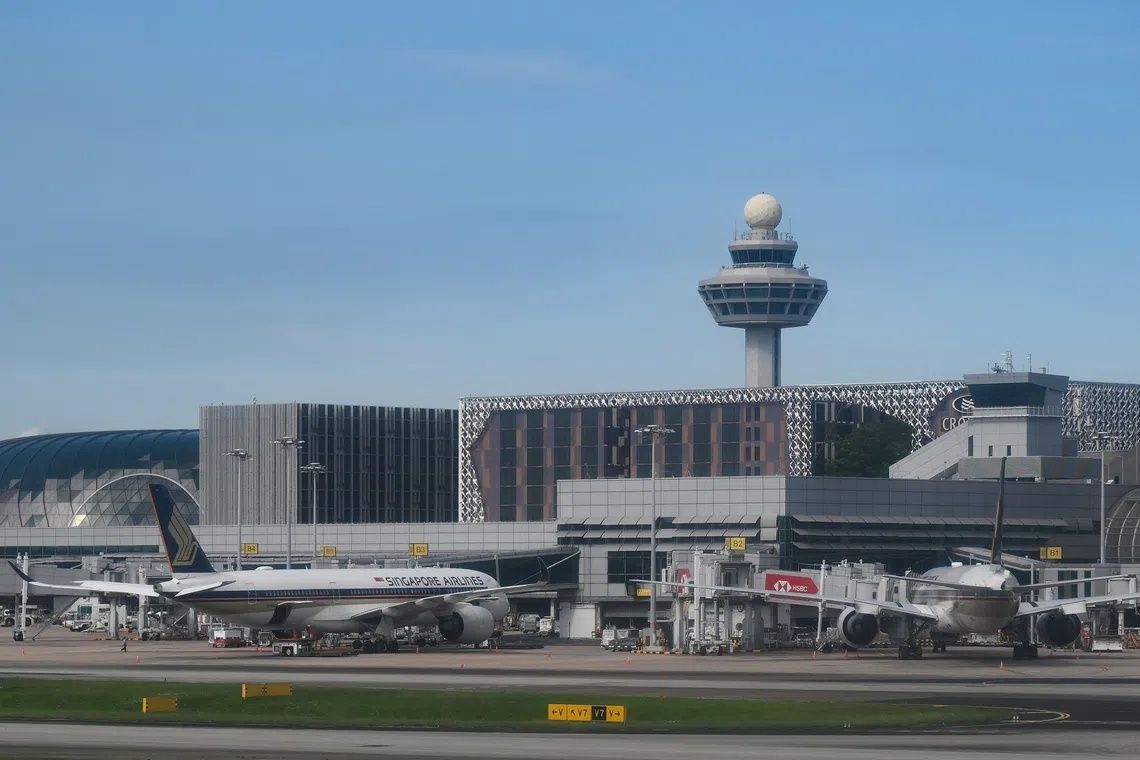
A British national aged 25 is set to face trial in Singapore following an incident at Changi Airport's Terminal 1 that disrupted flight operations and left an airline employee injured. The man, who authorities believe was intoxicated at the time, triggered a chain of events on July 20 that ultimately delayed a departure to Kuala Lumpur by 45 minutes. Police received a report around 4.05pm that afternoon regarding a disruptive passenger at one of the terminal's boarding gates, leading to an investigation that has now culminated in formal charges being filed.
According to the Singapore Police Force statement released on Tuesday, August 11, the incident began when the man engaged in loud and aggressive behaviour at the boarding gate, creating a disturbance that affected other travellers waiting for their flight. His conduct drew the attention of airline personnel, who approached him in an attempt to address the situation. Rather than cooperating with their intervention, he responded with hostility, directing vulgar language toward one of the staff members who had approached him. The airline subsequently made the decision to remove him from the flight roster due to his intoxicated state and disruptive conduct.
What transformed the situation from a troublesome passenger incident into a criminal matter was the man's reaction to being informed of the airline's decision to offload him. Upon learning that he would not be permitted to board the aircraft, he became increasingly aggressive and forcibly pushed past the airline personnel in an attempt to reach the aircraft anyway. In doing so, he breached security protocols by entering a restricted area of the airport without authorisation. During this aggressive manoeuvre, one female staff member fell to the ground and sustained injuries to her left arm and wrist, marking an escalation from mere verbal disruption to physical harm.
The incident continued to deteriorate as the man persisted in his aggressive demeanour, directing abusive language and vulgarities at airport security personnel who were attempting to manage the situation. This sustained disruptive behaviour, combined with his physical actions and refusal to comply with airport regulations, resulted in a substantial operational impact—the aircraft experienced a 45-minute departure delay as a consequence of the disturbance. For a major international hub like Changi Airport, which handles thousands of passengers daily, such delays create cascading consequences affecting connecting flights, crew schedules, and passenger connections across regional routes.
The charges the man is expected to face reflect the various categories of misconduct demonstrated throughout the incident. He will be prosecuted for causing annoyance while intoxicated in a public place, a charge that recognises both his state of intoxication and the disturbance caused to other airport users. A second charge concerns his use of threatening, abusive, or insulting words and behaviour directed at airport staff. The most serious charge relates to his unauthorised entry into a protected area of the airport, a matter that carries significant weight given heightened security concerns at international aviation hubs following global security developments.
The potential penalties underscore Singapore's stringent approach to airport security and passenger conduct violations. If convicted of causing annoyance while intoxicated, he faces a maximum fine of S$1,000, imprisonment of up to six months, or a combination of both sanctions. The charge relating to abusive language carries a maximum fine of S$5,000. However, the unauthorised entry charge carries the heaviest potential sentence—up to two years imprisonment, a fine reaching S$20,000, or both. This graduated penalty structure reflects the authorities' assessment that breach of airport security protocols represents a more serious transgression than the verbal misconduct that preceded it.
The incident carries particular significance for Southeast Asia's aviation sector, where maintaining strict passenger conduct standards has become increasingly important. Airlines and airport authorities across the region have become more vigilant about intoxicated passengers following several high-profile incidents in recent years that have compromised flight safety and operational integrity. Singapore's approach, reflected in the charges brought against this individual, demonstrates the jurisdiction's commitment to deterring such behaviour through meaningful legal consequences.
For Malaysian travellers and regional airlines, the case serves as a reminder of the security infrastructure that protects all passengers using Changi Airport. The protected boarding area that the man breached is a critical security zone designed to ensure that only authorised personnel and ticketed passengers access aircraft. Violations of these protocols, particularly when accompanied by physical aggression, trigger immediate law enforcement response and formal charges. The incident also highlights how alcohol-fuelled misbehaviour can quickly escalate from mere annoyance to criminal liability when individuals refuse to cooperate with legitimate airport authority directions.
The timing of the incident—July 20—places it during the height of the regional travel season, when Changi Airport experiences particularly high passenger volumes. That the disruption occurred on a flight bound for Kuala Lumpur, one of Singapore's busiest regional routes, amplifies its operational impact. The 45-minute delay would have affected not only the passengers on that particular service but potentially cascading connections throughout the regional network, given the interconnected nature of modern aviation scheduling.
This case also reflects broader challenges facing aviation security and passenger management across modern airports. While Changi Airport is renowned for its efficiency and customer service, even world-class facilities must contend with intoxicated or unruly passengers. The willingness of Singapore authorities to prosecute aggressively, rather than treating such incidents as minor administrative matters, establishes clear standards for passenger behaviour that travellers transiting through the region should understand and respect.

