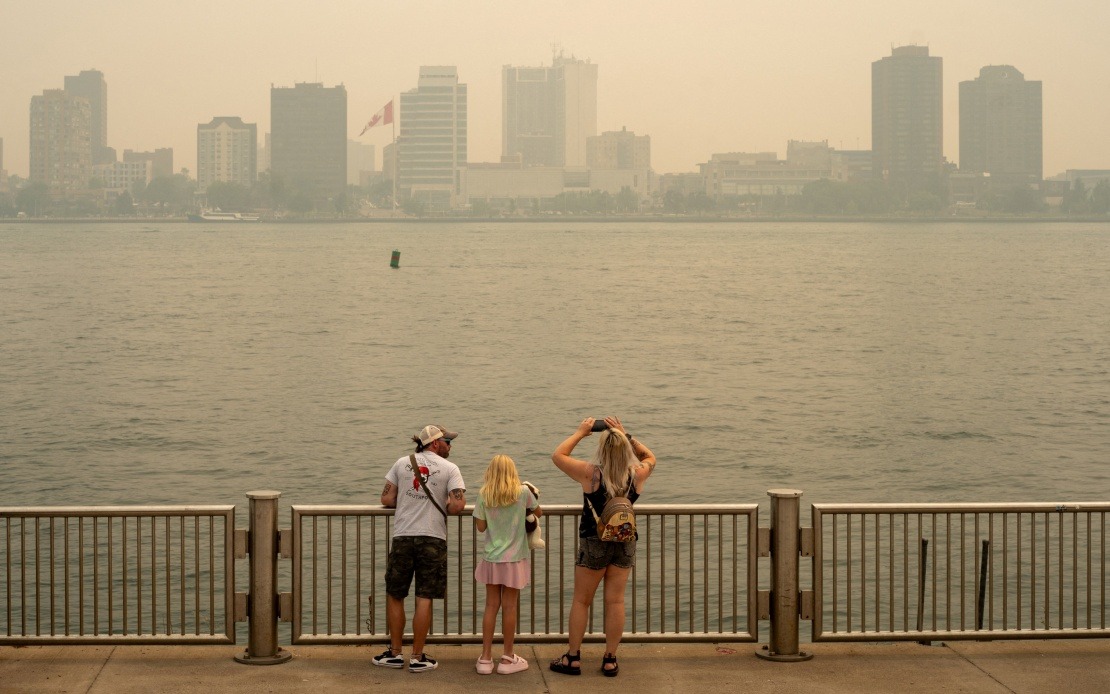
A destructive wildfire sweeping through British Columbia remains only partially contained despite efforts by emergency responders, with authorities reporting Sunday that the pace of expansion has begun to decelerate. The blaze, which has already scorched more than 100 square kilometres of the province, has forced more than 20,000 people to abandon their homes and seek refuge, while around 10,000 properties face direct threat in the surrounding region.
The fire's trajectory has shifted markedly as its advancing front reached Okanagan Lake, a natural boundary that is slowing its progression across the landscape. Firefighters have concentrated their defensive operations around Summerland, a town of approximately 12,000 residents located in the fire's path, with crews working to shield homes situated on the community's outer edges. The achievement of reaching the lake represents a critical turning point in the battle against the conflagration, even as full control remains elusive.
Emergency evacuation orders continue affecting thousands of residents throughout the region, with authorities emphasizing the severity of the situation by maintaining mandatory departures. Recent rescue operations have been particularly harrowing, with more than 50 individuals requiring helicopter extraction after becoming trapped between the advancing flames and escape routes. Investigators are simultaneously examining reports of at least one fatality potentially linked to the disaster, though confirmation has not yet been officially completed, adding to the human toll of the crisis.
The Canadian federal government has mobilized substantial resources to address the humanitarian dimensions of the emergency. Eleanor Olszewski, Minister of Emergency Management, announced on X that a request for disaster assistance from British Columbia had received approval, with the federal response including provision of temporary housing and accommodation for displaced residents. This coordinated approach reflects recognition that the scale of evacuation requires comprehensive support systems beyond provincial capacity.
Fire-suppression efforts continue facing significant environmental obstacles that complicate containment strategies. Persistently high temperatures, prolonged drought conditions, and dense smoke blankets across the affected territory are hampering visibility for aerial operations and reducing firefighting efficiency on the ground. These meteorological factors underscore why even diminished forward momentum represents tactical progress rather than strategic victory.
The province has activated an emergency declaration after assessing the broader wildfire situation across British Columbia. According to provincial authorities, more than 100 separate fire incidents have ignited throughout the region in recent weeks, with approximately half of these blazes remaining outside operational control. This multiplicity of simultaneous threats has stretched resources thin and forced prioritization decisions that affect different communities asymmetrically.
International cooperation has become integral to containing the disaster, with firefighting personnel and equipment arriving from Mexico, Australia, and New Zealand to augment Canadian resources. This cross-border mobilization highlights both the scale of the emergency and the established protocols for disaster response that bind allied nations together during crises. Such assistance proves crucial when regional capacity is exceeded by the magnitude of the challenge.
British Columbia is not isolated in confronting dangerous fire conditions this season. Other major Canadian provinces including Ontario and Quebec have simultaneously battled significant wildfire outbreaks, suggesting a continental pattern of elevated fire risk linked to broader climatic conditions. The distribution of these incidents across multiple jurisdictions raises questions about whether underlying meteorological or forestry management factors are creating unusually combustible conditions across eastern and western Canada.
For Southeast Asian observers, the British Columbia crisis illuminates vulnerabilities common to regional wildfire management despite geographical differences. Malaysia and Indonesia have grappled with transboundary smoke and large-scale evacuations during their own fire seasons, particularly the 2019 and 2023 incidents that affected air quality throughout the region. The Canadian experience of coordinating federal and provincial resources, managing international assistance, and prioritizing critical infrastructure protection offers relevant lessons applicable to improving disaster response frameworks in Southeast Asia.
The situation underscores how climate patterns increasingly drive simultaneous fire risks across the Pacific, potentially creating global resource competition during peak fire seasons. As nations develop climate adaptation strategies, wildfire preparedness and cross-border cooperation frameworks merit elevated priority in regional policy discussions. The British Columbia emergency demonstrates that jurisdictions of all economic levels face capacity constraints when natural disasters escalate beyond historical precedent.

