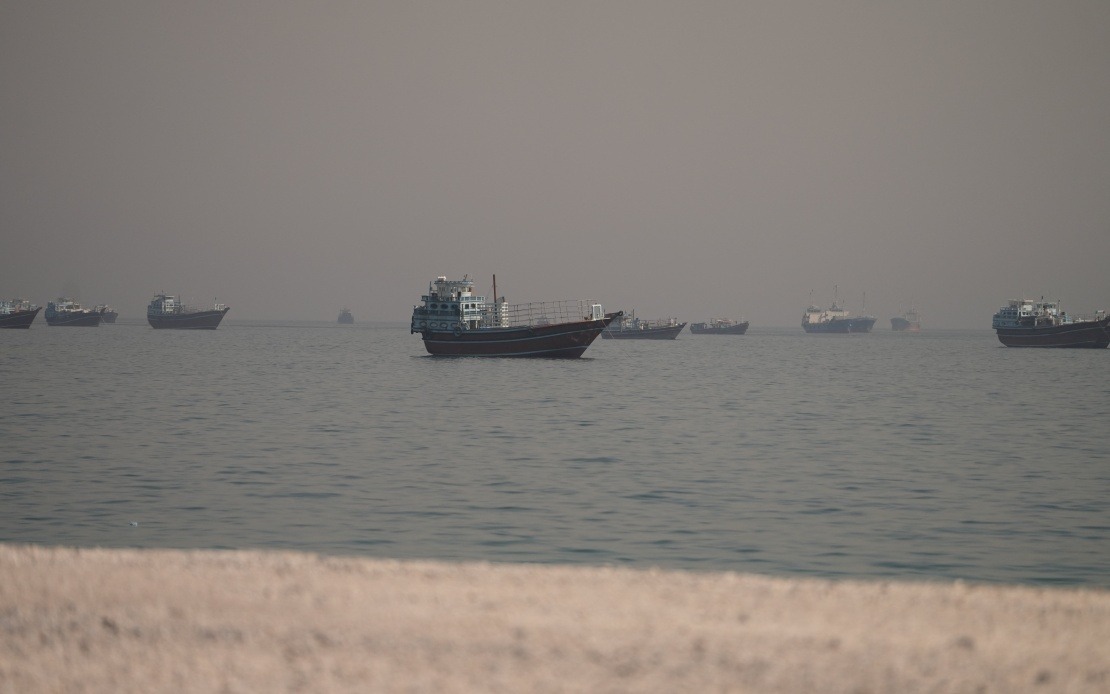
Britain and France have signalled their determination to establish a multinational military presence in the Strait of Hormuz, announcing Friday that they stand prepared to deploy forces aimed at guaranteeing safe passage for commercial vessels through one of the world's most consequential maritime corridors. The announcement, made jointly by British Prime Minister Keir Starmer and French President Emmanuel Macron in Berlin, represents a significant escalation in Western engagement with the region's security challenges, occurring amid intensifying tensions with Iran over control of the waterway.
The two European leaders framed the initiative as essential to global economic stability. In their joint statement, Starmer and Macron characterised the Strait of Hormuz as a fundamental artery sustaining international commerce, emphasising that guaranteeing unobstructed transit for vessels from all nations constitutes a matter of worldwide significance. This framing underscores the strategic importance many Western nations attribute to maintaining unrestricted passage through the 33-kilometre-wide channel, through which approximately one-third of the world's seaborne oil exports flow annually.
Central to the European proposal is the participation of Oman, a sultanate that borders the strait and maintains relatively neutral relations with both Iran and Western powers. The two leaders disclosed that Oman has consented to collaborate with London and Paris in facilitating safe passage through its territorial waters, a development that provides potential legal and diplomatic cover for any multinational operation. Oman's cooperation is particularly significant given its geographic position and its historical role as a mediator between regional rivals, suggesting that the proposed force may operate within a framework acceptable to at least one regional actor.
Britain and France have made explicit their readiness to anchor broader multinational military operations intended to uphold freedom of navigation across the region. This language indicates intentions extending beyond temporary patrols or symbolic deployments, suggesting a more substantial and sustained commitment to maritime security. The willingness of two permanent UN Security Council members to commit resources to the initiative lends considerable geopolitical weight to the endeavour and signals coordinated Western determination to maintain access to critical shipping lanes.
The European declaration reaffirms core principles central to international maritime law and regional stability. Both nations underscored their commitment to respecting state sovereignty, a noteworthy emphasis given the sensitivity surrounding foreign military operations in Middle Eastern waters. By framing their initiative within the context of upholding international law and global security architecture, the leaders attempted to position their proposal as consistent with established international norms rather than as unilateral intervention.
However, the initiative arrives amid escalating friction with Tehran, which has consistently and forcefully opposed foreign military operations within the strait. Iranian officials have repeatedly rejected any external involvement in maritime operations through the waterway, asserting instead that security arrangements should remain the exclusive domain of littoral states. This position reflects Tehran's broader strategic doctrine of resisting extra-regional power projection in its immediate neighbourhood and maintaining autonomy over domains it considers vital to national security.
Iran has issued multiple warnings to extra-regional powers against deploying military assets in the region, reflecting deep-seated concerns about Western military presence and influence. These warnings have occasionally been coupled with threats of disruption to shipping, creating uncertainty regarding navigation through the strait. The Iranian perspective, though contested by Western powers, carries weight among some regional actors who view external military involvement as destabilising and as reinforcing dependency on outside powers rather than fostering regional solutions.
For Southeast Asian nations including Malaysia, the developments carry significant implications. As substantial consumers of Gulf oil and major maritime trading nations, countries throughout the region have direct interests in maintaining stability and unimpeded passage through the Strait of Hormuz. Any escalation of tensions or disruption to shipping would directly impact energy costs and supply chains across Southeast Asia, potentially affecting economic growth and inflation pressures. The proposed European-led mission thus intersects with broader Southeast Asian concerns about maritime security and freedom of navigation in critical international waters.
The initiative also reflects a broader pattern of Western strategic engagement with Middle Eastern maritime security, following previous multinational efforts to maintain shipping safety in contested waters. The proposed Hormuz deployment differs from some earlier initiatives by securing explicit cooperation from a regional state, potentially enhancing its legitimacy and operational effectiveness. Nevertheless, the absence of broader regional consensus, particularly given Iranian opposition, suggests that any deployed force may operate amid persistent diplomatic tensions and uncertainty about the long-term viability of the arrangement.
The announcement raises questions about operational specifics that remain unresolved. Neither Starmer nor Macron provided detailed information regarding the scale of proposed deployments, rules of engagement, duration of the mission, or mechanisms for coordinating with other maritime actors. These practical considerations will prove critical to determining whether the initiative succeeds in providing meaningful security reassurance to shipping interests or instead becomes a point of ongoing contention between Western powers and Iran. The coming weeks will likely witness diplomatic manoeuvring as the proposal moves from announcement toward potential implementation.

