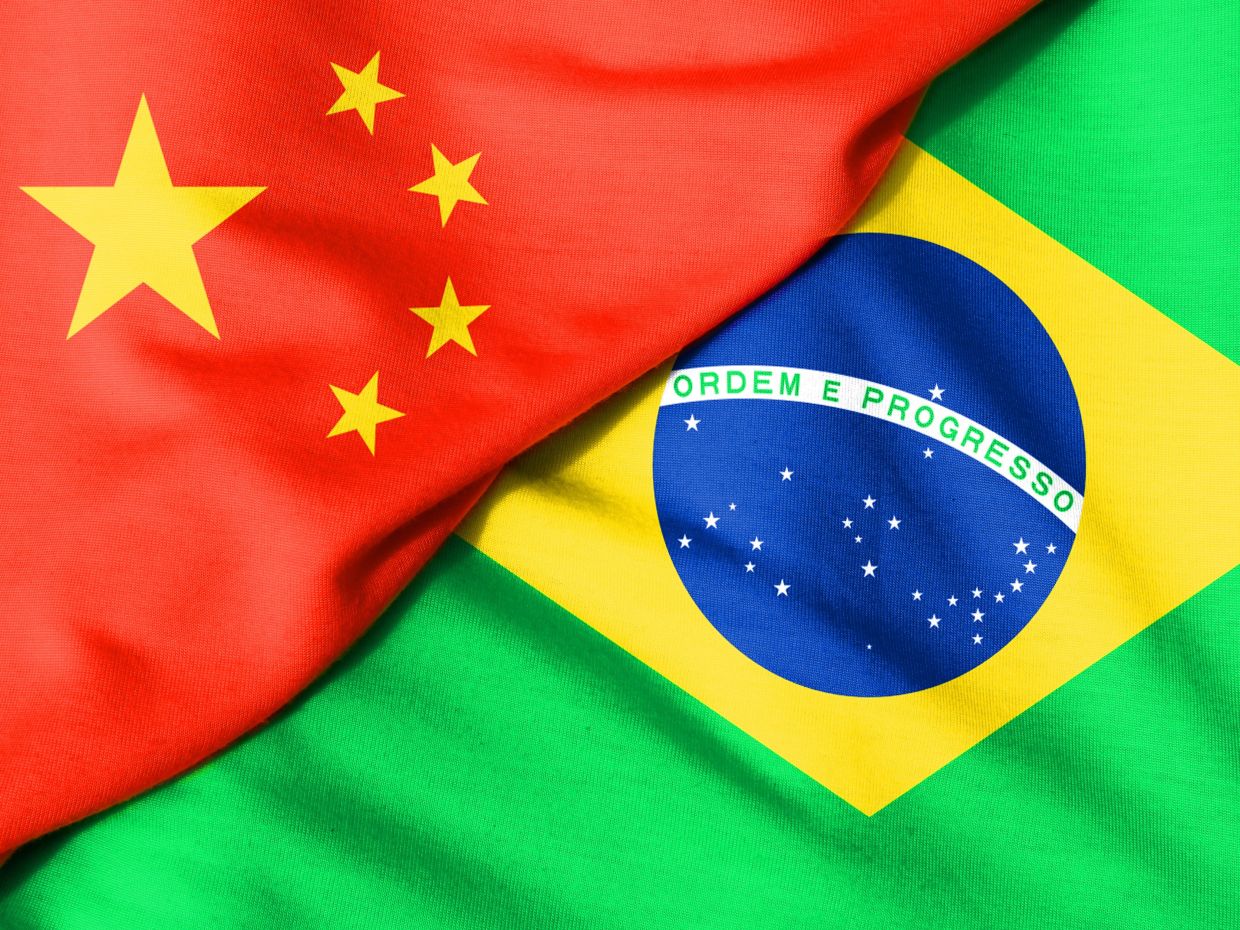
Brazil is poised to become a regular borrower in China's yuan bond market, with officials confirming that the country's inaugural sovereign issuance should occur before the close of 2024. The move signals a deepening of financial ties between South America's largest economy and Beijing, while reflecting broader trends in how emerging markets now access capital in an increasingly multipolar world. For Malaysian and Southeast Asian investors and policymakers, Brazil's foray into yuan financing offers a template for understanding how major economies are diversifying away from traditional dollar-dominated channels.
According to Francisco Segundo, deputy secretary for public debt at Brazil's National Treasury, the strategic importance of the debut lies not primarily in the quantum of funds raised but rather in establishing what he terms a "qualitative" breakthrough. External debt relative to the federal stock remains modest at four per cent, indicating the government is not financially dependent on yuan proceeds. Instead, the fundamental objective is to unlock access to a new class of investors while creating the infrastructure through which Brazilian corporations can independently tap Chinese capital on favourable terms. This distinction matters significantly for understanding Brazil's motivations—the country is making a long-term structural investment in market architecture rather than seeking immediate cash relief.
The pricing differential between yuan and dollar funding illustrates why Brazil and other sovereigns view this market as strategically vital. Foreign borrowers accessing China's bond markets this year have obtained coupons averaging 1.97 per cent, compared to the 4.5 to 5.5 per cent required for equivalent dollar borrowing. These transactions typically remain modest in scale, with issuers raising roughly one-fifth of what they would attempt in dollars, with tenors clustered between three and five years. Even accounting for currency swap costs, the savings prove substantial enough to incentivise repeated market participation. For corporations operating across Southeast Asia and the broader Indo-Pacific, such financing gaps have become impossible to ignore.
Brazil's formal application was lodged in June when Finance Minister Dario Durigan delivered a letter of intent to People's Bank of China Governor Pan Gongsheng, who promptly affirmed the central bank's readiness to facilitate issuance. The precise size of the debut remains contentious, with Durigan initially suggesting up to five billion yuan (US$735 million) and Treasury Secretary Daniel Leal subsequently indicating a target near ten billion yuan (US$1.48 billion). The discrepancy matters because Indonesia recently set a new record for sovereign yuan debuts, raising seven billion yuan in July, a benchmark Brazil hopes to match or exceed. Neither official has publicly explained the variance, leaving market participants uncertain whether Brazil intends a record-setting transaction or a more cautious entry.
Secundo acknowledged that the formal application process has been approved, with remaining steps confined to administrative procedures. These include engagement with a Chinese credit rating agency that has never previously evaluated Brazil's creditworthiness—itself a small but symbolic element of the structural shift underway. The treasury has declined to specify the exact maturity or intended use of proceeds, though conventional practice suggests funding for infrastructure or development initiatives. When pressed on timing certainty, Segundo adopted a measured stance: "Will the issuance happen this year? The objective is yes, but we cannot guarantee it." This carefully hedged language reflects the diplomatic complexities of coordinating cross-border financial operations during periods of geopolitical flux.
Brazil's commitment to sustained market participation reflects lessons drawn from European experience. Segundo explicitly noted that Brazil's sporadic appearances in euro bond markets have left the sovereign curve distorted by scarcity, undermining the reference-pricing function that corporate borrowers require. The treasury concluded that establishing a regular presence in yuan markets—appearing multiple times annually—would resolve this structural impediment. This strategic insight carries direct implications for other emerging market sovereigns, particularly in Asia, where thin curves and infrequent issuance have historically constrained corporate access to capital. The opportunity cost of absence proves higher than many policymakers initially recognised.
Corporate borrowing patterns provide empirical support for the hypothesis that sovereign benchmarks catalyse private issuance. Alexandre Lowenkron, chief executive at Bocom BBM (a Brazilian bank ultimately controlled by China's Bank of Communications), pointed to historical data demonstrating that fifty to sixty per cent of corporate issuances in a given window cluster immediately following sovereign debt sales. This concentration effect reflects investor behaviour: institutional participants gain comfort with a borrower's jurisdiction once a sovereign precedent exists, and pricing bands become anchored to a reference curve rather than remaining speculative. Suzano, a pulp-and-paper producer and the first non-financial Brazilian company to access China's panda bond market, exemplifies this mechanism in action.
Suzano has mobilised 2.6 billion yuan across three separate transactions since 2024, commencing with a green bond priced at 2.8 per cent. Emilio Yeh, chief financial officer of Suzano's Asian operations, disclosed that achieved pricing came in more than fifty basis points below the company's dollar curve even after accounting for swap expenses—a substantial concession reflecting reduced risk premiums in the yuan market. Critically, Yeh reported that investors from Shanghai raised the absence of a sovereign benchmark consistently during negotiations, viewing it as a material uncertainty. Once Brazil establishes its own curve, such investor queries should diminish, and pricing improvements should propagate across the corporate sector. This dynamic has already unfolded in other markets where sovereign curves preceded corporate issuance booms.
The credit rating constraint adds a layer of complexity to Brazil's yuan strategy. All three major rating agencies rate Brazil below investment grade, placing it beneath the threshold many large institutional funds must observe. This positioning disadvantages the sovereign relative to several major corporations: Vale ranks two notches higher than the government, Suzano one notch higher, and even Petrobras—a state-controlled entity—benefits from Fitch's assessment that the company itself merits investment grade status on standalone metrics. The establishment of a sovereign yuan curve may nonetheless attract investor classes less stringent about credit ratings or seeking yield enhancement through exposure to Brazilian credit. Chinese institutional investors, in particular, may operate under different mandates than Western peers.
Durigan articulated during June discussions that Brazilian corporations had directly petitioned the government to enter yuan markets, motivated by both the desire to expand financing options and the imperative to reduce currency volatility within the domestic economy. Large companies denominating liabilities in yuan creates natural hedges against exchange-rate movements, reducing the need for expensive derivative instruments. Suzano remains the sole Latin American company to have issued panda bonds in the two years since its inaugural transaction, underscoring the lateness of corporate participation despite the market's maturity elsewhere in Asia. As Brazil's sovereign curve takes shape, this isolation should begin to break down, opening doors for smaller enterprises previously excluded from international capital markets.
For Malaysia and other Southeast Asian economies, Brazil's yuan market expansion carries lessons about the durability of Beijing's financial outreach and the viability of currency internationalisation as geopolitical tool. The success of Brazil's issuance program will test whether China can sustain and expand its yuan bond ecosystem beyond Asia's immediate neighbourhood. If Brazilian sovereigns and corporations successfully establish regular funding relationships in Chinese capital markets, the precedent may embolden other major emerging economies to follow suit, gradually fragmenting the global financial system into regional currency blocs. This structural shift, already underway in trade and investment flows, now extends to bond markets where it was previously thought the dollar's dominance would persist indefinitely.

