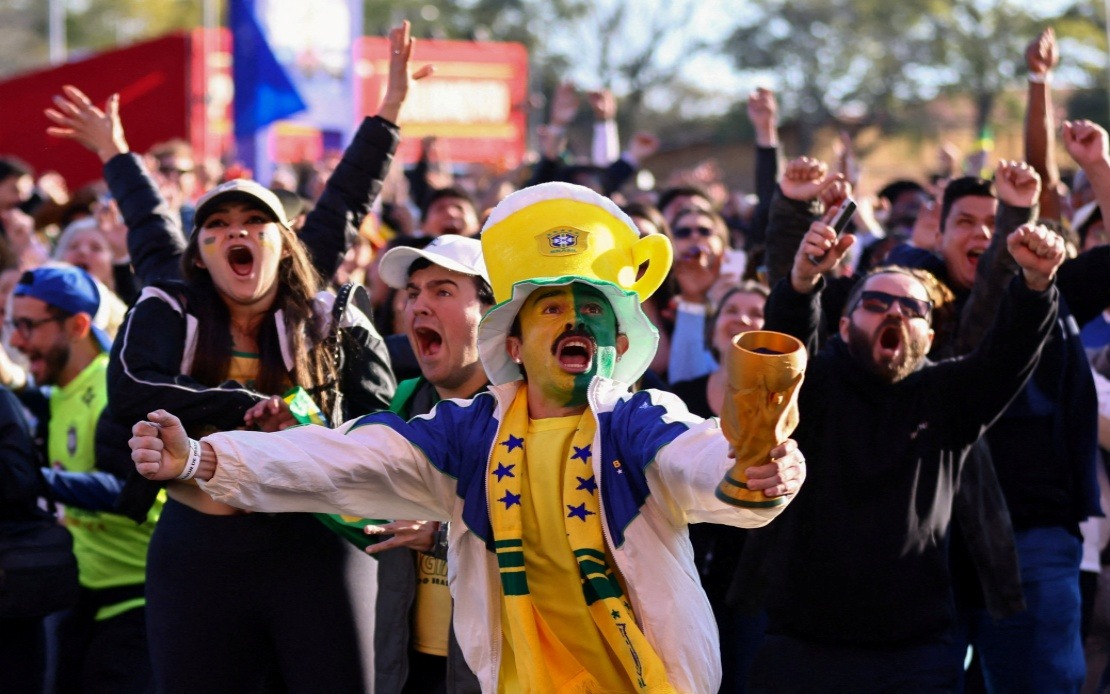
Brazil advanced to the knockout phase of the 2026 FIFA World Cup with a hard-fought 2-1 victory over Japan at Houston Stadium, ending the Asian side's hopes of a landmark World Cup breakthrough. The match, played with high intensity and tactical discipline from both teams, showcased the tension that defines knockout football even in the group stages, providing Malaysian viewers with a compelling reminder of why the World Cup remains the sport's premier tournament.
Japan's approach throughout the opening 45 minutes demonstrated why defensive solidity has become the hallmark of underdog success in modern football. Operating from a 5-4-1 formation, the Samurai Blue compressed space effectively and limited Brazil's attacking rhythm, frustrating the technically superior opponents who struggled to find penetrative passes or create clear-cut opportunities. The Brazilian side, accustomed to dictating possession, found themselves unable to convert their dominance into meaningful chances, with flanking areas particularly congested by Japan's disciplined positioning.
The deadlock was broken in the 29th minute when Kaishu Sano demonstrated the kind of clinical opportunism that often distinguishes tournament winners. After intercepting a loose pass from Danilo in midfield, Sano carried the ball forward purposefully before unleashing a low, driving strike from distance that found the corner of the net beyond goalkeeper Alisson. For Japan, this represented more than a mere goal; it was a validation of their defensive strategy and a tantalizing possibility that they might finally achieve the elusive World Cup knockout victory that has eluded them throughout their tournament history.
Brazil's coaching staff, led by Carlo Ancelotti, faced a significant tactical challenge heading into the second half. The psychological impact of conceding to a side ranked lower in FIFA's hierarchy demanded an aggressive response, yet such directness risked playing into Japan's hands. The solution emerged through intensity and width. Upon the resumption of play, Brazil unleashed greater tempo and directness, with wide attacking moves generating a succession of dangerous crosses into Japan's penalty area. This approach reflected the understanding that numerical superiority in offensive zones could overwhelm Japan's defensive formation.
The equalizer arrived in the 56th minute when Casemiro, demonstrating the aerial dominance that has made him invaluable to Brazilian football over the past decade, rose above defenders at the back post to direct Gabriel Magalhaes' cross past goalkeeper Zion Suzuki. The goal reinvigorated Brazilian supporters in Houston and fundamentally shifted the match's momentum. What had appeared to be a potential upset narrative transformed into a conventional scenario where greater technical quality begins asserting itself.
As the second half progressed, Brazil maintained relentless pressure while Japan, having expended considerable energy on their defensive organization, found themselves increasingly stretched. The pattern of play became almost predictable—the Seleçao attacking in waves, Japan defending compactly but gradually retreating deeper into their own half. Neither team managed to establish a decisive advantage through conventional means, setting the stage for a dramatic conclusion.
Drama arrived in the 90th minute and beyond. Bruno Guimaraes, the midfielder instrumental in Brazil's second-half resurgence, drove toward the penalty area before threading a precisely weighted pass that found Gabriel Martinelli in space. Martinelli's finish, despite Suzuki getting a hand to the ball, found the corner of the net in the fifth minute of added time. The timing proved devastating for Japan, whose dreams of historical achievement evaporated in those final, agonizing moments.
This result carries significant implications for the tournament structure and Brazil's trajectory. The Selecao now face either Norway or Ivory Coast in the Round of 16, opponents unlikely to replicate Japan's organized defensive discipline. For Malaysian and Southeast Asian football followers, the outcome underscores how even technically inferior opponents can trouble elite teams through tactical discipline and opportunistic finishing, a lesson increasingly relevant as Asian football develops more cohesive national team strategies.
Japan's early exit, while disappointing given their organized performance, represents neither failure nor cause for despair. They demonstrated that the gap between Asian and established football powers continues narrowing. The tournament experience gained here will inform future competitions. For Brazil, despite the labored nature of victory, progression was never truly in doubt given their quality and championship pedigree. The real test awaits in the knockout stages, where such narrow margins of victory become more commonplace and where sustained excellence under pressure defines true champions.

