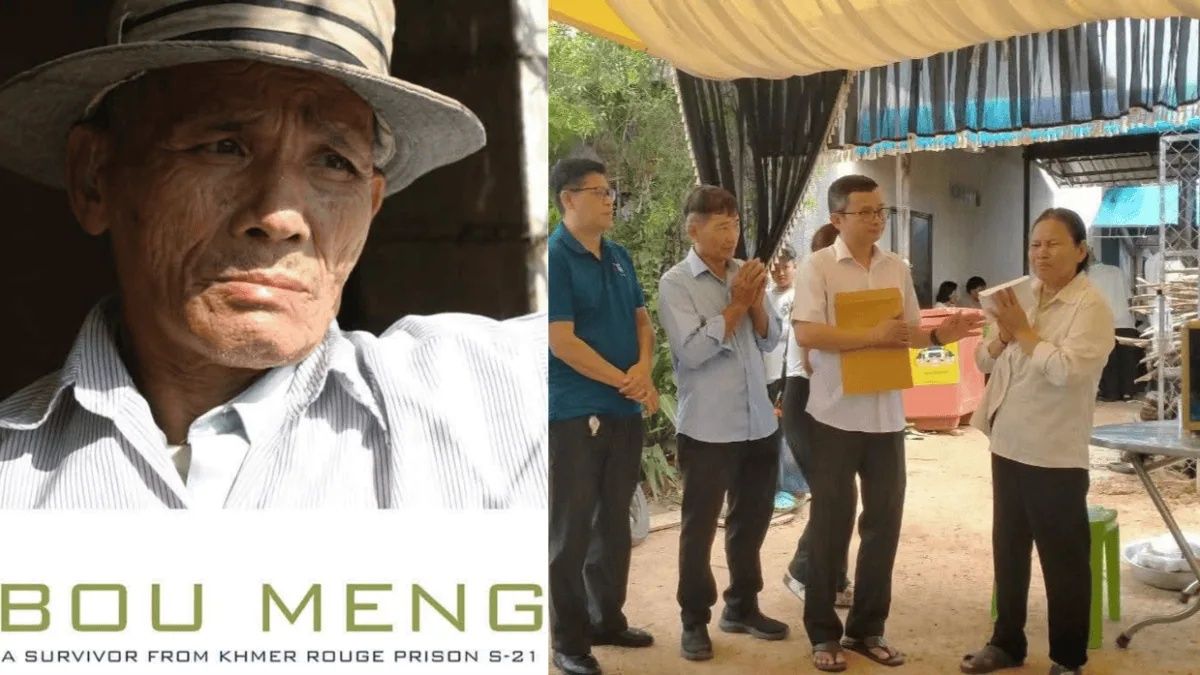
The death of Bou Meng on Friday, August 14, 2026, at age 85 removes from living memory one of the rarest witnesses to the Khmer Rouge's systematic brutality. As one of merely seven documented survivors to emerge from S-21, the regime's most infamous detention and interrogation centre, Meng's passing marks the loss of an irreplaceable historical voice during a period when such testimony grows increasingly precious with each passing year.
Managed by Kaing Guek Eav, known as Comrade Duch, Tuol Sleng prison operated as a machinery of terror responsible for the deaths of thousands. The centre functioned as both a processing hub and interrogation facility where suspected enemies of the state underwent extensive torture before execution. That Meng survived this apparatus at all stands as testament to fortune and circumstance—a providence that ultimately preserved his ability to bear witness to posterity.
Meng's survival depended on a skill that would prove unexpectedly vital in the killing fields' machinery: his proficiency as a painter. The Khmer Rouge regime, despite its apocalyptic ideology, required artists for propaganda purposes and administrative work. Meng's technical abilities made him valuable enough to spare from the routine executions that consumed the vast majority of S-21's prisoners, allowing him to endure captivity while so many others perished.
The personal toll of his imprisonment extended far beyond the physical torture he endured. Meng and his wife were both detained at S-21 in 1977, separated from their children who were dispatched to labour camps. The family was never reunited. This particularity of Khmer Rouge cruelty—the deliberate fracturing of family units and the systematic elimination of perceived threats across entire households—was exemplified in Meng's own tragedy, making him not only a survivor of institutional torture but also a victim of the regime's calculated assault on the social fabric itself.
During the interrogation process typical of S-21 operations, prisoners faced systematic beatings, deprivation, and psychological torture designed to extract confessions before execution. The centre's meticulous record-keeping, including photographs and written confessions, would later prove instrumental in documenting the scale of crimes committed. Meng's survival of this ordeal and his subsequent recollection of these experiences provided crucial corroboration for international justice mechanisms that would emerge decades later.
Following the Vietnamese-backed liberation of Cambodia in 1979, Meng eventually came forward to contribute to prosecutions of Khmer Rouge officials. His testimony proved pivotal in the trial of Duch before the Extraordinary Chambers in the Courts of Cambodia, the hybrid tribunal established to address crimes of the genocide that claimed approximately two million lives between 1975 and 1979. Meng's willingness to relive traumatic experiences in judicial proceedings represented a conscious choice to pursue accountability and honour the memory of those who did not survive.
In the decades following the tribunal proceedings, Meng dedicated his remaining years to education and public memory work. He served as a guide and speaker at the Tuol Sleng Genocide Museum, which transformed the former prison into a repository of historical evidence and a memorial space. Through these efforts, he shared his narrative with successive generations of domestic and international visitors seeking to understand this dark chapter of Southeast Asian history. His personal account, delivered in the physical space where atrocities occurred, carried an authenticity and emotional weight that academic histories could never fully convey.
The Tuol Sleng Museum released a statement acknowledging Meng's irreplaceable contribution to historical preservation and transitional justice. The museum emphasized that his passing represented not merely a loss of an individual survivor, but the diminishment of living memory at a moment when direct testimony becomes increasingly rare. Among the initial seven known survivors from S-21, Meng's death significantly reduces the cohort of individuals capable of speaking from personal experience about the prison's operations and horrors.
Meng's commitment to education reflected a deliberate rejection of the silencing that trauma can impose. Rather than withdrawing from the world, he chose repeated engagement with his own suffering, channeling that experience into teaching subsequent generations about the consequences of totalitarianism and genocide. This decision to transform personal tragedy into pedagogical purpose has served as model for other survivors navigating the complex relationship between private pain and public responsibility.
The implications of Meng's passing extend beyond Cambodia's borders. Across Southeast Asia, where multiple countries have experienced political violence and systematic state crimes, the loss of survivors like Meng underscores the urgency of recording and preserving testimony while witnesses remain alive. For Malaysia and the region, such examples highlight how societies can institutionalize remembrance and maintain historical accountability, even decades after conflict concludes.
As Cambodia continues grappling with intergenerational trauma and the challenges of transitional justice, Meng's death marks a closing of an era in which direct survivors can testify. Future understanding of Tuol Sleng and the broader Khmer Rouge period will depend increasingly on archival materials, photographic evidence, and preserved testimony, placing greater responsibility on institutions like the Tuol Sleng Museum to maintain rigorous historical interpretation.

