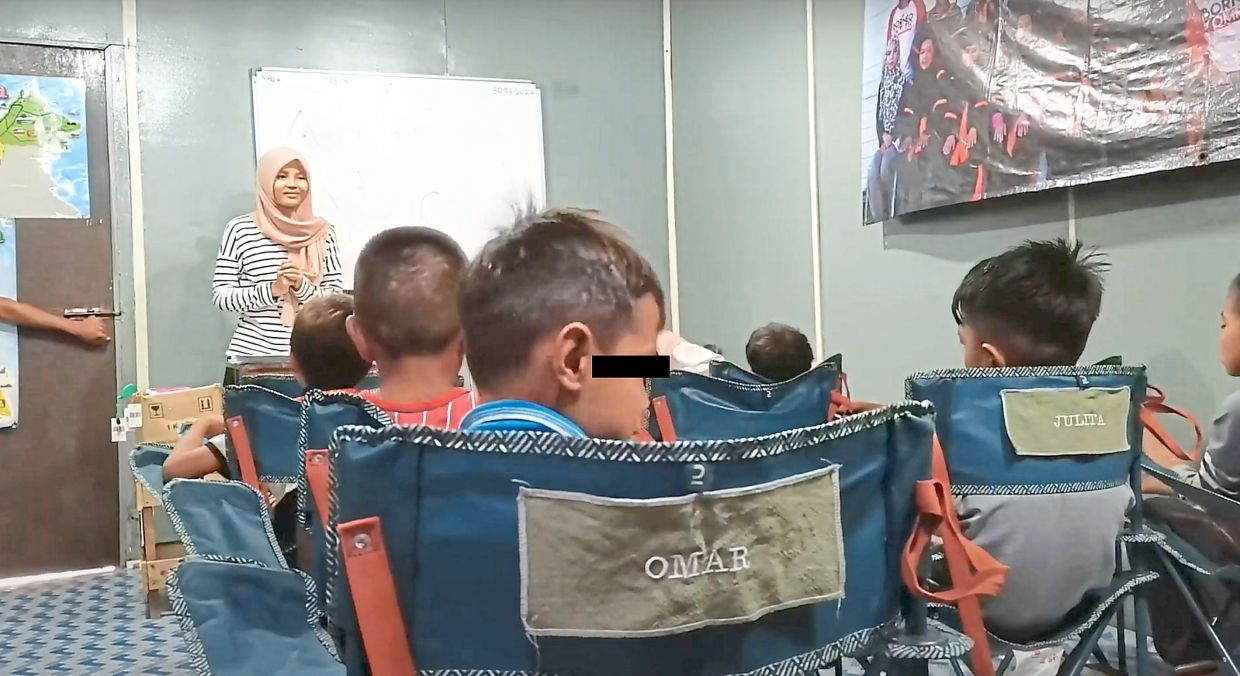
When a child grows up knowing only one home, attending school in one country, building friendships and memories within one community, the question of where they truly belong should have a straightforward answer. Yet for children born in Malaysia to Malaysian fathers and foreign mothers who were not legally married, the courts have delivered a different verdict. The Court of Appeal recently upheld constitutional provisions that deny these youngsters Malaysian citizenship, prioritising the marital status of their parents over the lived reality of their lives in this country.
The two cases that triggered this legal decision involved children with confirmed biological links to their Malaysian fathers, established through modern DNA testing. The children had grown up entirely in Malaysia after their mothers—from Indonesia and the Philippines respectively—departed during their infancy. They knew no other home, spoke no other language as their primary tongue, and maintained no meaningful connection to their mothers' countries of origin. Yet the constitutional framework, as interpreted by the court, mandated that citizenship follow the mother in cases where the parents were unmarried at the time of birth. The logic appears straightforward on paper but becomes troubling when applied to real children facing real consequences.
The Constitutional provision in question reflects legal thinking from an earlier era when different social standards prevailed. The framers of Malaysia's founding documents established that citizenship depends on both birthplace and parentage—a dual requirement that remains fundamental today. However, for children born outside of legal marriage, the Constitution stipulates that the mother's citizenship becomes the determining factor, effectively disregarding paternal connection. This framework predates the development of reliable DNA testing, which can now establish biological fatherhood with near-absolute certainty. The question haunting legal scholars and child welfare advocates is whether biological fatherhood, once scientifically confirmed, should continue to hold less legal weight simply because two adults did not marry before conception.
Child rights organisations across Malaysia and the region have mobilised in response to this ruling, arguing that it fails the fundamental principle enshrined in international law: the best interests of the child. They contend that the court's decision discriminates unfairly against Malaysian fathers while imposing lifelong consequences on children who had no control over their parents' marital decisions. These advocates call for greater judicial discretion and flexibility in applying citizenship law, particularly when the biological relationship is beyond dispute and the child has no genuine ties to the mother's home country. The development of Human Resources for Rural Areas (DHRRA), a civil society organisation working on this issue, has highlighted a startling fact: Malaysia ranks among only two countries globally where fathers cannot automatically confer citizenship to their biological children in such circumstances.
Historically, societies have treated children born outside marriage as distinct categories, burdening them with reduced legal status, inheritance complications, and social stigma. This practice persisted across Europe, Asia, and beyond for centuries, embedding discrimination into family law. However, the past five decades have witnessed a significant global shift as countries recognised that innocent children should not bear the consequences of adult choices. Progressive legal systems have systematically dismantled these distinctions, acknowledging that a child's legal status should reflect their circumstances and connections rather than parental marital status. Malaysia has not yet aligned its citizenship laws with this broader international movement.
A fundamental inequity emerges when examining how the law treats wrongdoing and punishment. When adults violate laws, society expects consequences for the adults involved. A person driving excessively faces a fine; a tax evader incurs penalties; a business fraudster receives sanctions; a violent aggressor goes to prison. Yet when two consenting adults choose not to marry before having a child, who bears the lifelong burden? Not the adults who made the decision, but the child who had no voice in it. This represents a peculiar inversion of justice, where the innocent party absorbs the permanent consequence while the decision-makers escape unscathed. The child becomes a vessel for society's disapproval of their parents' choices.
Reality rarely conforms to the neat legal categories that lawmakers prefer. People fall in love across borders and cultures; some relationships endure while others dissolve; pregnancies occur both planned and unplanned; some couples marry while others do not. These variations have characterised human relationships throughout history as societies have continuously mixed through migration, trade, and cultural exchange. The modern world, particularly in Southeast Asia with its high levels of regional mobility, encounters such situations with increasing frequency. Treating citizenship as contingent on parental marital status creates arbitrary distinctions that fail to reflect how contemporary families actually form and function.
Marriage and citizenship serve fundamentally different purposes and should not be conflated. Marriage represents a voluntary social and legal commitment between consenting adults, a choice they make about their relationship. Citizenship, by contrast, determines a child's legal identity and access to rights—a status the child never chose. The question citizenship should answer is not whether parents made choices society approves of, but rather whether this child belongs here and has meaningful connections to this society. When a child has spent their entire life in Malaysia, attended school here, formed social bonds here, and possesses no genuine connection to their mother's distant country, citizenship should reflect that reality rather than punishing the child for parental decisions.
The practical consequences of statelessness extend far beyond abstract legal status. Children without recognised citizenship face concrete barriers to education, healthcare access, and lawful employment. They cannot open bank accounts, obtain driving licenses, or secure stable housing. Unable to participate fully in society's economic and social institutions, they frequently remain trapped in poverty, vulnerability, and exclusion. Malaysia's international commitments and its aspirations as a developing nation should compel reflection on whether perpetuating such conditions serves the country's interests. A child forced into statelessness becomes an adult living on society's margins, unable to contribute meaningfully to the economy or community.
This citizenship problem recurs in different configurations across Malaysia's legal system. Foundlings with no documented parentage, children born in remote indigenous communities where birth registration proves difficult, and other vulnerable groups periodically surface in discussions about nationality and legal status. While the specific circumstances vary, the underlying pattern remains consistent: children become trapped in legal limbo through circumstances entirely beyond their control. These cases accumulate in the system, creating a class of individuals whose legal precarity defines their opportunities and possibilities.
Nationality represents a sensitive area where legitimate state interests in border control and security must be balanced against fundamental human rights. Yet legal frameworks need not remain frozen in time. Parliament demonstrated this principle in 2024 when it amended the Constitution to allow Malaysian mothers to automatically transmit citizenship to children born overseas. That reform recognised that citizenship laws must evolve to reflect contemporary realities and commitments to gender equality. The same logic should apply to children born in Malaysia to Malaysian fathers and unmarried foreign mothers. Such a reform would not create vulnerability but rather align law with existing social realities and humanitarian principles.
The question posed by these cases extends beyond legal technicality to challenge national values. Does Malaysia believe that every child born and raised within its borders deserves to begin life with a clear legal identity and secure belonging? Or does the nation accept that some children, through no fault of their own, should face lifelong marginalisation because of decisions made by their parents? Modern constitutional democracies have increasingly concluded that children deserve protection and security regardless of their parents' choices. Malaysia possesses the legal capacity and democratic institutions to bring its citizenship laws into alignment with such principles, recognising that true national strength emerges when every child can claim genuine belonging.

