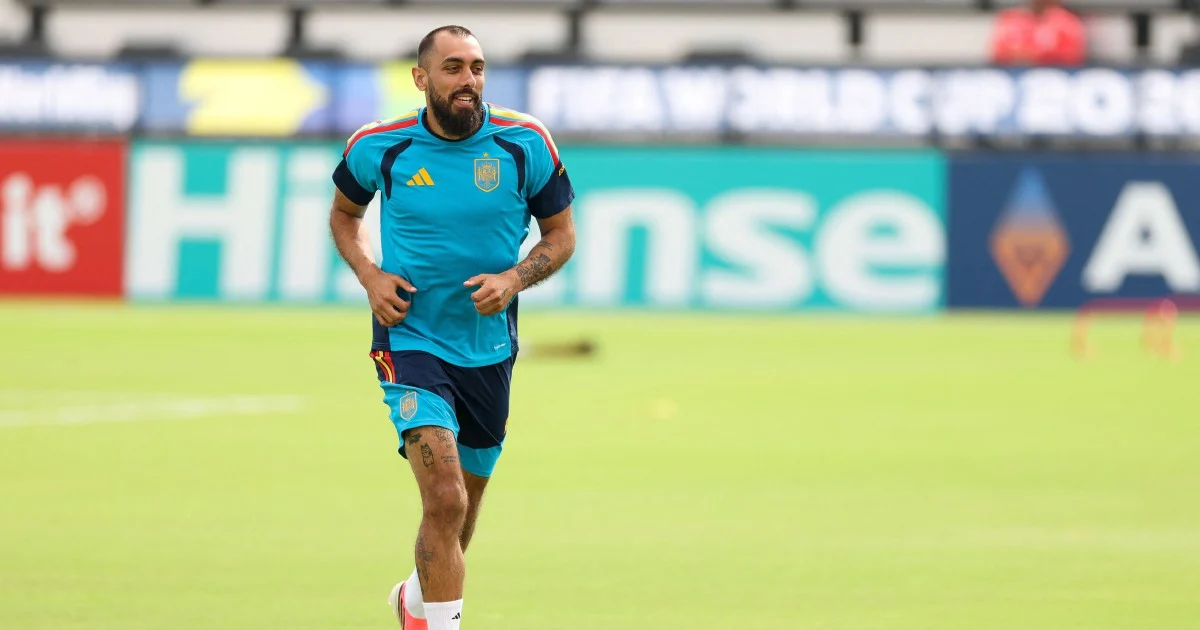
Borja Iglesias has become one of football's most unconventional voices, using his platform as a World Cup striker for Spain to challenge injustice and advocate for causes that many of his peers avoid entirely. The forward, who has made headlines as much for his activism as his performances on the pitch, exemplifies a growing trend of athletes willing to risk their commercial appeal and social standing to address global issues. In Chattanooga and beyond, Iglesias has demonstrated a willingness to engage with difficult conversations around geopolitical conflicts and social inequality that typically remain taboo within the traditionally conservative world of professional football.
Iglesias has become known for his uncompromising stance on matters ranging from the Israeli-Palestinian conflict in Gaza to homophobia within football. His approach extends to personal expression as well—painting his nails, a gesture that may seem inconsequential but carries symbolic weight in a sport where masculinity has traditionally been defined in narrow terms. This combination of aesthetic choices and political conviction has earned him a curious nickname: "the alien of football." The term, rather than being entirely pejorative, captures the degree to which Iglesias operates outside the conventional parameters of how professional footballers are expected to behave and communicate.
The Spanish striker's activism occurs against a backdrop of increasing scrutiny regarding athlete responsibility in the modern era. With global audiences tuning in to watch international matches and club competitions, athletes like Iglesias find themselves with unprecedented influence. His willingness to speak plainly about injustice reflects a philosophical position that holds athletes accountable for using their visibility and privilege. For many younger supporters and social justice advocates across Europe and beyond, including Southeast Asia where football commands passionate followings, Iglesias represents a refreshing departure from the calculated, PR-vetted statements typical of major sports figures.
Within Spain's football establishment, Iglesias occupies an interesting position. The Spanish national team, like many European squads, has engaged in various social campaigns and diversity initiatives. However, Iglesias goes further than official team positions, staking out personal stances on contentious international issues that extend well beyond sport. This independence carries risk. Commercial endorsements, sponsorship opportunities, and public relations relationships can all be jeopardised by controversial statements. Yet Iglesias has chosen principle over commercial caution, a decision that has shaped his public profile as much as his statistics on the pitch.
The phenomenon of outspoken athletes challenging social norms has grown across multiple sports in recent years, but football—particularly European football—has remained comparatively resistant to radical athlete activism. Part of this reluctance stems from football's unique commercial ecosystem, where players are often managed through tight media protocols and clubs maintain substantial control over player communications. Iglesias's refusal to conform to these expectations marks him as an outlier, someone willing to incur potential professional consequences for the sake of speaking truth as he sees it.
For audiences in Malaysia and across Southeast Asia, where football is followed with intense passion and where many young supporters look to international players as role models, Iglesias offers a complicated example. On one hand, his willingness to engage with political and social questions challenges the notion that sports figures should remain apolitical. On the other hand, his approach raises questions about the proper boundaries of athlete activism and whether individual players should take positions on international conflicts that governments themselves struggle to navigate consensually.
The Spanish striker's stance on homophobia carries particular resonance in football, where discrimination and exclusion of LGBTQ+ individuals has been systematic and deeply entrenched. By painting his nails and speaking openly about homophobia, Iglesias contributes to a broader conversation about inclusion and acceptance within the sport. Such gestures may seem symbolic, but within the hypermasculine culture of professional football, they carry substantial meaning. They challenge assumptions about what masculinity must look like and create space for athletes with different identities and perspectives to feel acknowledged and valued.
Iglesias's candidness also reflects a generational shift. Younger footballers, particularly those emerging from Spain's footballing culture which has produced players with increasingly diverse perspectives, appear more willing to challenge the sport's orthodoxies. This shift suggests that the rigid silence previously demanded of professional athletes may be gradually eroding, replaced by a model where athletes retain greater autonomy over their public voices and political positions.
However, the costs of such activism remain tangible. Sponsors reconsidering partnerships, media outlets presenting his statements through hostile framings, and the constant negotiation of how much candour is professionally sustainable all represent genuine pressures that Iglesias navigates. His persistence in the face of these pressures suggests a level of personal conviction that transcends career considerations, a quality that has increasingly defined him as a figure of consequence both within and beyond football.
The broader implication of Iglesias's example extends to questions about power, responsibility, and voice in contemporary sport. As global audiences consume football content across diverse markets including Malaysia, Thailand, and across the Asia-Pacific region, the narratives surrounding players inevitably shape cultural conversations about activism, justice, and the proper role of public figures. Whether Iglesias's approach becomes more mainstream or remains exceptional will likely influence how the next generation of footballers negotiates the intersection of sport, commerce, and conscience.
Ultimately, Borja Iglesias represents a challenge to football's tradition of enforced silence on contentious matters. Whether one agrees with his specific positions or not, his willingness to articulate them openly—and to accept the professional and personal costs of doing so—marks him as a figure reshaping expectations about what athletes can and should say. In a sport increasingly aware of its global influence, such voices may become less anomalous and more representative of football's evolving conscience.

