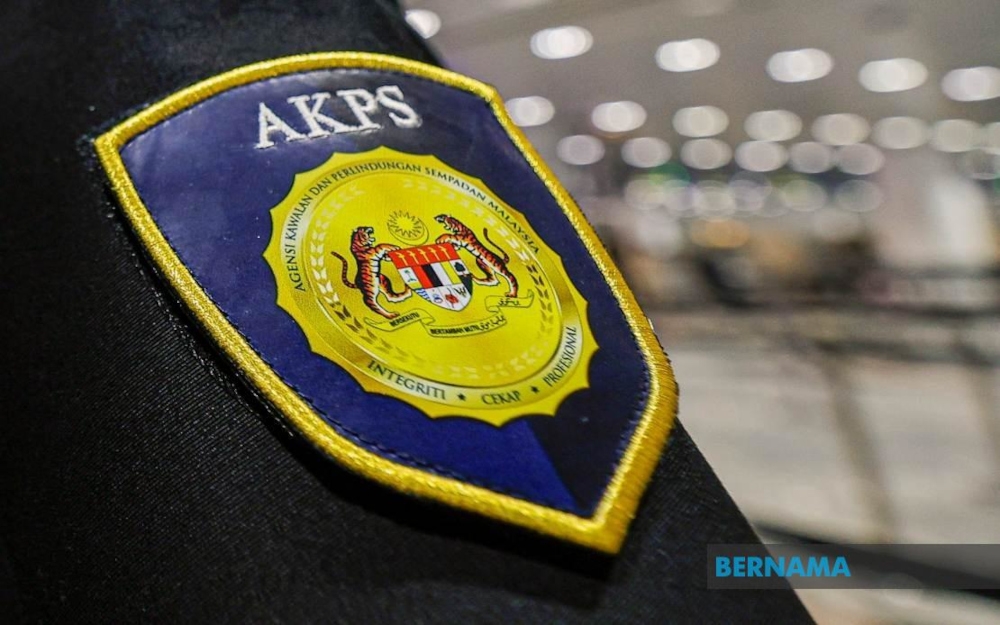
The Malaysian Border Control and Protection Agency (AKPS) has initiated a formal inquiry into claims that one of its officers stationed at Kuala Lumpur International Airport 2 (KLIA 2) received an unauthorised RM100 payment via a personal QR code, marking a fresh investigation into potential misconduct within the nation's border security apparatus. The allegation, which surfaced in July, underscores an emerging vulnerability in how digital payment methods are being exploited as conduits for illicit transfers at one of Malaysia's busiest international gateways, where millions of passengers transit annually.
The incident raises critical questions about the adequacy of internal controls and oversight mechanisms designed to prevent corruption among frontier staff. Unlike traditional cash-based bribery, which leaves a trail of physical evidence, QR code transactions—particularly those linked to personal payment applications rather than official channels—can be executed with minimal detection risk. The alleged officer's willingness to provide a personal digital payment identifier suggests a casual approach to circumventing established anti-corruption safeguards, a pattern that concerns oversight bodies charged with maintaining the integrity of border operations.
KLIA 2, operated by Malaysia Airports Holdings Berhad, processes over 30 million passengers annually and serves as a critical node in the nation's aviation infrastructure. Immigration and customs clearance at the terminal involve multiple checkpoints where officers exercise considerable discretionary power over passenger processing, document verification, and goods inspection. This authority, combined with the high-pressure environment of airport operations where passengers may be inclined to expedite procedures, creates an environment where informal payments could potentially be solicited or offered, though such conduct violates strict conduct codes.
The emergence of QR code-based corruption represents an evolution in how illicit payments are facilitated in the digital age. Traditional detection methods—cash counts, baggage searches, and surveillance—were designed for physical contraband and currency exchanges. However, transactions through mobile payment platforms leave digital footprints that, while theoretically traceable, require active monitoring systems and inter-agency coordination to identify suspicious patterns. The AKPS investigation must therefore examine not only the specific allegation but also the technical infrastructure that allows personal payment codes to circulate among passengers and staff.
Internal investigations within government agencies often proceed methodically but can be protracted, particularly when evidence involves digital transactions that require cooperation from financial service providers and telecommunications companies. The AKPS will likely seek transaction records from the payment platform used, passenger manifests from the relevant flight, and testimony from the implicated officer and any witnesses. Establishing the intent behind the payment—whether it was solicited as a gratuity, demanded as a condition for expedited processing, or offered voluntarily by a passenger—will be crucial in determining the severity of any disciplinary action.
The incident comes amid broader scrutiny of corruption risks within Malaysia's immigration and border management sectors. The Malaysian Anti-Corruption Commission (MACC) has previously investigated misconduct among immigration officers, though large-scale systemic corruption has been less documented than in some comparable agencies. Nevertheless, the vulnerability highlighted by this case suggests that preventive measures may be outdated. Most border agencies globally have shifted toward mandatory digital payment systems for official services, eliminating the need for cash or informal transfers, yet not all Malaysian border facilities have fully implemented such modernisation.
For passengers and international observers, such allegations can undermine confidence in Malaysia's border security and create perception that airport operations lack rigorous governance. This is particularly significant given Malaysia's efforts to position itself as a reliable regional travel hub competing with Singapore, Thailand, and other Southeast Asian destinations. Any suggestion of systematic corruption or lax oversight can deter international business travellers and tourists, with downstream effects on the aviation industry and associated economic sectors.
The investigation also highlights the role of technology in reshaping corruption risks. Mobile payment applications, originally designed to enhance convenience and financial inclusion, have inadvertently created new channels for misconduct when access controls are inadequate. The AKPS and other agencies may need to revisit staff conduct guidelines to explicitly address the misuse of digital payment systems. Training programmes for officers should include awareness of how seemingly innocuous transactions—a small RM100 payment—can constitute serious breaches of duty and expose the agency to reputational damage.
Moving forward, the findings of the AKPS investigation are likely to inform broader policy discussions within Malaysia's aviation and customs sectors. The agency may implement enhanced monitoring of officer conduct, greater emphasis on digital payment traceability, and clearer protocols for reporting suspected misconduct. Regional bodies such as the ASEAN Secretariat and international air transport associations may also take interest in how Malaysia addresses the incident, as it relates to broader questions about standards of conduct at major regional airports.
The investigation underscores a paradox in modern governance: as countries digitise services and adopt financial technology to improve efficiency, they create new vulnerabilities that corrupt actors can exploit. The AKPS and related agencies will need to stay ahead of these evolving risks through investment in detection systems, staff training, and institutional culture that prioritises integrity. The RM100 allegation, though seemingly minor in isolation, may prove instructive in identifying systemic weaknesses before larger-scale misconduct occurs. How thoroughly and transparently the AKPS handles this investigation will be closely watched by civil society groups and international observers monitoring governance standards in Malaysian institutions.

