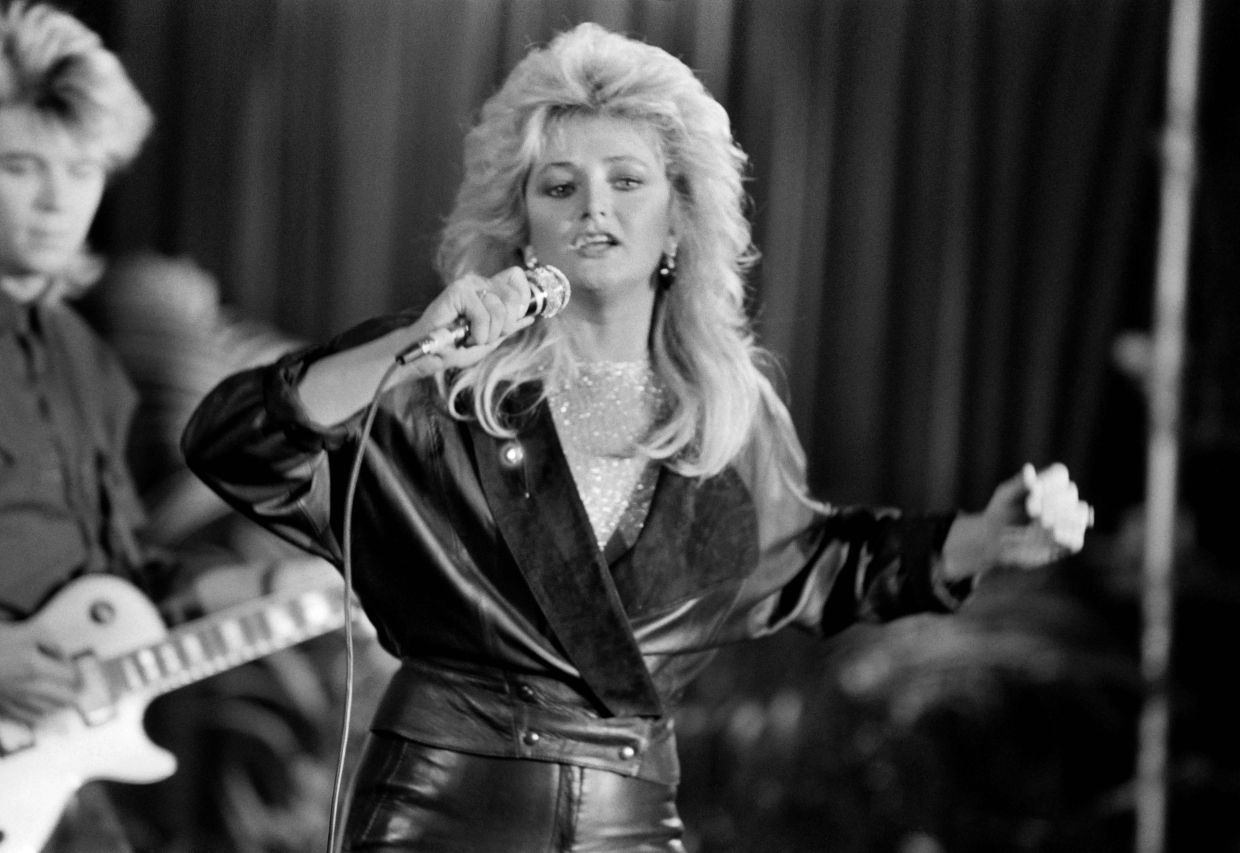
Bonnie Tyler, the husky-voiced Welsh pop sensation whose 1983 power ballad "Total Eclipse of the Heart" became a global phenomenon and cultural touchstone spanning decades, has passed away at age 75. The Grammy-nominated artist died unexpectedly in a Portuguese hospital where she had been receiving treatment for an acute illness, her family announced Thursday. Born Gaynor Hopkins in the coal-mining town of Skewen, Wales, Tyler rose from modest beginnings to achieve international stardom largely through a single extraordinary song that would resurface with renewed vigour during real solar and lunar eclipses, introducing her legacy to multiple generations of listeners.
Tyler had been hospitalised in May in Faro, Portugal, where she maintained a residence, for emergency intestinal surgery before subsequently slipping into an induced coma. The circumstances surrounding her final illness emerged gradually through family statements, with the extent of her health struggles having been withheld from public knowledge until her passing was announced. For Malaysian audiences familiar with Tyler's music through radio, streaming platforms, and cultural references spanning four decades, her death marks the end of an era defined by bombastic production values and unrestrained emotional expression in popular music.
The trajectory of Tyler's career crystallised around "Total Eclipse of the Heart", which spent four consecutive weeks atop international charts and accumulated more than one billion streams, with substantial boosts arriving during the solar eclipses of 2017 and 2024. The accompanying music video, filmed in a genuinely unsettling former psychiatric hospital in Surrey complete with guard dogs that reportedly refused to enter certain treatment rooms, became a fixture on early MTV programming and established visual templates for theatrical pop production. Music publication Stereogum's 2020 reassessment captured the track's outsized ambition, describing it as an "extinction-level event rendered in musical form" and celebrating its union of high production spectacle with raw emotional intensity.
Beyond her signature ballad, Tyler accumulated three Grammy nominations and represented Britain at Eurovision 2013, finishing nineteenth with the country-inflected "Believe in Me". Queen Elizabeth II honoured her with an MBE in 2023 for services to music, recognition that arrived after decades of industry contributions. The song itself proved remarkably resilient in popular culture, covered by Nicki French in 1995 and by the Irish boy band Westlife in 2006, whilst also appearing in feature films from "Bandits" to "Old School" and on television talent shows. For Southeast Asian listeners, the track's penetration through streaming services and social media means the song likely reaches more people today than during its original chart run.
Tyler's foundation lay in post-war industrial Wales, where she grew up as a coal miner's daughter in public housing facilities lacking indoor plumbing in a community seven miles outside Swansea. She was raised alongside three sisters and two brothers in an environment shaped by working-class constraints and limited opportunity, yet her household maintained cultural aspirations. Her early musical education came through devotion to The Beatles and obsessive documentation of chart programming via a reel-to-reel recorder, with particular admiration for American soul vocalists including Janis Joplin, Nina Simone and Otis Redding. These influences would later colour her interpretations and emotional directness.
A transformative surgical intervention in 1976 removed nodules from her vocal cords, an outcome that paradoxically created the distinctive gravelly timbre that would become her artistic signature. Prior to this intervention, she had been working under the stage name Sherene Davis whilst fronting a soul ensemble, when talent scout Roger Bell identified her potential and arranged London demo sessions through RCA Records. The label eventually committed to developing her artistry under the new name Bonnie Tyler, launching her recording career with the 1977 debut album "The World Starts Tonight", which yielded the chart single "Lost in France" and generated breakthrough recognition including a British music award nomination.
Initial momentum from her debut gradually dissipated through the late 1970s despite a number three hit with "It's a Heartache" in 1978, leading to what appeared to be a typical pattern of rapid rise and decline common among pop acts. Her subsequent signing with Sony Records coincided with a transformative creative decision: after witnessing Meat Loaf perform "Bat Out of Hell" on British television, she specifically requested collaboration with the song's composer and producer Jim Steinman. This partnership would fundamentally redirect her trajectory and produce the recording that overshadowed her entire subsequent career.
Steinman contributed "Total Eclipse of the Heart" as the debut single from her fifth studio album, "Faster Than the Speed of Night", drawing one of its signature lyrics from his own 1969 student musical "The Dream Engine" composed whilst studying at Amherst College in Massachusetts. According to Tyler's 2023 account to The Guardian, Steinman presented the composition as material from a prospective musical adaptation of the German Expressionist vampire film "Nosferatu", employing his characteristic maximalist production methodology that involved recording multiple takes and layering orchestral and percussion elements with meticulous precision. The released version featured session musicians from Bruce Springsteen's E Street Band, with Roy Bittan contributing piano and Max Weinberg performing drums contributions that provided rock foundation beneath the orchestral architecture.
The song itself explores emotional devastation through the lens of romantic loss, with Tyler delivering the opening couplet "Once upon a time there was light in my life / But now there's only love in the dark" with the full vocal commitment and dynamic range that the Steinman arrangement demanded. The accompanying music video's gothic aesthetic, featuring slow-motion doves, elaborate choreography incorporating dancing ninjas and greasers alongside fencers and gymnasts, established visual language that influenced subsequent pop production. Tyler's appearance in pronounced shoulder pads and the video's overall theatrical camp became simultaneously earnest and aesthetically excessive in ways that aligned with 1980s sensibilities whilst creating durable cultural artefacts.
The Grammy Awards acknowledged the song and album with three separate nominations, though Tyler did not convert these into victories, with the nominations positioning her within prestigious artistic company rather than rewarding with statuettes. Despite this commercial peak, her subsequent recording projects failed to replicate "Total Eclipse's" cultural penetration, though she maintained professional credibility through soundtrack contributions including "Holding Out For a Hero" from "Footloose" and "Here She Comes" from "Metropolis", both released in 1984. A 2019 collaborative album entitled "Between the Earth and the Stars" paired her with established artists including Rod Stewart, Cliff Richard and Status Quo guitarist Francis Rossi, whilst Vatican officials invited her to perform at a Christmas concert before Pope Francis, testament to her enduring cultural standing beyond chart success.
Tyler's later career demonstrated genre flexibility through a 2013 Nashville recording session producing the country-inflected "Rocks and Honey", which included a Vince Gill duet entitled "What You Need From Me" and the Eurovision selection "Believe in Me". This late-career pivot towards country music formats and international song contest participation illustrated her professional adaptability and willingness to explore musical territories beyond the orchestral rock that defined her celebrity. For Malaysian and Southeast Asian audiences, Tyler's trajectory encapsulates a particular moment in popular music history when individual songs could achieve generational penetration through limited broadcast channels, yet simultaneously demonstrates how technology and streaming services now extend the lifespan of cultural products indefinitely, allowing contemporary listeners perpetual access to 1980s production aesthetics and songwriting conventions.

