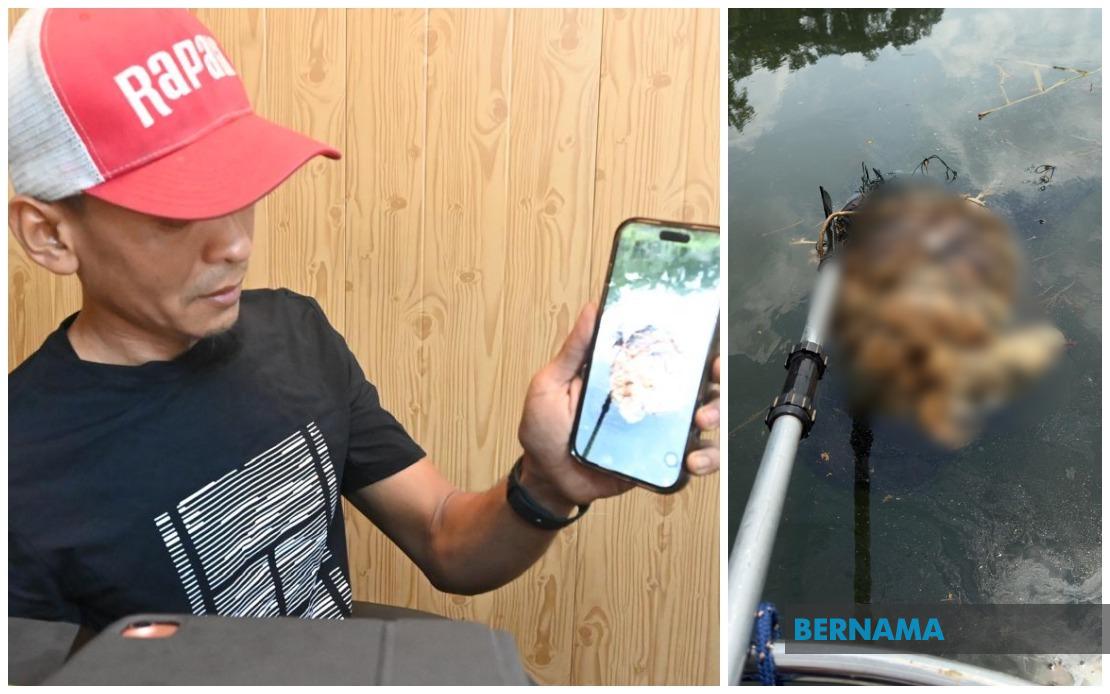
A routine fishing expedition at Sungai Tanjung Sembrong in Parit Raja, Batu Pahat, turned into a grim discovery when a local angler spotted a wrapped body in the water, prompting a police investigation that has already resulted in three arrests. The discovery highlights how ordinary moments can suddenly veer into tragedy, with implications extending across multiple districts in Johor.
Muhamad Zul Fikri Borhanodin, a 33-year-old fisherman, was documenting his fishing activities for social media when he noticed an unusual object floating in the river at approximately 11 am on August 3. Drawing on decades of experience fishing these waters, he initially believed he had encountered another animal carcass, a phenomenon he described as commonplace in the area. Yet something about this particular discovery warranted deeper investigation, and his instincts proved correct.
What ultimately prompted Muhamad Zul Fikri to investigate more closely was the overpowering stench emanating from the floating object and the fact that it appeared to be deliberately wrapped and bound with fishing netting. When he moved closer for examination, he observed a pair of jeans, a detail that shifted his suspicion from animal remains to something far more sinister. Acting decisively, he immediately notified another fisherman operating a separate boat nearby and together they initiated the chain of events that would involve law enforcement.
The discovery takes on additional weight given Muhamad Zul Fikri's extensive familiarity with the location. With more than twenty years of fishing experience specifically at Sungai Tanjung Sembrong, he stands as a long-time witness to the river's history. His recollection of a previous body discovery at the same location—involving someone who had fallen into the water years earlier—suggests the waterway carries a tragic history and raises questions about safety measures and public awareness around the river.
Police received notification of the discovery at approximately 12.30 pm, setting into motion formal investigative procedures. Johor's deputy police chief, DCP Hoo Chuan Huat, confirmed that authorities had apprehended three male suspects, all aged between 26 and 40 years old, in the Batu Pahat vicinity on the same day as the body discovery. These detentions aimed to gather information and clarify the circumstances surrounding the death.
The investigation quickly connected the discovery to a missing person case with roots in a different district. The victim's wife had reported her husband missing on July 29, specifying that he had vanished from Mutiara Rini in Iskandar Puteri, a location approximately 50 kilometres away from where his body was recovered. This geographic distance suggests either he was killed elsewhere and transported to the river, or he travelled to the area before his death, each scenario presenting different investigative angles.
The circumstances of the body being methodically wrapped and bound with netting point toward deliberate concealment rather than accidental death. Such deliberate measures indicate someone sought to prevent the body from surfacing or being easily discovered, underscoring the apparent premeditation involved. Yet the discovery's relatively quick occurrence—less than a week after the missing person report—suggests either the concealment method proved inadequate or the location was not sufficiently remote.
For Malaysian law enforcement, the case illustrates how waterways continue to feature prominently in serious crime investigations, particularly across Johor's extensive river network. The Sungai Tanjung Sembrong case mirrors broader patterns where bodies concealed in water eventually resurface, often through chance encounters or routine activities by ordinary citizens. This reality underscores the challenges police face in solving crimes where perpetrators attempt to eliminate evidence through submersion.
The three arrested individuals now face crucial questioning about their potential involvement, knowledge, or whereabouts during the critical period between July 29 and August 3. Their ages suggest they may span a generational range, raising questions about whether this involved organised activity or whether associates of varying backgrounds collaborated in whatever transpired. The investigation will likely examine communications, movements, relationships, and motives connecting these individuals to the victim and to each other.
For the victim's family, the discovery brings closure to the uncertainty of not knowing their loved one's fate, though it arrives wrapped in the tragedy of apparent foul play. The missing person report mechanism, in this instance, proved instrumental in authorities establishing a timeline and understanding the broader context of the death. Such cases underscore the importance of families reporting disappearances promptly, enabling police to establish frameworks within which to investigate.
The broader implications for Southeast Asian readers extend beyond Johor's immediate jurisdictional boundaries. River-related crime discoveries across Malaysia and the region remain persistent challenges, complicated by geography, accessibility, and the varying rates at which decomposing bodies resurface. Improved coordination between police forces, enhanced river patrols in known trouble spots, and community awareness campaigns about reporting suspicious activities near waterways collectively represent strategies employed across comparable investigations.
As DCP Hoo Chuan Huat's police unit continues interrogating the three detained men, investigators will pursue forensic evidence, timeline reconstruction, and motive analysis. The deliberate wrapping suggests someone with knowledge or forethought regarding body disposal, details that may distinguish between opportunistic violence and premeditated harm. Muhamad Zul Fikri's chance discovery, born from an innocent attempt to capture fishing content, has provided authorities their first tangible lead in what appears to be a homicide investigation spanning multiple Johor districts.

