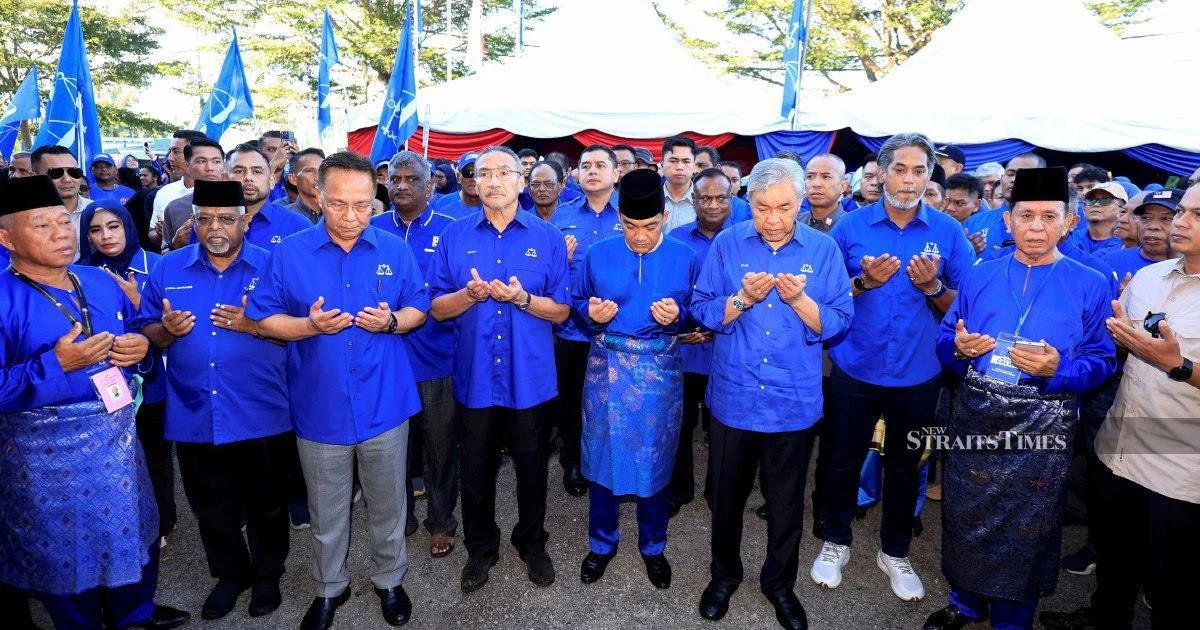
Senior figures within Barisan Nasional made a deliberate show of force at the Simpang Renggam District Council offices this morning, gathering to demonstrate their collective backing for Datuk Onn Hafiz Ghazi. The carefully orchestrated appearance of multiple BN heavyweights underscored the coalition's determination to present a unified front in the approach to Johor's electoral contest, with the concentration of top-tier political figures sending a clear message about organisational cohesion at a critical juncture.
The assembly at Simpang Renggam carries particular significance given the competitive nature of contemporary Malaysian politics, where such public displays of unity serve multiple strategic purposes. By bringing together established party figures and senior government officials in a single venue, BN's leadership demonstrated that backing Onn Hafiz represents more than individual support—it reflects institutional commitment from the coalition's power structure. For voters observing from the sidelines, the gathering telegraphs confidence and organisational strength, qualities that political parties routinely emphasise during campaign periods.
Onn Hafiz's position as Johor Menteri Besar places him at the forefront of BN's state-level operations, making his political stability a matter of considerable consequence for the coalition's overall performance in the region. Johor, as Malaysia's second-most populous state and an economic powerhouse, represents territory that BN cannot afford to lose or substantially weaken. The personal validation offered by senior coalition leaders therefore extends beyond individual endorsement, functioning as reassurance to party machinery and party-aligned constituencies that their existing political investments remain strategically sound.
The timing of such gatherings frequently correlates with internal party dynamics or external competitive pressures. Whether prompted by internal murmuring about Onn Hafiz's direction, rival opposition activity in the state, or simply standard pre-election momentum-building, the presence of multiple BN figures suggests that party strategists identified value in this particular public demonstration. In Malaysian politics, where factional tensions within coalitions frequently surface in local media coverage, orchestrated shows of solidarity often serve to suppress such narratives before they gain traction.
For Malaysian observers following state-level politics, such events warrant attention because they preview how respective coalitions intend to contest the upcoming election. BN's decision to concentrate leadership presence around Onn Hafiz indicates that this figure remains central to their Johor strategy, rather than being sidelined or marginalised within broader coalition calculations. This contrasts sharply with scenarios where political figures face internal resistance, as evidenced through conspicuous absence of senior party representation.
The Simpang Renggam location itself merits consideration, as district-level venues carry different symbolic weight compared to state capitals. Selecting a secondary urban centre for this gathering suggests an intention to engage voters beyond Johor Bahru's metropolitan boundaries, acknowledging that electoral victories require support across the state's geographical breadth. This operational detail reflects how Malaysian political campaigns increasingly attend to distributing campaign activities across diverse constituencies rather than concentrating resources exclusively in urban strongholds.
Within the broader context of Malaysian coalition politics, BN's public display of internal alignment represents a resource allocation decision. Deploying senior figures for local campaign activities signals that the coalition views this contest as sufficiently significant to warrant top-level attention. Conversely, relegating electoral campaigning to secondary-tier figures might suggest lower institutional prioritisation, a signal that opposition parties would eagerly exploit to argue that BN lacks conviction about electoral prospects.
For Malaysia's political economy, Johor's electoral outcome carries implications extending beyond the state itself. As a significant economic zone and a traditionally important component of BN's federal support base, developments in Johor influence calculations about the coalition's overall sustainability. Investors and businesses routinely monitor state election outcomes as indicators of political stability and government continuity, meaning that BN's demonstrated focus on retaining Johor reflects economic considerations alongside purely electoral concerns.
The gathering also illustrates how Malaysian political parties orchestrate public relations messages through physical assemblies rather than relying exclusively on digital communication strategies. Despite Malaysia's developed information technology landscape, face-to-face deployment of political leadership remains a standard campaign tactic because it generates local media coverage and creates tangible evidence of organisational presence that voters can directly observe. This approach proves particularly effective in districts where direct voter engagement opportunities prove limited during formal campaign periods.
Looking forward, whether this demonstration of BN unity translates into electoral success will depend on multiple variables beyond internal coalition harmony. Opposition parties' campaign intensity, voter sentiment about economic conditions, and local grievances all factor into electoral calculations. Nevertheless, BN's leadership clearly determined that publicly aligning behind Onn Hafiz served the coalition's interests at this particular political moment, a calculation that reflects ongoing strategic prioritisation of Johor within broader Malaysian electoral politics.

