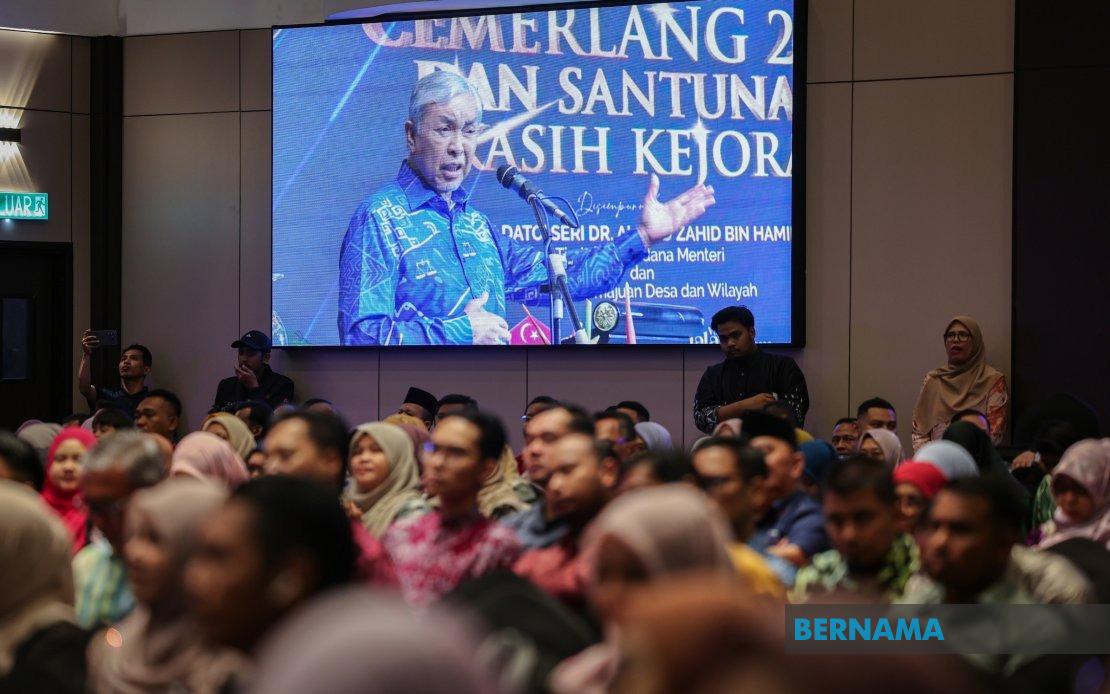
Barisan Nasional's campaign machinery for the Johor state election is functioning effectively and delivering results on the ground, coalition chairman Datuk Seri Dr Ahmad Zahid Hamidi asserted during a press engagement in Kota Tinggi on July 2. The Deputy Prime Minister's remarks came in direct response to suggestions from certain quarters that BN's campaigning efforts have appeared subdued compared to previous electoral contests. Zahid characterised such assessments as emanating from political perception rather than observable reality, while maintaining that opposing coalitions remain at liberty to voice their own opinions regarding campaign intensity.
The contention over campaign energy reflects the broader competitive dynamics shaping the contest for all 56 state assembly seats. BN is not alone in mobilising resources and voter outreach—Pakatan Harapan is fielding a full slate of 56 candidates, Perikatan Nasional is contesting 33 seats, while smaller formations including Bersama, MUDA, Parti Orang Asli Malaysia, Parti Sosialis Malaysia, and six independent candidates round out the field. The fragmentation across multiple political groupings suggests that campaign visibility may be distributed more thinly than in previous single-versus-single contests, potentially explaining perceptions of reduced intensity despite genuine organisational activity.
Zahid's defence of BN's electoral positioning reflects the coalition's confidence in its incumbent state administration headed by Menteri Besar Datuk Onn Hafiz Ghazi. The Johor government's financial performance has become a centrepiece of BN's campaign narrative, with Zahid highlighting that the state registered revenue of RM2.26 billion in the preceding year—a benchmark he claims represents the strongest performance among Peninsular Malaysian states. This fiscal achievement underscores the administrative stability that BN offers voters, positioning the coalition's developmental track record as tangible evidence of effective governance rather than mere campaign rhetoric.
A notable tension in the political landscape involves the coordination between BN and Pakatan Harapan at the federal level through the Unity Government framework, established in late 2023. Some analysts have suggested that this arrangement could perplex traditional BN voters in Johor who view Pakatan as a rival force. However, Zahid articulated a distinction that resolves this apparent paradox: Johor's state government predates the federal Unity Government arrangement, rendering the state administration independent of federal power-sharing dynamics. This chronological separation allows BN to present itself as a distinct entity at the state level while participating in cooperative governance nationally, a positioning that Zahid argued reflects professional working relationships rather than organisational confusion.
The coalition's strategic focus centres on expanding its state mandate rather than merely defending incumbent seats. BN's objective of securing a resounding victory would provide the incoming administration with renewed electoral capital to pursue its five-year developmental agenda as articulated in its campaign manifesto. Such an outcome would signal voter validation of the Onn Hafiz administration's policy direction and grant enhanced legitimacy to planned initiatives. The emphasis on mandate expansion, rather than preservation, indicates BN's assessment that current circumstances favour a positive electoral outcome under favourable conditions.
PAS president Tan Sri Abdul Hadi Awang's appeal to voters to categorically reject Pakatan Harapan—including in contests where BN and PH face off directly—presents a complication for unified opposition coordination. The implicit suggestion that PAS supporters should abstain from or vote against PH-endorsed candidates, even when BN stands as the primary beneficiary, contradicts conventional opposition unity logic. Zahid's response reflected institutional composure rather than acrimonious engagement, with the BN chairman indicating that his coalition would maintain professional campaign standards and allow electoral outcomes to speak for themselves. This restrained posture suggests confidence in BN's organisational capacity and voter appeal without requiring external validation from rival opposition blocs.
The campaign period carries particular significance for Malaysian electoral politics given ongoing debates about coalition stability at both state and national levels. Johor voters will render a verdict not merely on local governance but implicitly on the broader viability of power-sharing arrangements between ostensible rivals. BN's strategy emphasises continuity and competent administration under established leadership, an appeal pitched directly at voters who may value institutional stability in an era of shifting political alignments. The coalition's messaging deliberately positions itself as the custodian of Johor's economic progress and social cohesion, narratives that resonate across demographic segments concerned with practical governance outcomes.
Zahid's invocation of professional campaigning standards, contrasted with what he characterised as the more adversarial approach of rival coalitions, subtly frames BN as the mature electoral operator focused on substantive issues rather than partisan theatre. This rhetorical positioning carries weight with voters fatigued by confrontational politics, positioning the incumbent as a stabilising force capable of navigating complex governance challenges. The emphasis on existing state revenue achievements and planned future development initiatives furnishes voters with concrete reference points for evaluating BN's competence, moving beyond abstract ideological appeals toward performance-based assessment.
Early voting is scheduled for July 7, with general polling occurring on July 11, providing a compressed campaign timeline in which momentum and messaging discipline become particularly consequential. The election outcome will carry implications extending beyond Johor's borders, potentially influencing calculations within the federal Unity Government regarding balance of power between component parties. A decisive BN victory would strengthen the coalition's negotiating position nationally, while a diminished mandate or unexpected electoral setback could ripple through federal political alignments. Malaysian political observers across Southeast Asia will monitor the result closely as an indicator of whether established ruling coalitions can successfully defend electoral strongholds amid fragmented opposition challenges and evolving voter priorities around governance effectiveness versus ideological positioning.

