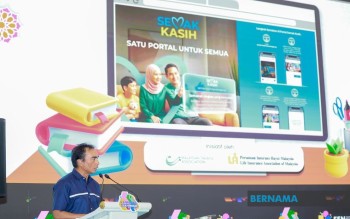
Bank Negara Malaysia has unveiled a new digital platform designed to address a longstanding gap in the nation's insurance and takaful landscape: thousands of unclaimed death benefits sitting in insurers' hands while beneficiaries remain unaware of their existence. The 'Semak Kasih' portal, launched in Kuala Terengganu, represents a significant effort to reunite families with financial protection that their loved ones purchased but never successfully transferred upon death.
Deputy Governor Adnan Zaylani Mohamad Zahid framed the initiative as a response to a persistent problem plaguing Malaysia's financial services sector. According to estimates jointly compiled by the Life Insurance Association of Malaysia and the Malaysian Takaful Association, approximately 50,000 insurance policies and takaful certificates with death benefit entitlements remain unclaimed. These represent genuine financial assets—protection mechanisms deliberately established by breadwinners to safeguard their families—yet they languish uncollected due to communication breakdowns, administrative confusion, or simple lack of awareness among intended recipients.
The portal functions as a centralized verification mechanism, allowing beneficiaries to search for coverage their deceased family members may have held. Rather than requiring families to contact dozens of insurers individually or navigate complex claims procedures without knowing where to begin, the system streamlines the discovery and initiation process. Once a beneficiary confirms the existence of coverage through the platform, they can immediately engage with the relevant insurance or takaful provider to commence formal claims procedures. This addresses a fundamental friction point in Malaysia's insurance ecosystem where administrative barriers have historically prevented legitimate payments from reaching qualified recipients.
For Malaysian households, the implications extend beyond individual benefit recoveries. The unclaimed funds represent a broader issue of financial protection awareness, particularly in a nation where many families operate with minimal safety nets. Death benefits serve critical functions—covering medical debts, funeral expenses, mortgage obligations, or temporarily sustaining dependents—precisely when households face maximum vulnerability. When these protections go unclaimed, they represent not merely lost money but a failure of the financial system to fulfill its fundamental social contract during families' darkest hours.
Adnan Zaylani emphasized that insurance and takaful protection warrants far greater prominence in Malaysian financial planning discourse. Both mechanisms provide essential scaffolding during catastrophic events: severe illness requiring extended hospitalization, accidents causing permanent disability, or fire destroying property and livelihoods. Yet many Malaysians view these products as optional extras rather than foundational elements of household financial architecture. The 'Semak Kasih' launch implicitly acknowledges this knowledge deficit and attempts to bridge the gap between coverage purchased and claims ultimately collected.
The central bank has already invested considerable effort in contacting beneficiaries through traditional channels—insurance agents visiting homes, companies dispatching notification letters—but these methods have proven inadequate for reaching the full population of eligible claimants. A digital portal addresses this constraint by making inquiries available 24/7 from any internet connection, reducing bureaucratic friction and accommodating diverse communication preferences. For a nation increasingly comfortable with digital financial transactions, this aligns with broader fintech trends while targeting a specific, quantifiable problem.
Beyond the immediate benefit discovery mechanism, the portal rollout reflects BNM's wider financial literacy agenda. Deputy Governor Adnan Zaylani linked the initiative to broader efforts strengthening financial resilience across Malaysian society, including initiatives targeting micro, small, and medium enterprises through various financing schemes offering microloans up to RM100,000 without collateral or guarantor requirements. The central bank has additionally allocated RM5 billion under the SME Stabilisation Relief Facility to support companies affected by regional geopolitical disruptions, enabling working capital financing packages reaching RM750,000.
Research underpinning BNM's policy agenda reveals troubling behavioral patterns among Malaysian consumers. Approximately 37 percent admit to impulsive online purchasing decisions, while 26 percent carry debt burdens they acknowledge as unsustainably high. These statistics suggest that while the 'Semak Kasih' portal addresses a specific administrative challenge, Malaysia faces broader financial decision-making deficiencies requiring educational intervention from childhood through adulthood. The central bank's emphasis on financial literacy thus extends far beyond insurance awareness into fundamental money management competencies.
The iTekad initiative illustrates one approach, having enhanced income and living standards for over 14,000 participants nationwide, including approximately 600 in Terengganu. The Financial Education Forum initiative advances this mission toward greater inclusivity, particularly targeting persons with disabilities through a dedicated website functioning as an integrated financial education hub. These complementary programs suggest BNM views financial capability as a social determinant affecting economic mobility and household stability across income levels.
Educational initiatives targeting young Malaysians represent critical infrastructure for long-term financial culture transformation. Programs including the MyDuitStory competition and the FEN Proaktif 2.0 Programme, developed collaboratively with Universiti Malaysia Terengganu, aim to equip students entering the workforce with robust financial management foundations. Early savings habits, research suggests, compound significantly over decades, enabling substantially more secure retirements and wealth accumulation than decisions deferred until later adulthood. By anchoring financial literacy education in school systems and universities, BNM seeks to establish behavioral patterns conducive to prudent decision-making before young adults encounter complex financial products and marketplace pressures.
Adnan Zaylani's closing remarks captured BNM's philosophical approach to financial resilience amid uncertain macroeconomic conditions. While policymakers cannot control global economic fluctuations or technological disruption, individuals possess substantial agency over daily financial decisions—saving consistently, spending deliberately, protecting themselves adequately, and continuously expanding financial knowledge. The 'Semak Kasih' portal operationalizes this philosophy by removing a specific administrative barrier preventing families from accessing protection already purchased, while simultaneously symbolizing the central bank's commitment to financial system transparency and beneficiary-centric service design.

