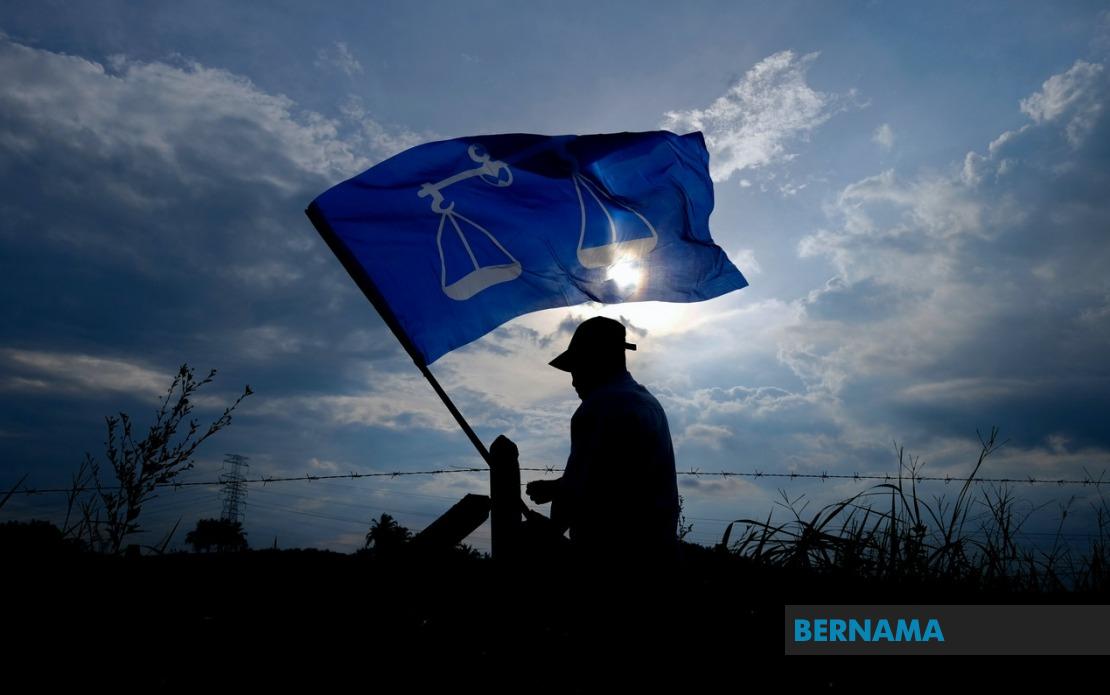
Barisan Nasional plans to recalibrate its political playbook for the upcoming Negeri Sembilan state election, taking into account the unique demographic composition and electoral patterns that distinguish the state from other Malaysian territories. BN chairman Datuk Seri Dr Ahmad Zahid Hamidi made the announcement on July 13, emphasising that a one-size-fits-all approach would not serve the coalition's interests in what remains a competitive political landscape in the Malay heartland.
Ahmad Zahid, who holds the concurrent position of Deputy Prime Minister, explained that Negeri Sembilan's smaller parliamentary constituency count, combined with its particular population structure and voting tendencies, necessitates a strategic recalibration of both candidate selection criteria and campaign messaging. The state's distinctive profile means that strategies proven effective in larger, more populous states cannot simply be transplanted wholesale. Rather, BN intends to craft a formula that resonates specifically with Negeri Sembilan voters while maintaining alignment with the coalition's broader objectives.
The timing of this announcement comes on the heels of BN's convincing performance in the recent Johor state election, where Ahmad Zahid credited the coalition's success to a combination of psychological fortitude and creative problem-solving throughout the campaign period. That victory provided momentum heading into the Negeri Sembilan contest, though the deputy premier acknowledged that each state presents its own peculiar challenges and opportunities that demand tailored solutions rather than cookie-cutter tactics.
Candidate nominations emerged as a critical element of BN's readiness for the electoral contest. Ahmad Zahid indicated that the coalition would announce its slate of candidates during that same week, signalling that preparations were moving into their final phase. The candidate selection process itself reflects the coalition's commitment to fielding personalities who can effectively connect with Negeri Sembilan's electorate and articulate BN's vision in locally resonant terms.
Coalition discussions with PAS regarding potential cooperation frameworks and specific portfolio allocations, particularly regarding the Menteri Besar position, remain fluid rather than settled. Ahmad Zahid took pains to clarify that no formal written agreements exist between BN and PAS, characterising their dialogue instead as preliminary understandings that have yet to crystallise into binding commitments. This distinction carries significance, as it preserves BN's flexibility while negotiations continue and permits either party to adjust its position should circumstances evolve.
The deputy premier's measured language about PAS negotiations reflected the delicate balancing act required when managing multiple coalition partners with sometimes divergent interests and constituencies. While BN and PAS have found common cause at the federal level and may cooperate at the state level, their relationship remains transactional and conditional rather than organic. Ahmad Zahid's comments suggested that BN would not rubber-stamp arrangements that did not serve its core interests, even if broader coalition considerations occasionally required compromise.
On the domestic front within Malaysia's governing coalition, Ahmad Zahid addressed criticism directed at Housing and Local Government Minister Nga Kor Ming, the DAP deputy chairman, by urging greater restraint in public statements among Unity Government partners. The deputy premier argued that inflammatory rhetoric appropriate for opposition politics becomes counterproductive when all parties share governmental responsibility and must present a united front to the electorate. His characterisation of Nga as a personal friend underscored the coalition's attempt to maintain collegial working relationships despite occasional policy disagreements or public criticism.
Ahmad Zahid's defence of Unity Government cohesion reflected broader concerns about coalition stability. With BN, DAP, PKR, and other components needing to function effectively across multiple layers of governance, excessive public infighting creates space for opposition forces to exploit divisions and raises questions about the government's capacity to deliver on its agenda. By tempering expectations that every internal disagreement would be aired in public, the deputy premier sought to establish professional norms that could contain inevitable tensions.
The relationship between federal and state-level politics in Malaysia adds another layer of complexity to BN's Negeri Sembilan calculations. While the coalition performs adequately at the national level, maintaining state governments remains crucial for controlling resources, delivering local services, and preventing opposition footholds that could later threaten federal dominance. Negeri Sembilan, a state with significant Malay-Muslim demographics but also emerging urbanisation trends, represents precisely the kind of territory where demographic shifts and voter mobility could alter political equilibrium if BN fails to engage voters effectively.
Ahmad Zahid's emphasis on demographic and voting pattern analysis reflects modern political practice increasingly informed by data analytics and targeted messaging. Rather than assuming uniform voter preferences across constituencies, contemporary campaigns increasingly segment electorates and tailor messaging accordingly. This approach suggests BN recognises that different voter cohorts within Negeri Sembilan—whether rural farmers, urban professionals, youth, or traditional constituencies—respond to different appeals and require customised communication strategies.
The broader context of Malaysia's political trajectory since the 2022 general election has shaped these calculations. With BN recovering from the 2018 electoral collapse and the subsequent Perikatan Nasional adventure, the coalition remains focused on methodically rebuilding electoral support and demonstrating effective governance at state and federal levels. Negeri Sembilan, while not a megastate, nonetheless represents an important arena for consolidating BN's revival and maintaining the coalition's footprint across Malaysia's geography.
As BN proceeds with finalising its Negeri Sembilan strategy, the coming months will test whether customised approaches genuinely translate into electoral gains or whether broader national political currents ultimately determine outcomes. The state election will provide important indicators of whether the coalition's coalition-building efforts and granular political strategy prove sufficient to maintain its dominance in Southeast Asia's most enduring political force.

