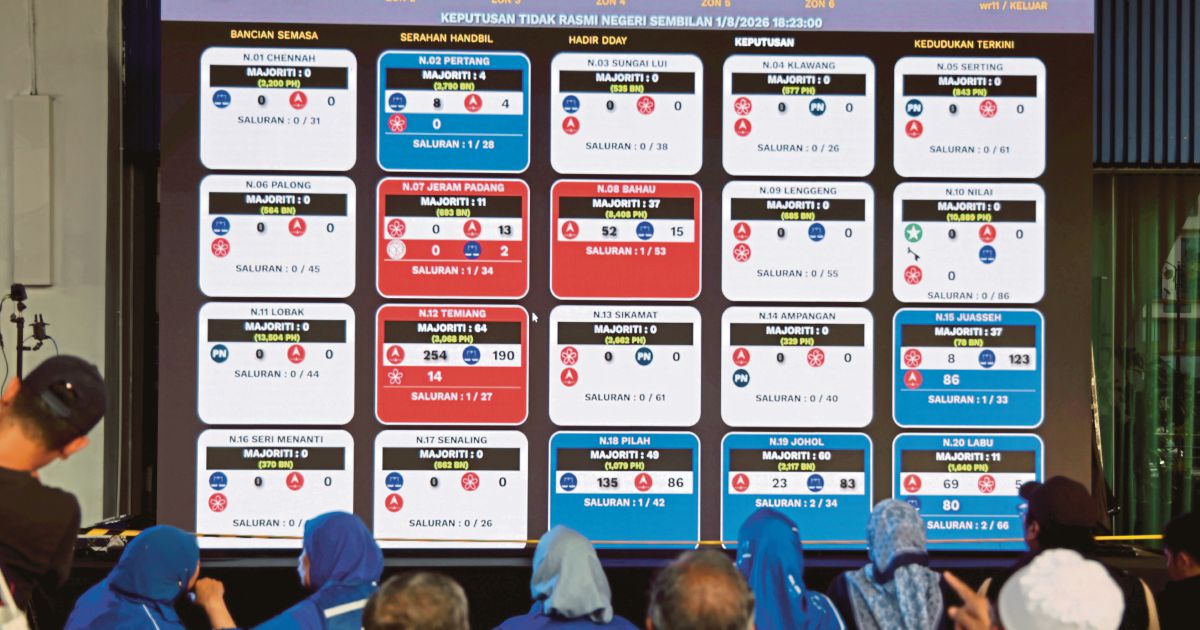
The Barisan Nasional and Perikatan Nasional coalition has claimed victory in Negri Sembilan's state elections, with Umno's Datuk Dr Asyraf Wajdi Dusuki declaring the partnership has secured the 23 seats necessary to govern the state. The announcement was made in Seremban as final results from the electoral process became clearer, signalling a significant outcome for the federal government-aligned parties in this peninsular state.
Negri Sembilan, while smaller than several other Malaysian states, holds considerable strategic importance in the broader political landscape. The state has traditionally been a competitive battleground, and results here often reflect shifting patterns across the wider electorate. A BN-PN victory consolidates the ruling coalition's control over key peninsular territories and strengthens its legislative position ahead of potential future developments in Malaysian politics.
The Perikatan Nasional component of this coalition has been instrumental in several state administrations since the 2022 general election, and this apparent success in Negri Sembilan reinforces its credentials as a coalition partner. The combination of BN's traditional electoral machinery and PN's grassroots appeal has proven effective in this electoral context, demonstrating that despite occasional tensions between the two blocs at the federal level, they remain capable of coordinated action at state level.
For Barisan Nasional specifically, the result extends a pattern of relative electoral stability in its traditional strongholds. Umno's role in leading the charge reflects the party's ongoing attempts to rebuild credibility following the political upheavals of recent years. The state election provides a platform for Umno leaders to demonstrate renewed relevance and organisational capacity to both the party faithful and the broader electorate.
The claim of 23 seats, should it be confirmed following official tallying, would give the coalition a workable majority in the Negri Sembilan State Assembly. This would enable formation of a functioning state government with sufficient numbers to pass legislation and maintain stability through the normal legislative term. The margin, while not overwhelming, should prove sufficient for administrative purposes provided discipline within the coalition ranks is maintained.
The timing of this announcement also matters politically. Clear assertion of coalition victory at an early stage helps shape narrative momentum and sets expectations for formation of the new state administration. By moving quickly to claim the mandate, coalition leaders seek to demonstrate confidence and control over proceedings, factors that matter considerably in Malaysian politics where perceptions of momentum and unity can influence the behaviour of elected representatives.
This outcome has implications for Malaysia's broader political equilibrium. A BN-PN partnership that functions effectively at state level strengthens arguments for continued federal cooperation. Conversely, any difficulties in implementing this state-level alliance could complicate federal arrangements. Negri Sembilan thus becomes a test case for whether the two coalitions can work harmoniously when circumstances require it.
For opposition parties, the apparent loss suggests they faced significant headwinds in this electoral context. Whatever the ultimate margin of defeat, it underscores the challenge facing opposition forces in competing against a united government-aligned coalition that possesses substantial organisational resources and administrative advantages of incumbency.
The Datuk Dr Asyraf Wajdi Dusuki claim remains unofficial pending official confirmation from the Election Commission, but such claims from major coalition figures typically reflect genuine confidence in vote tallies and preliminary results. The next steps will involve formal announcement of results, followed by the constitutional process of government formation, potentially including discussions about ministerial portfolios and the allocation of state-level positions between BN and PN components.
The composition of the new Negri Sembilan government will also signal how power-sharing arrangements between these two coalitions operate in practice. The distribution of major state positions between Barisan Nasional and Perikatan Nasional representatives will be closely watched by political observers analysing the stability and sustainability of their partnership.
Looking forward, this electoral performance establishes a baseline for the two coalitions' combined strength in Negri Sembilan for the remainder of the state assembly term. Maintaining this coalition majority requires continued harmony between BN and PN at the state level, a factor that state leaders will need to manage carefully to prevent internal disagreements from spilling over into parliamentary proceedings.
For Malaysian voters and observers across the peninsula, the Negri Sembilan result represents a data point in the evolving post-2022 electoral landscape. It demonstrates that despite political volatility elsewhere in Malaysia, the BN-PN partnership retains significant electoral appeal in certain contexts, even as opposition forces continue efforts to build alternative narratives and organisational capacity for future electoral contests.

