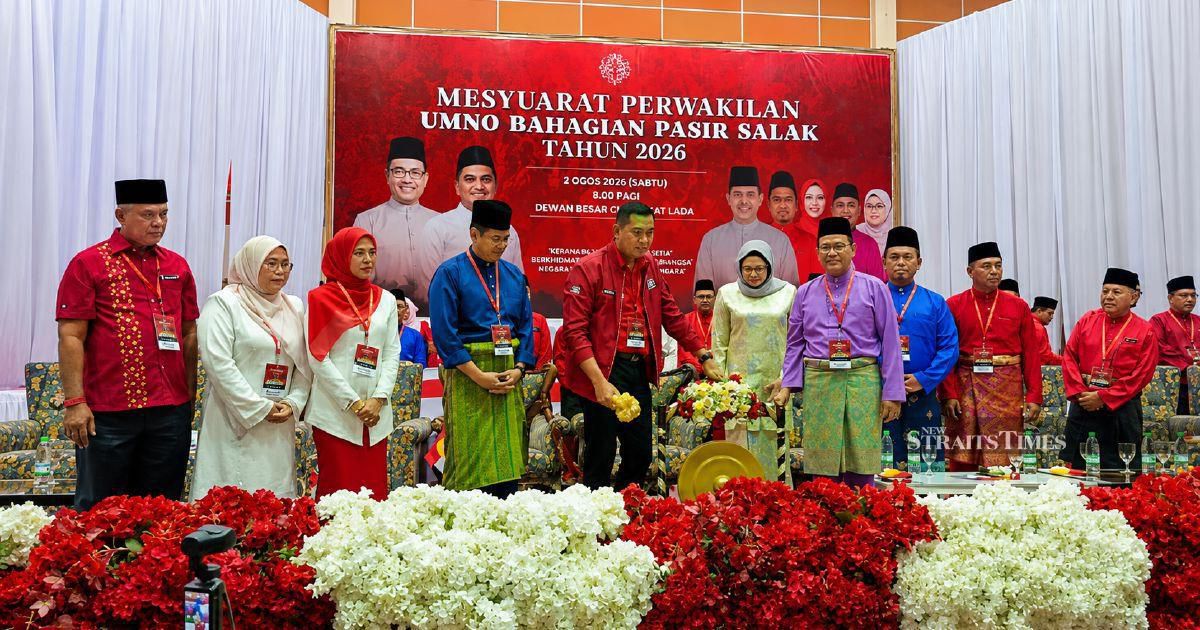
The leadership of Umno must acknowledge and honour the perspectives held by division leaders concerning electoral seat distributions arising from the party's recent political arrangement with Perikatan Nasional, according to Umno Youth chief Datuk Dr Muhamad Akmal Saleh speaking in Pasir Salak. This statement underscores growing internal pressures within Umno as the coalition navigates the complex process of determining parliamentary and state assembly seat allocations under its agreement with PN.
The formation of a political understanding between Barisan Nasional and Perikatan Nasional represents a significant realignment in Malaysian politics, carrying profound implications for how seats are distributed among coalition partners. Since the announcement of this alliance, constituencies at various levels have become focal points of internal party negotiation, with grassroots members and division representatives often holding entrenched positions based on local political considerations and historical electoral performance. Akmal's intervention suggests that central party machinery cannot simply impose seat allocation decisions without considering sentiments bubbling up from the ground level.
For Umno as Malaysia's dominant political force within BN, the challenge is particularly acute. The party holds the largest number of parliamentary and state seats within the coalition and has traditionally wielded considerable influence in determining who contests where. However, the addition of PN as a formal alliance partner has altered this calculus significantly. PN brings substantial voter bases in certain regions and states, particularly in the northeastern peninsula, creating inevitable friction points where both coalitions might seek the same constituencies. Division leaders, who bear direct responsibility to their communities and party members, often possess intimate knowledge of local electoral dynamics that national strategists may overlook.
Akmal's emphasis on respecting divisional stances reflects a recognition of internal party democracy principles that have historically defined Umno's strength. Division leaders represent the institutional memory of their constituencies, understanding voter preferences, community concerns, and the party's previous performance in ways that national calculations cannot fully capture. By advocating for their inclusion in seat allocation discussions, Akmal appears to be positioning Umno Youth as champions of grassroots perspectives, a posture that carries political weight within a party where younger members increasingly demand greater transparency and participation in strategic decisions.
The broader context of this statement relates to broader tensions within the ruling coalition regarding power distribution. BN's traditional dominance has been challenged in recent years through electoral volatility and shifting voter preferences, making the stability provided by a formal understanding with PN attractive strategically. Yet this stability comes with costs, particularly regarding seat negotiations that inevitably disappoint some factions within the larger coalition. Division leaders who anticipated contesting particular constituencies may find themselves sidelined to accommodate PN's strategic interests or to balance regional representation.
Malaysian political coalitions have historically grappled with this tension between central coordination and grassroots autonomy. The challenge becomes especially pronounced when multiple parties must coordinate electoral strategies across hundreds of constituencies while managing internal party expectations. Premature announcements or perceived high-handed allocation decisions have triggered dissent and defections in past election cycles, prompting cautious leadership to involve divisional representatives more substantially in these critical decisions.
For Malaysian voters and observers monitoring coalition stability, Akmal's statement carries mixed signals. On one hand, it suggests a commitment to internal consultation and democratic processes. On the other hand, it hints at underlying disagreements within Umno regarding how the BN-PN understanding should be operationalised, with division leaders potentially resisting allocations that favour PN candidates or consolidate seats for national-level strategic purposes. The coming weeks will reveal whether Umno's party leadership genuinely incorporates divisional feedback or whether it proceeds with pre-determined allocation formulas that marginalise grassroots input.
The timing of Akmal's comments, made in Pasir Salak—itself a constituency with considerable electoral significance—suggests deliberate positioning. By championing divisional autonomy, Umno Youth stakes a claim to representing party members' interests against what might be perceived as technocratic decision-making from central leadership or accommodations to coalition partners. This generational tension between institutional hierarchies and democratic participation runs throughout Malaysian political parties, with Umno Youth frequently playing the role of internal pressure group demanding greater inclusivity.
Regional implications extend beyond Umno's internal dynamics. The stability of the BN-PN alliance depends substantially on fair and perceived-to-be-fair seat allocations that prevent partner parties from feeling systematically disadvantaged. Should Umno's divisions organise substantive resistance to particular seat distributions, this could ripple outward, affecting PN's confidence in the alliance and potentially influencing how other coalition members view their own negotiating positions. Southeast Asian political observers have increasingly noted how informal coalition arrangements, lacking formal written frameworks, often fracture over implementation disagreements, making Akmal's emphasis on grassroots consultation strategically significant.
Moving forward, Umno's central leadership faces the delicate task of balancing genuine grassroots consultation with the operational necessities of governing a large coalition. Ignoring divisional concerns entirely risks generating internal alienation precisely when united political parties prove most electorally competitive. Conversely, allowing purely localistic considerations to override coalition-wide strategic imperatives could undermine the BN-PN understanding's effectiveness. The resolution of this tension will significantly influence not only Umno's electoral performance in the next general election but also the broader stability of Malaysia's ruling coalition and the confidence that voters place in its coherence and governance capacity.

