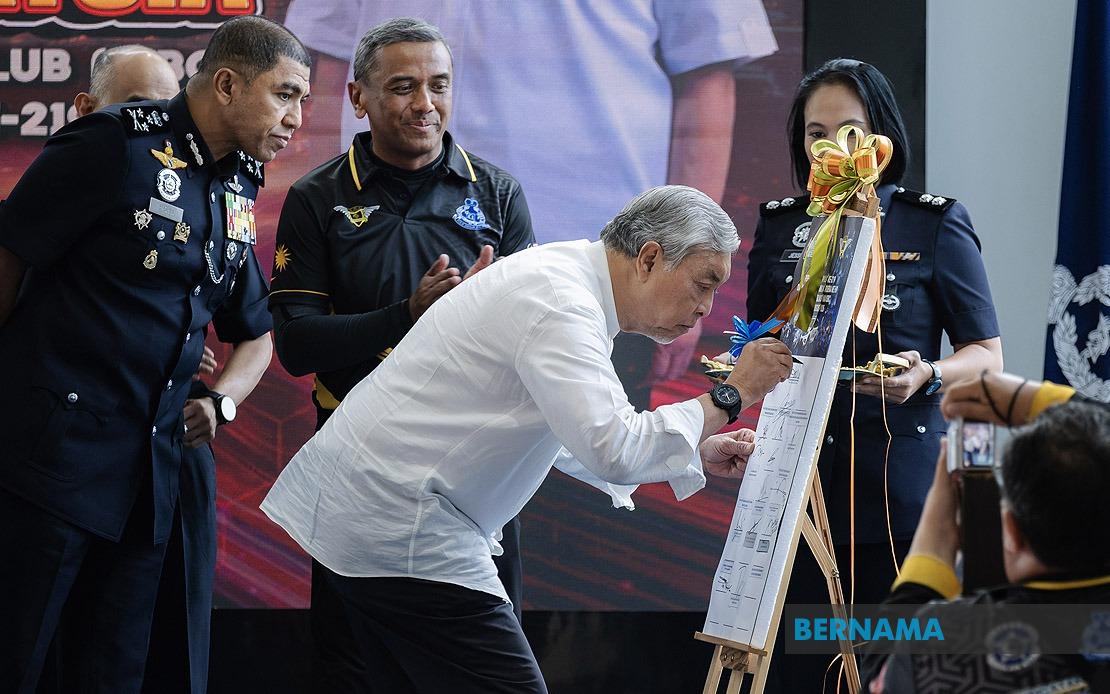
Barisan Nasional cannot simply import its winning formula from other states into Melaka without carefully considering the state's distinct political context, according to coalition chairman Datuk Seri Dr Ahmad Zahid Hamidi. Speaking after an event at the Kuala Lumpur Police Contingent Headquarters, the Deputy Prime Minister underlined that BN's approach to the upcoming Melaka state election must be calibrated to fit local realities rather than blindly following the templates that delivered dominant victories in Johor and Negeri Sembilan.
The carefully worded position reflects deep calculations within BN's leadership about how to navigate a delicate political terrain in Melaka. The state, with its mixed electorate and fractious coalition dynamics, presents challenges markedly different from the more straightforward contests in neighbouring states. Ahmad Zahid's emphasis on crafting a tailored approach signals recognition that imposing a uniform strategy across Malaysia's diverse states risks either overreaching or oversimplifying complex local political equations.
During his remarks, Ahmad Zahid articulated a core principle underpinning BN's coalition negotiations: any arrangement must deliver tangible benefits that substantially exceed potential costs. This formulation—benefits must outweigh drawbacks—encapsulates the pragmatic calculation that drives contemporary Malaysian coalition politics. In practice, this means BN must assess whether expanded cooperation at the state level generates sufficient electoral advantage or institutional control to justify potential complications, internal party tensions, or compromises on candidate selection and ministerial portfolios.
The Deputy Prime Minister also stressed the importance of good faith and honour in any political agreements, cautioning against negotiating partners who agree to terms only to reverse course once deals are finalised. This implicit warning suggests BN has encountered or fears such behaviour in previous arrangements, reflecting the erosion of trust that has characterised Malaysian coalition politics over the past decade. The emphasis on sincerity and promise-keeping, though rhetorically appealing, underscores how fragile contemporary political alliances have become.
Ahmad Zahid delegated immediate negotiating authority to Melaka Chief Minister Datuk Seri Ab Rauf Yusoh, who simultaneously holds the position of Melaka BN chairman. This arrangement concentrates decision-making power at the state level while preserving ultimate approval at the national party headquarters. The structure allows for flexibility in state-level talks while ensuring that any significant agreements receive scrutiny and endorsement from BN's top leadership, preventing rogue deals that could contradict broader coalition strategy.
The current Melaka state administration emerged from the fifteenth state election with BN securing 21 of 28 seats, substantially stronger than both Pakatan Harapan's five seats and Perikatan Nasional's two seats. Yet despite this commanding majority, the state executive council includes Pakatan Harapan assemblymen, a configuration that mirrors the Unity Government arrangement at federal level. This hybrid structure demonstrates how Malaysia's political landscape has shifted toward coalition-based governance even when single coalitions possess sufficient numbers to govern alone.
Melaka's governance arrangement illustrates the strategic logic of broad-based coalitions in contemporary Malaysian politics. By including Pakatan Harapan representatives in the state executive council despite not requiring their numbers for a working majority, BN signals commitment to the broader Unity Government framework at the national level. This approach prioritises national political stability and coalition cohesion over maximising patronage and ministerial positions exclusively for BN members, a significant evolution from earlier competitive coalition politics.
The mandate of the current Melaka state government expires on December 31, creating a defined deadline for negotiations and political arrangements. This temporal constraint focuses minds on resolving outstanding questions about the composition and format of the next state administration. Whether BN seeks to renegotiate the existing arrangement, alter the coalition composition, or proceed with modified terms will substantially shape Melaka's political trajectory through the coming term.
Ahmad Zahid explicitly linked state-level coalition arrangements to national political stability, framing Melaka negotiations as part of broader efforts to consolidate the Unity Government framework. This perspective reflects how Malaysian politics now operates across multiple levels simultaneously, with state elections and arrangements having implications for federal coalition mathematics. State governments that deviate from the national coalition blueprint risk destabilising the entire framework, while states that align with federal arrangements reinforce overall coalition cohesion.
The Deputy Prime Minister's broader vision encompasses coordination across government beyond simple Cabinet representation. He emphasised how ministerial coordination and whole-of-government approaches strengthen the Unity Government framework. This systemic perspective suggests BN leadership views political cooperation not merely as transactional power-sharing but as requiring institutional mechanisms that align policy implementation and resource allocation across different governmental levels and agencies.
For Malaysian and regional observers, Ahmad Zahid's statement reveals the sophisticated political calculations required to maintain broad coalitions across the country's federal structure. Unlike Westminster systems with straightforward majority governments, Malaysia's coalition arrangements must accommodate multiple parties, ethnic communities, and state governments with distinct priorities. The Melaka formula, whatever ultimately emerges, will inevitably influence how other states approach similar negotiations, making these seemingly technical discussions consequential for the trajectory of Malaysian coalition politics more broadly.

