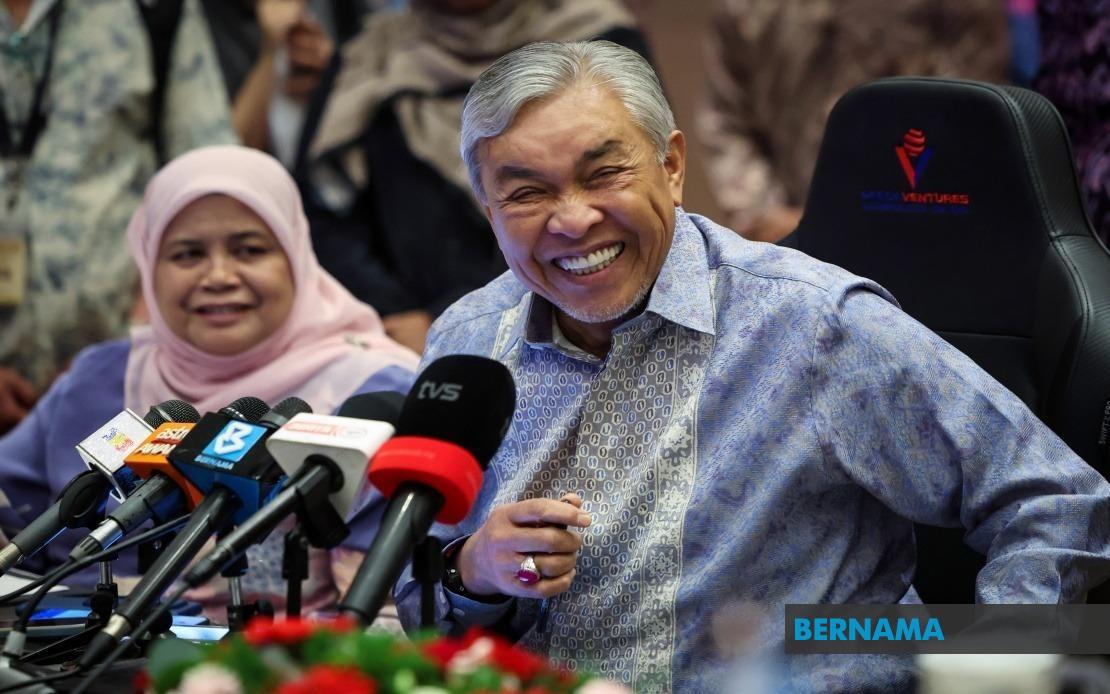
Barisan Nasional stands resolute in its commitment to the Unity Government framework until the conclusion of the 15th Parliament, according to Deputy Prime Minister and BN chairman Datuk Seri Dr Ahmad Zahid Hamidi, who issued an unequivocal rejection of speculation surrounding potential political upheaval. Speaking in George Town after chairing the 61st Coordination Meeting between the Minister of Rural and Regional Development and State Executive Councillors for Rural Development, Ahmad Zahid underscored that BN's allegiance to the administration led by Prime Minister Datuk Seri Anwar Ibrahim remains unwavering and anchored in the Yang di-Pertuan Agong's original directive following the 2022 General Election.
The categorical nature of Ahmad Zahid's statement reflects mounting anxiety within Malaysian political circles about the durability of the coalition arrangement that has defined governance since 2022. By invoking the constitutional authority of the Agong in legitimising the Unity Government, Ahmad Zahid positioned BN's commitment as a matter of institutional duty rather than mere political convenience—a rhetorical move designed to elevate the pledge beyond routine campaign rhetoric. The reference to "Bangkok Move" or "Dubai Move" appears to target longstanding speculation within Malaysian politics about overseas meetings that could signal behind-the-scenes negotiations intended to engineer shifts in parliamentary allegiances.
Ahmad Zahid's assertion carries particular weight given BN's historical leverage as a major parliamentary bloc. The coalition's continued participation is essential to maintaining the supermajority that currently anchors the Unity Government in the Dewan Rakyat. Any serious fracturing of BN's internal discipline or a withdrawal from the arrangement would fundamentally alter Malaysia's political landscape, potentially forcing the administration to seek fresh sources of parliamentary support or confront a confidence crisis. The emphasis Ahmad Zahid placed on maintaining "political stability" signals an awareness that questions about coalition durability could themselves generate market uncertainty and undermine investor confidence in government continuity.
The timing of these remarks coincided with the Negeri Sembilan state election campaign, where internal strains within BN have become visible. The decision not to field a BN candidate in the Klawang seat triggered a standoff that resulted in the closure of the party's polling district centre in that area. Ahmad Zahid disclosed that he had engaged directly with Negeri Sembilan UMNO chief Datuk Seri Jalaluddin Alias to address the grievance, characterising the matter as a localised issue susceptible to resolution within the nine days remaining before polling day. This episode illustrates the tension between BN's macro-level stability strategy and the micro-level complications arising from seat allocations in state elections.
The three-cornered contest in Klawang encapsulates broader fractionalisation within Malaysia's opposition bloc, with Pakatan Harapan, Perikatan Nasional, and Bersatu each fielding separate candidates. This fragmentation has become characteristic of Malaysian electoral politics in recent years, reflecting the difficulty opposition parties face in constructing coherent alliances. The absence of a BN candidate in this particular seat appears to reflect internal calculations about resource allocation and strategic positioning rather than a fundamental policy disagreement, yet its local consequences demonstrate how national political arrangements ripple through subnational contests.
Ahmad Zahid also addressed emerging speculation about a potential "Perikatan Barisan Nasional" (PBN) alliance that has circulated among supporters and within campaign messaging. He firmly stated that no formal discussions have occurred between BN and Perikatan Nasional regarding such a political formation, characterising references to PBN as campaign rhetoric rather than serious negotiating positions. By insisting that any such arrangement would require deliberate consideration by relevant parties, Ahmad Zahid implicitly acknowledged that discussions, if they were to occur, would represent a significant departure from current positioning. The careful language employed suggests awareness that even speculation about alternative coalitions could undermine confidence in the existing arrangements.
The maintenance of what Ahmad Zahid described as a cordial relationship between himself and Prime Minister Anwar Ibrahim, despite their opposing roles in the Negeri Sembilan campaign, indicates that elite consensus on institutional stability prevails over individual partisan competition at the state level. The exchange of pantun between the two leaders, with Anwar emphasising the importance of unity and Ahmad Zahid responding in similarly light-hearted fashion, projects an image of intercoalition relations characterised by respect and restraint rather than acrimony. This theatrical element of Malaysian politics—wherein public figures deploy traditional poetic forms to signal political messages—serves both as substantive communication and as symbolic reinforcement of shared commitment to constitutional governance.
For Malaysian observers, Ahmad Zahid's pronouncements offer reassurance regarding the institutional continuity that has underpinned the Unity Government's tenure thus far. The coalition arrangement, despite its inherent tensions arising from ideologically divergent member parties, has delivered relative parliamentary stability and enabled the government to prosecute its legislative agenda without the volatility that characterised earlier administrations. However, the persistence of speculation about alternative arrangements suggests that underlying pressures—generational changes within party structures, accumulated grievances over seat allocations, and divergent policy preferences—remain present even if managed through established coordination mechanisms.
The broader context for these assurances involves Southeast Asia's recognition of Malaysia as a democracy with complex institutional arrangements. Political investors and regional partners monitor Malaysian stability carefully, given the nation's economic importance and strategic location. Statements from senior figures like Ahmad Zahid serve not merely to address domestic audiences but to signal to international observers that Malaysia's political class recognises the importance of continuity and orderly governance. The invocation of the Agong's constitutional role reinforces that Malaysia's democratic arrangements remain rooted in institutional legitimacy rather than ephemeral personal relationships or factional ascendancy.
Moving forward, the durability of Ahmad Zahid's commitment will be tested through ongoing negotiations over seat allocations in forthcoming elections, management of intra-coalition policy disagreements, and the capacity of coalition leaders to maintain discipline within their respective party structures. The Negeri Sembilan state election represents a relatively low-stakes test of coalition cohesion; future challenges at the federal level, particularly if economic conditions deteriorate or policy disputes intensify, will provide a more rigorous assessment of whether BN's stated commitment reflects genuine institutional consensus or aspirational messaging. For Malaysian political observers and international stakeholders alike, the next phase of the Unity Government's evolution will reveal whether the current architecture proves resilient or merely represents an interim arrangement pending more fundamental realignments.

