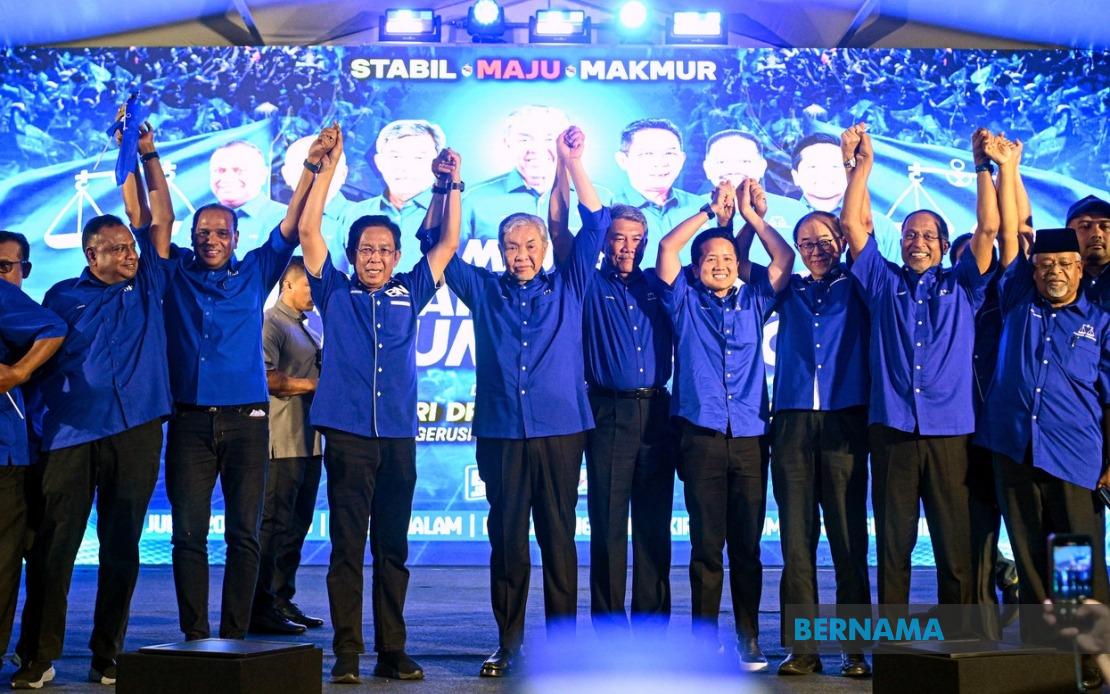
Barisan Nasional moved to solidify its electoral footprint in Negeri Sembilan by announcing 25 candidates for the 16th state election, signalling confidence in a mix of experienced lawmakers and fresh contenders to challenge for control of the key central Malaysian state. The announcement came at a campaign rally in Seremban, where party officials laid out their strategy for retaining seats and expanding influence in a state that has traditionally been competitive ground between the ruling coalition and opposition forces.
Mohamad Hasan, the Negeri Sembilan BN chairman, confirmed his intention to contest the Rantau seat for the sixth consecutive time, a constituency he has represented since 2004 with considerable seniority within party structures. His decision to stand was framed as a continuation of consistent service to the electorate, reflecting the coalition's preference for experienced incumbents in marquee races. Mohamad, who also holds the position of BN deputy chairman, carries significant weight in party deliberations and his retention signals BN's emphasis on stability and continuity in senior positions.
The decision to field Jalaluddin Alias in Pertang represents another attempt to build on established ground game in the region. Jalaluddin has served as the Member of Parliament for Jelebu while holding the Pertang state seat since 2013, creating a dual representation structure that some view as consolidating local influence. His nomination underscores BN's strategy of leveraging incumbents with institutional knowledge and existing grassroots networks, particularly in constituencies where margins have been narrow or contested.
Beyond these headline retentions, BN confirmed the candidacies of Mohd Faizal Ramli in Linggi and Mustapha Nagoor in Palong, both seeking to extend their parliamentary and state legislative records respectively. These incumbents represent the backbone of BN's campaign structure, individuals with established party machinery and local recognition that provides foundational support for the coalition's broader electoral push. The emphasis on returning faces reflects a calculated approach to leverage experience during a period of relative political uncertainty nationally.
However, the announcement contained a significant caveat that tempers the sense of complete readiness: BN has yet to finalise candidates for eleven state seats, including Klawang, Serting, Lobak, Sikamat, Ampangan, Bukit Kepayang, Mambau, Paroi, Lukut, Bagan Pinang, and Gemas. This incomplete candidate selection raises questions about internal party negotiations, the relative difficulty of recruiting suitable contenders for certain constituencies, and the timeline for finalising selections. The outstanding seats represent meaningful portions of the state legislature, where decisions about who carries the BN banner carry implications for party unity and electoral competitiveness.
The incomplete candidate list suggests ongoing deliberations within UMNO and allied parties in the BN coalition regarding optimal nominee combinations for contested or strategically important constituencies. In Malaysian state elections, the timing and manner of candidate announcements often signal party confidence levels, internal dynamics, and calculations about which races are genuinely competitive versus those considered safer. The remaining eleven seats may represent areas where negotiations between BN component parties are still ongoing, or where party leadership is considering whether to field new faces or adjust incumbency arrangements based on performance data.
Negeri Sembilan occupies particular significance within Malaysian political calculations given its swing-state character and the interplay between UMNO dominance and emerging opposition strength. The state has historically served as a bellwether for broader political movements affecting the peninsula, making the composition of BN's candidate slate important for reading party strategy and confidence levels. Mohamad Hasan's prominence in the announcement process reflects both his standing within UMNO and his role as administrator responsible for translating national party directives into state-level execution.
The selective retention of senior figures while leaving roughly 44 percent of seats without confirmed candidates creates a two-phase narrative for the upcoming campaign. Early weeks will focus on familiar faces defending established territory, while later announcements regarding outstanding seats may introduce new dynamics or address internal party concerns about particular constituencies. This approach allows BN flexibility in responding to opposition movements and managing internal party pressure regarding candidate selection.
For Malaysian voters and regional observers, the Negeri Sembilan election represents a crucial test of BN's ability to consolidate support following recent political developments affecting the coalition. The candidate announcements provide early indicators of party strategy, internal cohesion, and strategic priorities. The decision to retain experienced figures in high-profile seats while maintaining flexibility on others suggests a coalition attempting to balance continuity with adaptability, a calculus that will become clearer as the remaining candidate announcements unfold and campaigning intensifies across the state.

