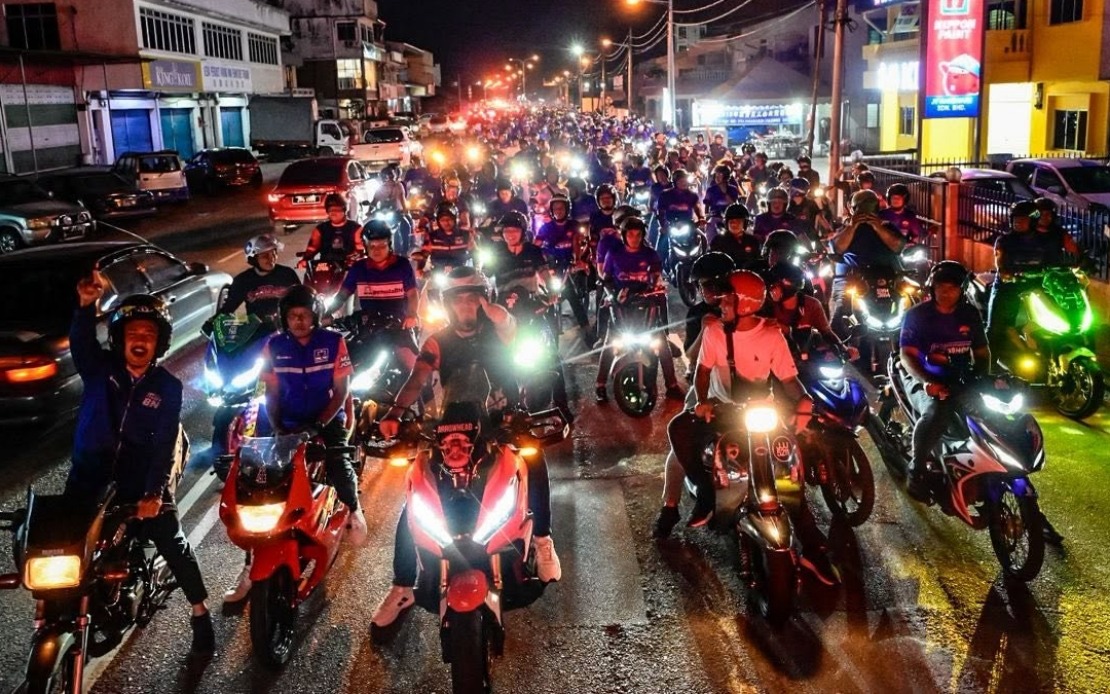
Barisan Nasional appears positioned for a credible performance in the Johor state election set for July 11, according to UMNO Youth leadership, which points to gathering momentum in campaign activities and receptiveness among the electorate. Speaking in Selandar on June 30, UMNO Youth chief Datuk Dr Muhamad Akmal Saleh outlined an optimistic assessment of coalition prospects, anchoring his confidence in the calibre of engagement the party machinery has encountered during its outreach efforts across constituencies.
The emphasis on youth voter responsiveness reflects a broader strategic calculation within UMNO and the wider Barisan Nasional coalition. Younger demographics have become increasingly significant in Malaysian electoral mathematics, particularly as older voter pools stabilise and youth participation rates fluctuate across regions. Dr Muhamad Akmal's observation that support among this cohort has been particularly encouraging suggests that either messaging efforts have resonated effectively or that the coalition perceives openness to its platform among voters under forty, a group that has shown volatility in recent electoral cycles.
The coalition's decision to field thirteen young candidates, with six emanating from UMNO Youth's own ranks, appears designed to address perceptions that establishment parties lack contemporary appeal and fresh perspectives. This candidate selection strategy carries implications beyond simple generational optics. By promoting younger representatives, BN signals commitment to succession planning and institutional renewal, while simultaneously attempting to combat the narrative that the coalition represents entrenched interests disconnected from evolving voter priorities, particularly on economic opportunity and governance accountability.
Johor's electoral significance extends beyond state-level politics. As Malaysia's second-largest state by population and a traditional stronghold for UMNO and its Barisan partners, the July 11 outcome will be interpreted as a barometer for coalition strength heading into any potential federal electoral contests. A strong showing would reinforce BN's claim to be a governing force capable of delivering results; conversely, underperformance would embolden opposition parties and provide ammunition for challengers seeking to portray the coalition as weakening support.
The mobilisation of UMNO Youth machinery represents the informal party structure operating at peak capacity. Youth wings have historically functioned as crucial ground-level organisational assets, moving beyond ceremonial roles to conduct grassroots campaigning, voter registration drives, and logistical coordination. Dr Muhamad Akmal's assertion that the UMNO Youth organisation is fully prepared for not only the Johor election but other state polls scheduled for 2023 indicates coordination across multiple electoral battlegrounds, suggesting the party expects an intense campaign period.
Context matters significantly for assessing these optimistic projections. Malaysian state elections have delivered unexpected outcomes in recent cycles, with voter sentiment shifting more rapidly than traditional political observers anticipated. The rise of independent candidates, fragmentation of opposition votes across multiple parties, and localised issues sometimes overwhelming national narratives all suggest that pre-election confidence statements, while standard political communication, should be treated as indicators of party mood rather than reliable predictions.
The timing of Datuk Dr Muhamad Akmal's remarks, roughly two weeks before the July 11 vote, places them at a stage when campaign intensity peaks but outcomes remain genuinely uncertain. Election officials would finalise nomination processes, campaigns enter their final stretch, and voters begin more actively deliberating choices. For Barisan Nasional and UMNO specifically, the window to shift undecided voters narrows considerably in these final days.
Regional implications warrant consideration as well. Johor shares geographic proximity and economic integration with Singapore, giving its political outcomes significance within the broader Southeast Asian context. A coalition government in Johor perceived as stable and business-friendly can influence cross-border investment patterns and bilateral relations, whereas political instability or dramatic shifts can create uncertainty affecting trade and people movement across the Causeway.
The broader Malaysian political landscape has seen significant fragmentation since the 2020 federal election, with numerous coalitions and blocs competing for voter attention. Barisan Nasional's recovery in several 2022 by-elections suggested a stabilisation of support, yet sustained electoral performance requires consistent organisation and message discipline. The Johor election will test whether this recovery trajectory continues or represents merely a temporary respite in longer-term coalition decline.
UMNO Youth's focus on young candidates also reflects demographic anxiety within the party. Malaysia's median age continues declining, with nearly half the population under thirty. Political parties that fail to appeal to these cohorts face gradual electoral erosion as demographic composition shifts. By emphasising youth candidates and youth voter response, Dr Muhamad Akmal is narratively positioning UMNO as dynamically responsive to demographic realities.
The invocation of "Insya-Allah" in Dr Muhamad Akmal's statement carries both spiritual and rhetorical weight, acknowledging forces beyond electoral engineering while also implicitly suggesting that the coalition's prospects are sufficiently positive to warrant optimistic framings. Such language, common in Malaysian political discourse, reflects the cultural and religious context within which electoral politics operates.
Moving forward, the actual vote on July 11 will determine whether UMNO Youth's pre-election confidence translates into substantive results or becomes another example of institutional optimism outpacing electoral reality. The campaign's final fortnight will likely see intensified activity across all coalitions, with competing projections and claims of momentum becoming standard political theatre. For Malaysian voters in Johor, these final weeks offer the opportunity to evaluate competing visions and candidate quality before casting ballots that will shape state governance for the subsequent term.

