Barisan Nasional is betting heavily on strong support from Federal Land Development Authority (FELDA) communities in the Kulai parliamentary constituency as voters head to polls on July 11 for the 16th Johor state election. The coalition has identified nearly 7,000 registered voters across four FELDA settlements as crucial to its campaign strategy, reflecting the importance of rural constituencies in determining the outcome of the election. The FELDA vote has long been considered a traditional stronghold for BN, though recent electoral cycles have shown considerable volatility in this bloc, making current messaging focused on tangible development benefits designed to shore up support among smallholders and their families.
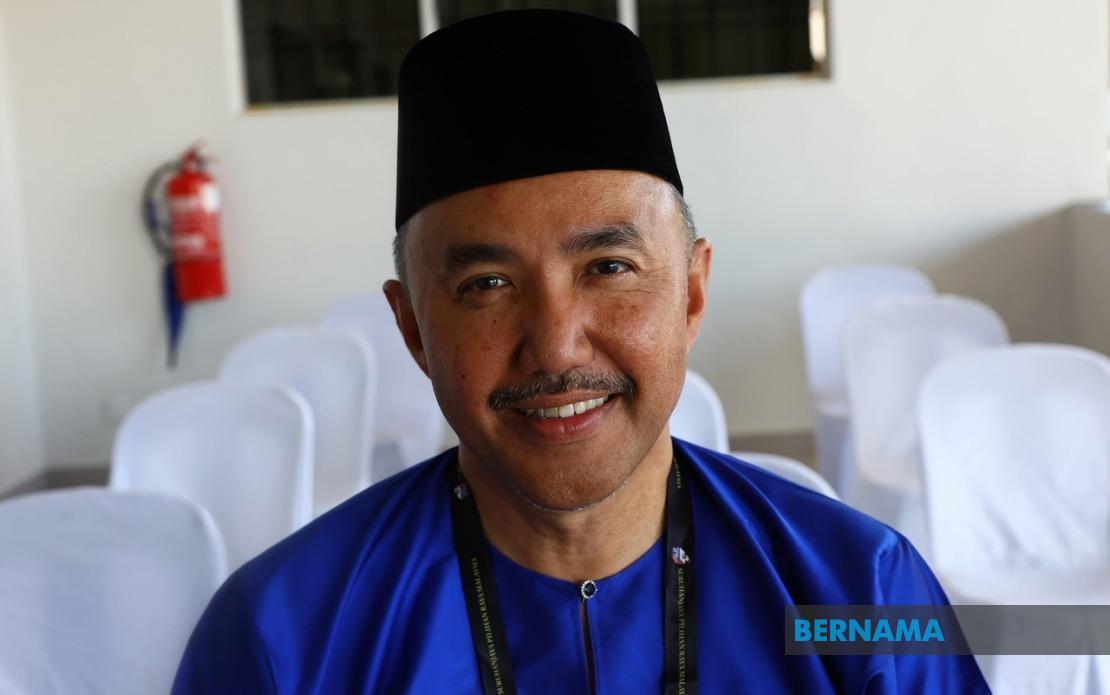
Kulai BN chairman Datuk Mohd Jafni Md Shukor outlined the geographic distribution of FELDA voters within the electoral landscape, identifying three settlements within the Bukit Permai state constituency and one in the adjacent Bukit Batu seat. FELDA Taib Andak, FELDA Inas, and FELDA Bukit Permai together account for the bulk of the settler population Jafni is targeting, while FELDA Bukit Batu represents a secondary concentration of support. The parliamentary division encompasses three state seats in total, giving the coalition multiple opportunities to consolidate its position across the broader Kulai area. Jafni himself is mounting a defence of his Bukit Permai seat while BN seeks to capture or hold ground in the adjacent Bukit Batu and Senai divisions.
The coalition's confidence stems partly from perceived improvements in state government responsiveness to FELDA concerns under Menteri Besar Datuk Onn Hafiz Ghazi. Jafni acknowledged that BN's performance among FELDA voters deteriorated significantly during the 2018 state election, a turning point when rural communities became more receptive to opposition messaging. However, the 2022 election saw some recovery in BN's FELDA support, a trajectory Jafni believes will strengthen further as voters recognise concrete deliverables from the Johor administration. This narrative of incremental improvement is central to BN's pitch to rural constituencies facing genuine economic pressures and service delivery challenges.
Among the most significant achievements Jafni highlighted is the resolution of longstanding land title disputes that have plagued FELDA settlers for decades. The state government claims that 99.9 per cent of land ownership applications have now been processed and settled, addressing a grievance that has fuelled rural discontent and provided opposition parties with potent campaign ammunition. For smallholders dependent on credit access and inheritance certainty, clear property rights represent a foundational requirement for economic security. This administrative breakthrough, if verified and communicated effectively at grassroots level, could meaningfully shift settler perceptions of state government competence and commitment to their interests.
Education support has emerged as a secondary pillar of BN's outreach to FELDA families. The Johor Education Foundation (YPJ) has been channelled to provide educational assistance to children in FELDA communities, addressing a persistent concern among settler families about access to quality schooling and the costs associated with advancing their children's prospects. Accessibility to education support schemes can significantly influence voting behaviour in constituencies where household income volatility makes discretionary spending on schooling difficult. By framing education assistance as a signature achievement, BN is attempting to reframe its relationship with rural voters as one attentive to long-term family welfare rather than purely extractive.
Jafni's appeal for a second mandate reflects the reality that the Johor state government recognises rural constituencies require sustained attention rather than electoral cycle adjustments. His argument that four years is insufficient to implement a comprehensive development agenda implicitly acknowledges that FELDA communities have accumulated grievances spanning multiple electoral terms. The request for voter patience and a second term suggests that BN believes demonstrable progress has been achieved but that momentum risks reversal if opposition parties gain ground. This positioning also signals that BN sees the rural vote as potentially decisive in determining overall state election outcomes, particularly in a three-cornered or four-cornered contest environment.
The electoral challenge facing Jafni in Bukit Permai is notably fragmented, with candidates from Parti Bersama Malaysia (Bersama), Pakatan Harapan (PH), and Perikatan Nasional (PN) competing alongside his BN candidacy. A four-way split in opposition voting could theoretically advantage the incumbent, as happened in many constituencies during the 2022 cycle. However, such fragmentation also creates uncertainty, as voter preference patterns remain unpredictable when opposition options proliferate. The 2022 result saw Jafni secure victory with a majority of 4,755 votes, a margin that provides some buffer but hardly guarantees retention in a more polarised electoral environment.
The timeline for this election creates practical constraints on campaign intensity. Early voting is scheduled for July 7, with polling day following on July 11, compressing the campaign window significantly. For a distributed rural constituency like Kulai, where FELDA settlements are geographically dispersed, this compressed schedule may disadvantage candidates seeking to conduct intensive grassroots mobilisation. BN's organisational superiority in rural areas could work to its advantage during this compressed period, as the party retains longer-established machinery for rapid voter contact and turnout operations compared to newer political entities.
The Johor state election carries implications extending beyond the immediate electoral contest. The state has served as a testing ground for various political alignments and strategies, with outcomes in Johor often predictive of broader national trends. A strong BN performance in rural constituencies like Kulai would suggest that state-level initiatives addressing concrete FELDA grievances remain politically consequential. Conversely, significant FELDA defections to opposition parties would signal that rural voters have moved beyond traditional loyalties and now demand substantive performance metrics before renewing support. For Malaysian policymakers and political strategists, the FELDA vote in Kulai therefore represents a barometer of rural political sentiment more broadly.
The coalition's framing of its campaign around administrative competence and targeted welfare delivery reflects a broader recognition that traditional appeals based on party identity alone insufficient in contemporary Malaysian politics. By emphasising specific achievements in education, land titling, and localised assistance programmes, BN is attempting to reconstruct its relationship with rural constituencies on firmer empirical foundations. Whether this strategy succeeds will depend partly on voters' assessment of whether promised benefits have actually materialised in their own communities, and partly on whether opposition parties can effectively counter with their own rural narratives and proposals.

