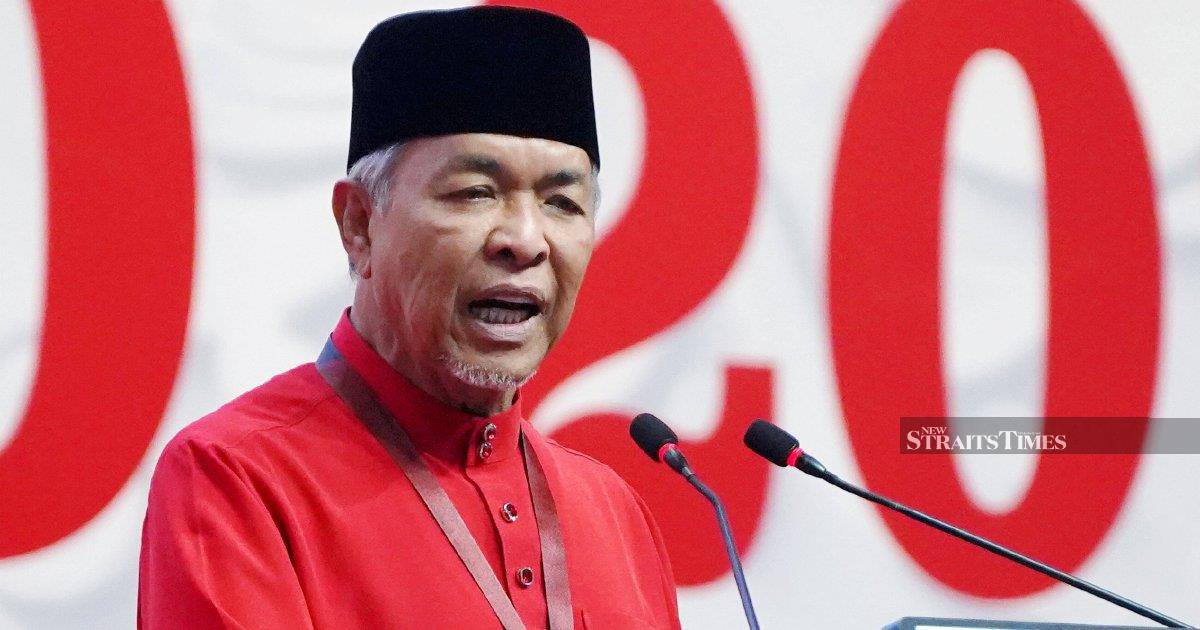
The leadership of Barisan Nasional and Umno has committed to accepting full accountability if the ongoing Royal Commission of Inquiry into Tabung Haji uncovers evidence of misconduct, according to BN chairman and Umno president Datuk Seri Dr Ahmad Zahid Hamidi. Speaking from Putrajaya, Zahid emphasized that neither the coalition nor the party would intervene to protect individuals or groups found to have engaged in wrongdoing, criminal breach of trust, or failures in governance once the investigative body completes its work.
The Tabung Haji inquiry represents a significant moment in Malaysia's ongoing reckoning with governance failures across major state institutions. Launched to examine the management and operations of the pilgrimage fund—one of Southeast Asia's largest Islamic financial entities—the commission's mandate extends to scrutinizing decision-making at the highest levels. The fund's accumulated losses and the deterioration of its financial position in recent years have intensified public concern and prompted calls for a comprehensive, independent investigation into how leadership failures may have contributed to the institution's difficulties.
Zahid's declaration carries particular weight given Umno's historical dominance within Tabung Haji's governance structures. The party has traditionally wielded significant influence over board appointments and strategic direction at the fund, making any subsequent revelations of institutional failure potentially damaging to the party's standing. By preemptively stating that the coalition would accept whatever findings emerge, Zahid appears to be attempting to position BN and Umno as committed to transparency and the rule of law, regardless of internal political consequences.
The timing of this statement reflects broader political pressures facing the current government. The pilgrimage fund has become emblematic of concerns about how Malaysia's state-linked enterprises operate, with questions surrounding investment decisions, risk management, and the adequacy of board oversight. For Malaysian Muslims—who represent the fund's primary stakeholder base—the RCI's conclusions will carry moral and religious significance beyond mere financial considerations, as Tabung Haji holds sacred trust in managing resources intended for fulfilling one of Islam's Five Pillars.
Zahid's commitment to non-interference should be understood within the context of Malaysia's evolving institutional landscape. Previous inquiries into corporate mismanagement have sometimes faced criticism regarding political influence over outcomes and the independence of investigation processes. By explicitly ruling out coalition protection or interference, Zahid is attempting to establish credibility for the RCI's integrity, though scepticism among observers regarding genuine institutional independence will likely persist until the inquiry concludes and its recommendations face implementation.
The statement also carries implications for individual senior figures with connections to Tabung Haji's management during the period under examination. Several prominent political and business personalities have held positions within the fund's leadership structure, and depending on the RCI's findings, they could face reputational damage, legal consequences, or both. Zahid's declaration essentially signals that party affiliation or seniority will not constitute grounds for exemption from accountability should wrongdoing be established.
For Malaysian investors and the broader public, the RCI's findings will likely determine whether confidence in state-linked enterprises can be restored. Tabung Haji's difficulties have raised questions about governance frameworks across similar entities, and the investigation's conclusions may precipitate wider institutional reforms. The fund's recovery—financial and reputational—will depend partly on how thoroughly the RCI examines root causes and whether its recommendations address systemic weaknesses rather than merely attributing failure to individual incompetence or dishonesty.
Regionally, Malaysia's handling of corporate governance failures within Islamic finance institutions carries implications for Southeast Asia's broader reputation as a reliable hub for Islamic financial services. Investors and international observers will be watching to assess whether Malaysia can effectively investigate and rectify institutional failures while maintaining market confidence. The RCI's processes and credibility thus extend beyond domestic politics to affect Malaysia's standing within the global Islamic finance ecosystem.
The investigation's scope encompasses multiple dimensions of institutional management, including investment strategy decisions made during periods of both stronger and weaker market conditions, the effectiveness of internal controls and audit functions, and the adequacy of oversight by the fund's leadership structures. Each of these areas represents potential grounds for findings of failure, whether through deliberate malfeasance or negligent disregard for fiduciary responsibilities. The distinction between these categories will prove important for determining appropriate accountability mechanisms.
Zahid's statement, while publicly projecting commitment to accountability, does not address the broader question of whether Malaysia's institutional frameworks can credibly investigate matters involving senior political figures without external pressure compromising the process. The credibility of any inquiry ultimately rests not merely on pre-investigation pledges of impartiality, but on demonstrable independence throughout the investigation and genuine implementation of remedial measures that may prove politically costly.
As the RCI proceeds with its examination, the statement serves as a public commitment that will be measured against eventual actions and outcomes. For Malaysian Muslims awaiting restoration of confidence in their pilgrimage fund, and for citizens concerned about governance standards across state institutions, the true test will arrive once the investigation concludes and Malaysia determines whether the leadership's promises of accountability translate into concrete consequences and meaningful institutional reform.

