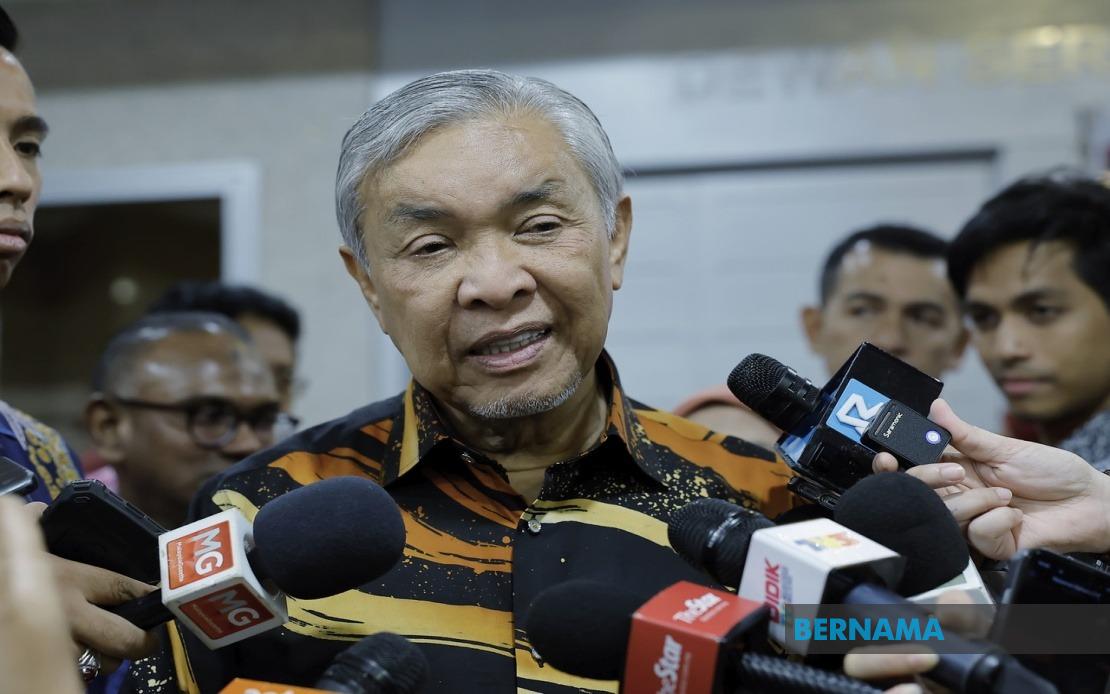
Deputy Prime Minister and Barisan Nasional chairman Datuk Seri Dr Ahmad Zahid Hamidi has signalled that the coalition and UMNO will adopt an uncompromising stance toward any breaches of fiduciary duty or operational failures within Tabung Haji, the country's largest Islamic financial institution managing pilgrimage savings for millions of Malaysians. His remarks, made in Putrajaya following a ministry gathering, underscore mounting political pressure to demonstrate accountability following the release of an explosive inquiry report that exposed serious governance lapses spanning a critical six-year period.
The intensity of the government's response reflects the severity of findings contained in the Royal Commission of Inquiry report released on July 29, which documented systematic mismanagement and questionable financial decisions that precipitated a substantial erosion of Tabung Haji's asset base. Ahmad Zahid emphasised that individuals implicated in any wrongdoing or misadministration at government agencies and statutory bodies must face consequences proportionate to their culpability, signalling that political considerations will not shield officials from investigation or prosecution. His statement suggests a deliberate recalibration of political messaging, positioning the coalition as custodian of institutional integrity rather than protector of connected interests.
The RCI investigation, which examined Tabung Haji's stewardship between 2014 and 2020, unearthed evidence of questionable transactions alongside deliberate concealment of material information from stakeholders. These findings carry particular significance given Tabung Haji's unique position as custodian of approximately RM80 billion in savings accumulated by over 9 million Malaysian Muslims preparing for the hajj pilgrimage, making it one of Southeast Asia's largest religious financial institutions. The report's recommendations include a comprehensive forensic audit examining investment decisions that triggered the asset value collapse, suggesting investigators identified patterns consistent with negligence or potentially deliberate misallocation.
Parliament will convene for a special session on August 11 to debate the RCI findings, providing lawmakers the opportunity to scrutinise the inquiry's recommendations and demand ministerial responses. This parliamentary forum carries strategic importance for both government and opposition, offering platforms to signal commitment to reform while highlighting opposing narratives about accountability and institutional governance. For Malaysian voters, particularly the Muslim demographic majority who place faith-based savings within Tabung Haji, the parliamentary debate will test whether political rhetoric translates into substantive remedial action or represents performative governance.
The timing of Ahmad Zahid's pronouncement suggests coordination between BN leadership and law enforcement agencies, potentially signalling imminent enforcement actions against implicated officials. Malaysian political history demonstrates that public declarations of zero tolerance frequently precede prosecutorial moves, enabling government to shape narrative framing while maintaining prosecutorial independence optics. The sequential nature of these announcements—RCI report release, public condemnation, parliamentary debate, prospective enforcement—follows a recognisable Malaysian governance pattern designed to demonstrate institutional capability while managing political fallout.
Tabung Haji's governance crisis intersects with broader concerns about statutory body oversight that extend beyond this institution. Malaysian statutory authorities and sovereign wealth funds have periodically faced criticism regarding investment decisions, transparency standards, and accountability mechanisms. The Tabung Haji situation provides opportunity for government to demonstrate capacity for institutional self-correction, potentially forestalling external pressure for systemic reform across the broader constellation of government-linked entities managing significant national resources.
For Southeast Asian observers, the Tabung Haji episode illuminates challenges confronting Islamic financial institutions operating within broader regulatory ecosystems that evolved through secular commercial frameworks. Balancing fiduciary obligations to millions of Muslim savers with governance standards, professional management practices, and political accountability pressures creates inherent tensions. Malaysia's response—through investigative commission, parliamentary scrutiny, and enforcement mechanisms—demonstrates one regional approach to reconciling these competing demands, offering comparative insights for other Muslim-majority jurisdictions wrestling with similar institutional governance questions.
The matter carries implications for Malaysia's financial reputation and investor confidence more broadly. Tabung Haji's substantial asset base and investment activities influence asset markets, policy formation, and regulatory oversight across multiple sectors. Any perception that governance failures persist uncorrected could undermine confidence in Malaysian institutions' reliability and management competence. Conversely, demonstrable accountability through criminal prosecution and institutional reform could restore stakeholder confidence and demonstrate regulatory system functionality.
International rating agencies and foreign investors often scrutinise a nation's capacity to address governance failures within major institutions, particularly those holding substantial public or religious trust. Malaysia's handling of Tabung Haji therefore carries symbolic importance extending beyond domestic political calculations, influencing broader assessments of institutional governance capacity. Ahmad Zahid's public commitment to accountability, conditional upon investigation findings, represents calculated positioning that acknowledges international governance standards while maintaining political flexibility regarding ultimate enforcement decisions.

