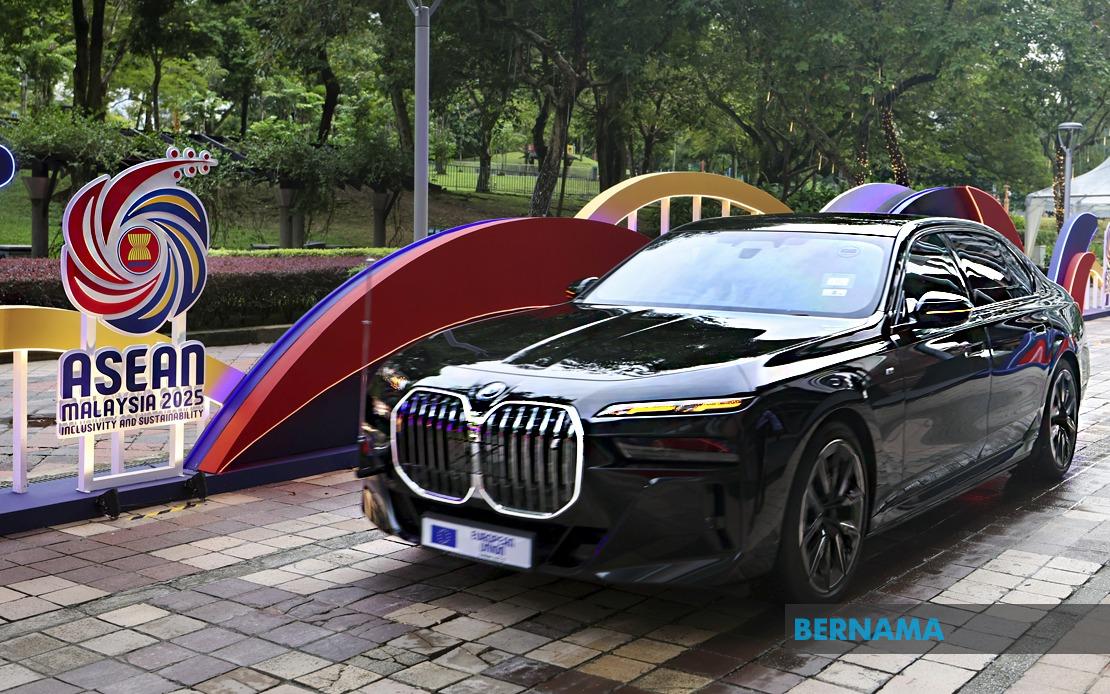
The Prime Minister's Department (JPM) has moved to dispel online speculation surrounding a luxury BMW vehicle recently seen with Prime Minister Datuk Seri Anwar Ibrahim, confirming it is part of the government's existing fleet rather than a newly acquired asset. In a statement released through Facebook, the department alongside the Ceremonial and International Conference Secretariat Division (BIUPA) explained that the vehicle belongs to a dedicated pool of officially designated government transportation resources.
The clarification addresses mounting social media chatter that had emerged regarding the vehicle's procurement and ownership status. The government's decision to address public perception through a direct statement underscores the sensitivity surrounding expenditure on official transport at a time when many Malaysians face economic pressures. The BMW in question, according to JPM's account, has long been under BIUPA's stewardship as part of the nation's formal logistics infrastructure.
The vehicle is specifically maintained to accommodate international diplomatic protocols and security requirements that Malaysia must observe when hosting heads of state and government officials at the presidential or prime ministerial level. These conventions, established through decades of international practice, dictate strict standards for how visiting dignitaries and national leaders are transported and protected. The specifications demanded by such protocols extend far beyond typical luxury vehicle features into specialized security enhancements.
According to the department's statement, the BMW has been engineered with ballistic protection capable of withstanding high-calibre firearms, explosive devices, and contemporary security threats including unmanned aerial systems. These capabilities require extensive modifications to the vehicle's chassis, windows, and interior systems that cannot be retrofitted to standard luxury cars. The engineering and manufacture of such vehicles represents a significant but necessary investment for nations regularly hosting international summits and bilateral visits at the highest levels.
The Prime Minister's use of the vehicle, JPM emphasized, represents a temporary arrangement implemented following a formal security assessment conducted by the Royal Malaysian Police (PDRM). Rather than indicating a permanent shift in official transport protocols, the arrangement addresses a specific operational circumstance. The move reflects security professionals' judgment about immediate protective requirements rather than any policy change regarding prime ministerial transport.
The temporary transition was necessitated because Datuk Seri Anwar Ibrahim's official vehicle—a gift from the Yang di-Pertuan Agong—is currently undergoing scheduled maintenance. This detail proves significant as it clarifies the rationale behind the unexpected vehicle switch, positioning the decision within routine logistical necessity rather than acquisition of new government resources. Regular maintenance of official vehicles is standard practice across government fleets globally, ensuring these high-value assets remain in optimal operational condition.
The timing of JPM's statement reveals the degree to which Malaysian public discourse has become scrutinized through social media channels, where unverified claims can rapidly gain traction. The department's proactive approach to releasing factual information demonstrates recognition that official transparency on matters of government expenditure and assets directly affects public confidence in institutional integrity. In contemporary politics, particularly in Southeast Asia where questions about governance frequently surface online, such clarifications have become routine defensive measures.
For Malaysian citizens and regional observers, the incident illustrates the complex intersection between security imperatives and governance accountability. While nations require vehicles capable of protecting their leaders against genuine threats—a reality underscored by security incidents across the globe—the public's legitimate interest in understanding how government resources are deployed cannot be dismissed. The fact that specifications for leader protection vehicles exceed civilian automobile standards reflects real-world security vulnerabilities that democratic governments must acknowledge transparently.
The underlying security concerns that necessitate such specialized vehicles remain relevant regardless of which political coalition holds office. The threats mentioned by JPM—ballistic attacks, explosive devices, and drone-based attacks—represent genuine hazards that have affected leaders and dignitaries across multiple continents in recent years. Southeast Asian governments, Malaysia included, have observed security incidents in neighboring jurisdictions that validate investments in protective transport infrastructure.
Moving forward, the clarification may serve to reset public perception regarding this particular incident, though broader questions about government vehicle procurement and maintenance budgets will likely persist as routine political discourse. Opposition parties and civil society observers will continue monitoring official expenditure patterns, which represents a healthy component of democratic accountability. The Malaysian government's willingness to explain its decisions about prime ministerial transport, rather than remaining silent, suggests receptiveness to public inquiry—a precedent that may encourage similar transparency across other government operations.

