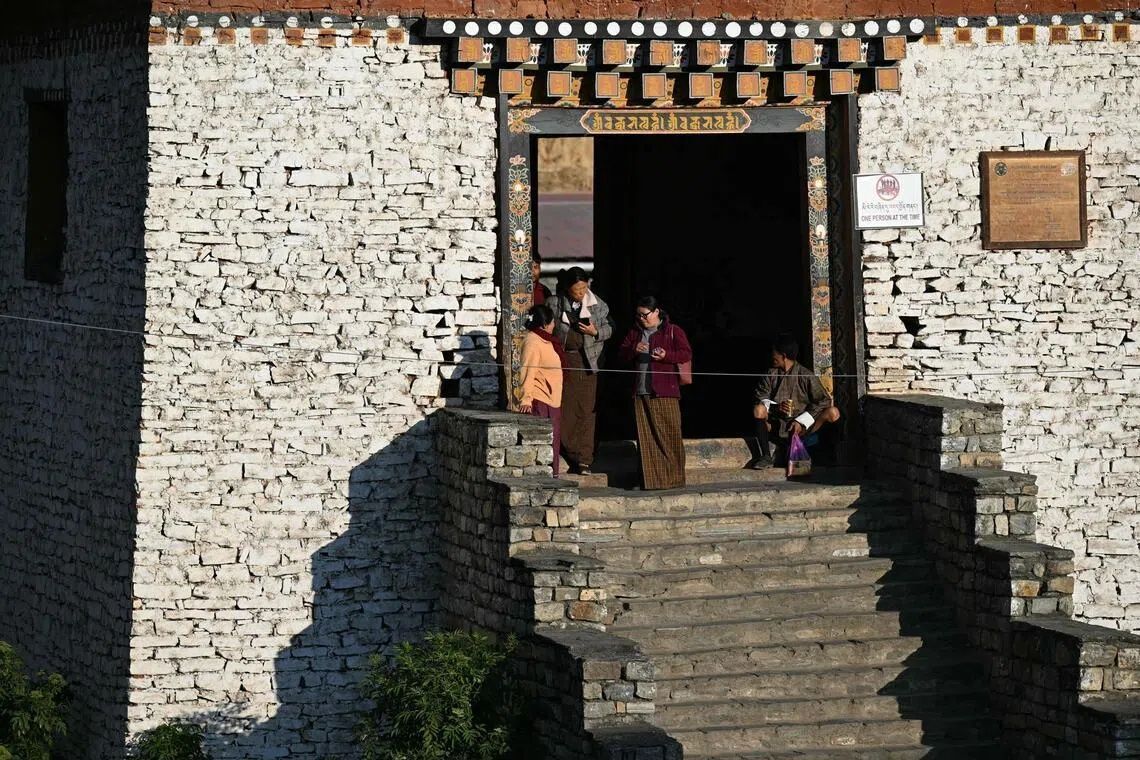
Bhutan's government has embarked on an ambitious experiment in demographic reversal, introducing a monthly subsidy scheme that places the kingdom at the forefront of Asia's struggle against population decline. The "Third Child Plus" programme, launched in June, reflects the desperation of policymakers grappling with what Prime Minister Tshering Tobgay has termed an "existential" crisis — one that threatens the very sustainability of the nation's workforce and social systems. By offering families 105 dollars monthly for each third or subsequent child until age three, Thimphu is attempting to halt a decline that has already claimed the country's demographic future.
The numbers underpinning this intervention paint a stark picture of accelerating demographic change. Annual births have contracted by more than a quarter over the past decade, while the kingdom's fertility rate has plummeted to approximately 1.8 children per woman — a figure that falls below the replacement threshold of 2.1 and ranks among Asia's lowest. More striking still, births of third or higher-order children specifically have nosedived 27 percent since 2020 alone, suggesting that even those willing to have children are increasingly stopping at one or two. These figures gain additional weight when placed against the United Nations' projections that elderly citizens aged 65 and above will balloon from six percent of the population today to 17 percent by mid-century, fundamentally reshaping the nation's age structure.
The crisis extends far beyond mere statistics. Bhutan's mountain kingdom of fewer than 800,000 people, positioned between the giants of India and China, faces the prospect of insufficient working-age citizens to sustain its economy or support a growing retired population. Prime Minister Tobgay has articulated this challenge with clarity, noting that declining births combined with sustained emigration create cascading pressures on workforce participation, government finances, and the cohesion of communities throughout the country. The government's briefing documents acknowledge that this demographic squeeze could undermine everything from tax collection to pension schemes, raising uncomfortable questions about Bhutan's long-term viability as an independent state.
Yet emigration stands as the more immediate concern. As of May 2026, more than 71,000 Bhutanese nationals resided overseas, with Australia alone hosting approximately 39,000 — representing 55 percent of the entire diaspora. This concentration of emigration among prime working-age and reproductive-age individuals creates what economists describe as a vicious cycle: those who leave are precisely the people who would otherwise contribute to births at home, while their absence reduces domestic economic opportunities and pushes further cohorts toward emigration. The outflow represents a structural drain of human capital precisely when the kingdom can least afford it, as remittances, while financially beneficial, cannot substitute for the labour and demographic contributions of absent citizens.
Citizens consulted about the new scheme express cautious scepticism about whether cash payments alone can reverse deeply rooted behavioural change. Khandu Wangmo, a 35-year-old civil servant, acknowledged the programme's merits while questioning its sufficiency. She articulated a perspective common among Bhutanese women contemplating parenthood: that 105 dollars monthly, while welcome, pales against the genuine obstacles families face. Housing costs, childcare expenses, and educational fees represent the true financial burdens that deter larger families, concerns that monthly stipends touch only peripherally. Similarly, Preeti Nirola, a 34-year-old mother of one, expressed willingness to expand her family only if her financial circumstances improved dramatically — a condition the subsidy programme is unlikely to satisfy given the magnitude of expenses involved in raising children in a modern economy.
Bhutan's current predicament carries profound historical irony. The kingdom spent decades promoting what it termed the "Small Family, Happy Family" campaign, initiated in 1974, that successfully drove fertility downward and reshaped reproductive behaviour. The strategy achieved its intended effect, embedding cultural norms favouring smaller families across generations. Now, having successfully internalised this messaging and faced with limited domestic economic opportunities, Bhutanese citizens have extended the logic to its ultimate conclusion: many are simply forgoing parenthood altogether or limiting themselves to single children. Additionally, the 1990s witnessed the forced exodus of more than 100,000 ethnic Nepali-speaking residents — roughly one-sixth of the nation's population — as the government implemented increasingly restrictive immigration policies. That historical episode, while addressing one set of policy concerns, may have also contributed to demographic and cultural instability that now manifests in youth outmigration and depressed fertility.
The underlying causes of demographic change in Bhutan reflect broader patterns reshaping Asia's demographic landscape. Experts point to multiple intersecting factors: rising living standards have elevated the financial burden of childrearing, while expanded educational opportunities and access to information have shifted women's priorities beyond motherhood. Young Bhutanese, particularly those educated abroad, increasingly view international migration as a pathway to economic security and personal fulfilment unavailable at home. The availability of contraception and changing cultural attitudes toward marriage and family formation have given individuals unprecedented choice in structuring their lives. Anthropologist Shawn Rowlands, who teaches in Thimphu, has documented this transition, noting that Bhutan's shift from a fertility rate of 6.6 in the 1990s to 1.8 today represents one of Asia's most dramatic demographic compressions, driven substantially by young citizens emigrating for employment opportunities.
Rowlands has also introduced a provocative counterpoint to the prevailing narrative of crisis. In a kingdom internationally celebrated for prioritising "Gross National Happiness" over conventional economic growth metrics, and distinguished globally as one of the world's rare carbon-negative nations, the presumption that declining population necessarily constitutes catastrophe warrants examination. Higher educational attainment and expanded job opportunities, she argues, naturally correlate with women deferring or forgoing motherhood. The demographic transition might reflect not failure but the success of development — the realisation of educational and economic aspirations that come with reduced fertility as an inevitable accompaniment. This perspective introduces tension between how Bhutan's leadership frames the population question and how development scholars might interpret similar trends elsewhere.
The United Nations Population Fund, which supported the "Third Child Plus" initiative, has advocated for a more comprehensive approach than financial incentives alone. The organisation emphasises that genuine solutions require expanding genuine choices through affordable childcare, supportive workplace policies, improved housing affordability, and educational investments — interventions that address the root causes of smaller family sizes rather than attempting to induce births through cash transfers. This framing suggests that Bhutan's subsidy programme, while politically visible and symbolically significant, may represent merely the first tentative step in a longer reformation of how the state supports families and values reproductive labour.
For Malaysian policymakers and Southeast Asian observers more broadly, Bhutan's situation carries instructive weight. Several nations in the region face comparable demographic pressures, with fertility rates approaching or below replacement levels and significant youth emigration. The kingdom's experience suggests that demographic reversal cannot be accomplished through financial incentives disconnected from broader improvements in living standards, economic opportunity, and social support systems. Bhutan's crisis also illustrates how rapid development and modernisation, while bringing undeniable benefits, can destabilise long-established patterns of social reproduction. The kingdom's willingness to openly confront these challenges and experiment with new policy solutions may offer valuable lessons — both positive and cautionary — for neighbours grappling with similar transitions.
Bhutan's demographic crossroads ultimately reflects a deeper paradox embedded in modern development. The policies and social changes that have lifted the kingdom from poverty and elevated living standards have simultaneously created conditions in which citizens choose not to reproduce at replacement rates. No cash payment can fully resolve this contradiction. Instead, the kingdom faces a prolonged process of policy recalibration, requiring sustained economic growth, creation of meaningful employment opportunities, substantial investment in affordable childcare and housing, and possibly a cultural reassessment of how population decline fits within Bhutan's distinctive development philosophy. The "Third Child Plus" programme represents a beginning, but only a beginning, in responding to what the government has correctly identified as a challenge threatening the nation's fundamental viability.

