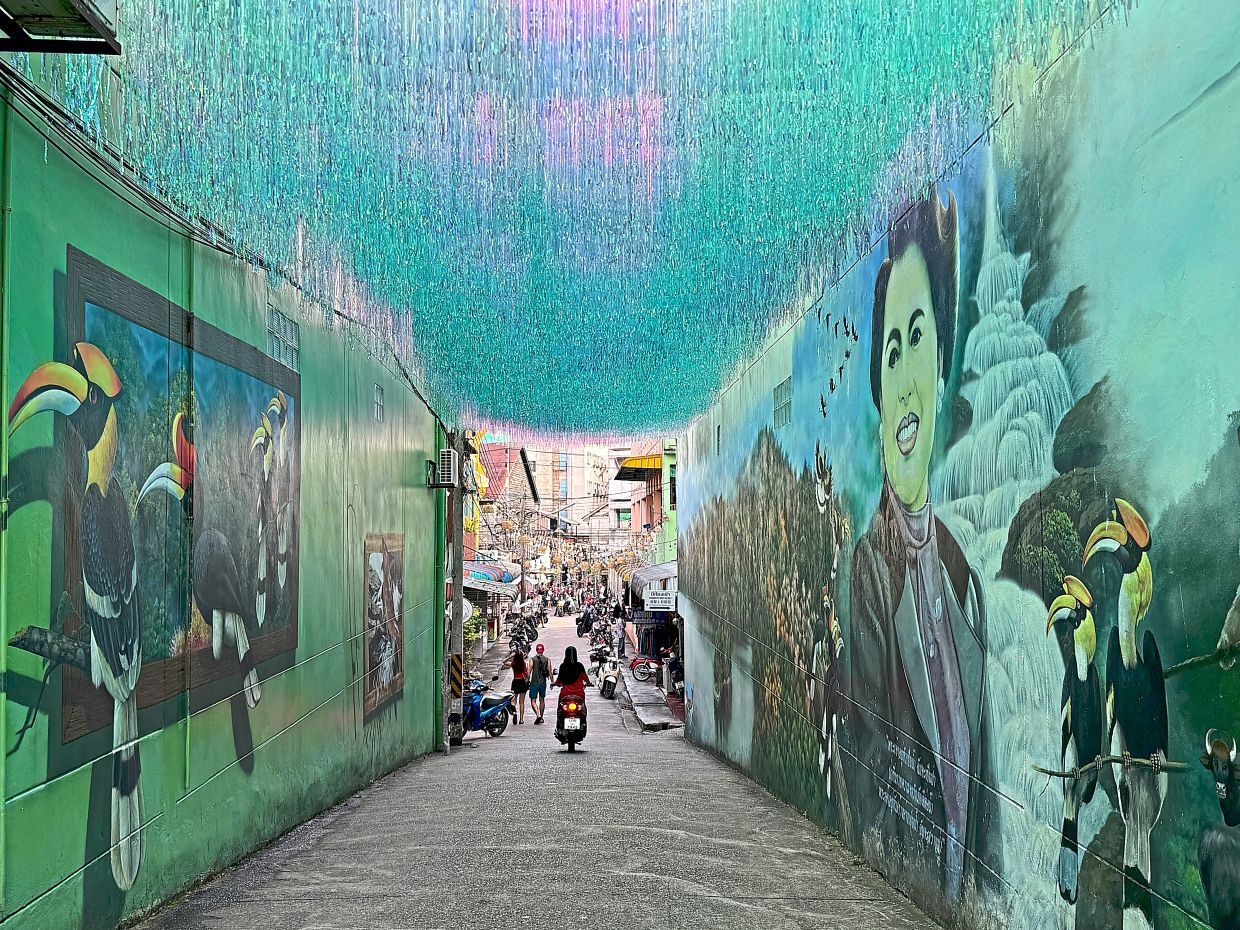
Betong might seem unremarkable at first glance, but this small Thai town situated close to the Malaysian frontier harbours an abundance of unexpected attractions that reveal themselves to the curious traveller willing to wander beyond the obvious. Located roughly 380 kilometres from Kuala Lumpur, a manageable five-hour drive, Betong has become an increasingly popular weekend destination for Malaysian road-trippers seeking something different from mainstream tourist circuits.
The town's most distinctive symbol is the Betong chicken, a local breed that has become so integral to the community's identity that it dominates the landscape through oversized sculptures and cultural references. Giant chicken statues positioned around town, particularly the monumental figures that initially seemed like mere roadside oddities, actually commemorate this heritage breed. Local restaurant owners enthusiastically shared that the chicken breed represents not just agricultural history but the town's determination to preserve its unique character. This pride translates directly into the culinary scene, where chicken appears in virtually every form imaginable—from simple rice dishes to elaborate porridge preparations, all drawing on generations of local cooking tradition.
Beyond the chicken phenomenon, Betong possesses remarkable historical and geological features that justify a proper visit. The Mongkollit Tunnel, constructed in 2001 as Thailand's inaugural mountain tunnel, initially appears underwhelming during daylight hours. However, after sunset the tunnel transforms into something magical, bathed in ethereal blue illumination that creates an almost otherworldly atmosphere. The transformation draws steady streams of visitors who line both pedestrian walkways, some capturing photographs while others simply absorb the unusual spectacle—a reminder that Betong's appeal often lies in unexpected moments rather than conventional attractions.
The most historically significant site is the Piyamit Tunnel, situated approximately 15 kilometres from central Betong deep within jungle surroundings. Built during the late 1970s, this 1-kilometre-long underground complex originally functioned as a Communist Party of Malaya base, operating as an air raid shelter, storage depot, and escape route during military operations. The tunnel network originally featured multiple entrances and exits facilitating tactical movement through dense forest, though several have been sealed for contemporary safety standards. Visitors approach through a dedicated covered pathway requiring about fifteen minutes walking time, arriving at a visitor centre that leads into the Piyamit Histories Museum, a compact but poignant repository of photographs and artefacts documenting the lives of guerrilla fighters who inhabited the surrounding forest.
The ingenuity displayed in the tunnel's design reveals much about the operational constraints faced by the insurgents. A particularly clever feature is the concealed outdoor cooking area featuring a specially engineered stove designed to channel charcoal smoke underground, effectively masking any visible signs of habitation from potential aerial observation or ground-level reconnaissance. Walking through the facility, visitors encounter sleeping quarters, meeting rooms, and communications chambers—each space telling stories of clandestine operations conducted in isolation. For those seeking deeper contextual understanding, the Chulabhorn Phatthana Village 9 located approximately 120 kilometres away in Mae Wat provides additional perspective, having once housed former communist party members and now functioning as a cultural centre documenting post-insurgency life.
Betong's appeal extends considerably to its walkability and intimate scale. Those staying in the older town centre discover that most points of interest remain within comfortable pedestrian distance, making exploration straightforward and reducing reliance on vehicular transport. However, parking presents a consistent challenge throughout town, a situation locals navigate through keen observation of kerb colour coding—black and white markings indicating legal parking zones while red and white signifies prohibition. This local knowledge proves invaluable to visitors attempting to navigate the town's quirks.
Route 410, locally designated the Pattani-Betong Highway and stretching approximately 160 kilometres, has emerged as a destination in itself, particularly attracting motorcycle enthusiasts drawn to its challenging topography featuring sharp climbs and serpentine curves through mountainous landscape. Specialized shops catering to this demographic, such as Betong Route 410, have become informal gathering points where riders exchange experiences while shopping for apparel and custom accessories. These commercial spaces serve functions beyond retail, functioning as community hubs where the area's motorcycle culture manifests tangibly.
Religious sites also feature prominently in Betong's landscape. Wat Phutiwhat, alternatively known as Wat Phuttha Thiwat, anchors the spiritual geography through a commanding bronze Buddha statue positioned at the entrance, offering panoramic views across the town while the temple interior houses significant Buddhist relics. Like many pilgrimage sites, early morning visits prove advisable for those seeking quieter contemplative experiences before crowds accumulate.
Perhaps most charming are the town's oversized mailboxes, which have transcended their purely utilitarian function to become beloved landmarks. The original structure, standing 3.2 metres tall and dating to 1924, originally featured an integrated loudspeaker system through which government announcements were broadcast to residents—a clever technology adapted to frontier conditions before modern mass media infrastructure existed. The mailbox continues operational today, serving both symbolic and practical purposes. A more recent 9-metre tall replica was subsequently constructed as deliberate tourist attraction, positioned outside the City Convention Hall along Sukyang Road, testament to how Betong has begun self-consciously celebrating its idiosyncrasies.
Exploring Betong rewards those adopting flexible, spontaneous travel approaches over rigid itineraries. By establishing only basic accommodation arrangements and identifying principal sites while remaining open to serendipitous discoveries, visitors consistently report their most memorable experiences emerging from unplanned detours. The town's charm accumulates through accumulation of small moments—observing bikers gathering at specialist shops, witnessing sunset illuminate mountain tunnels, or appreciating how a community preserves agricultural heritage through artistic monuments. Betong represents a category of destination increasingly rare in rapidly globalizing Southeast Asia: places that maintain distinctive character while cautiously embracing tourism without abandoning authentic identity.

