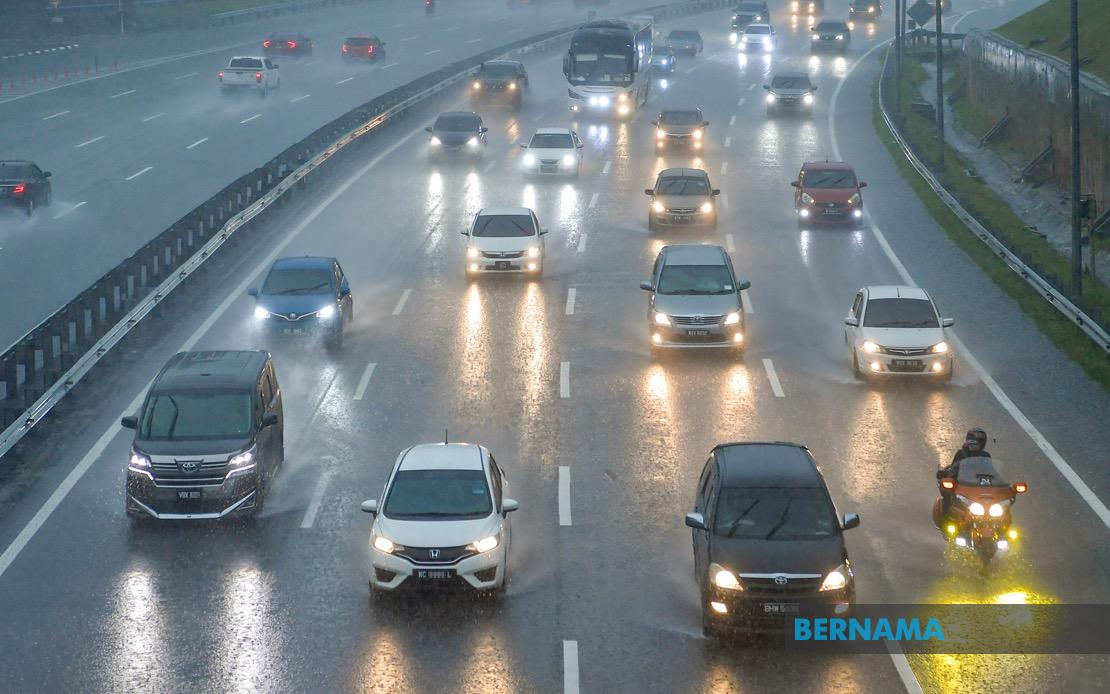
KUALA LUMPUR — Commuters navigating the Klang Valley's arterial highways should prepare for significant disruptions next month. The Sungai Besi Expressway (BESRAYA) and New Pantai Expressway (NPE) will undergo temporary closures spanning from 11 pm on August 1 through 10 am on August 2, permitting the IJM Allianz Duo Highway Challenge 2026 to proceed. The overnight window reflects organisers' attempt to minimise peak-hour congestion, though the extended closure window will still impact early morning commuters and shift workers traversing these critical routes.
The NPE restrictions encompass two distinct sections affecting traffic in both directions. The first closure extends from kilometre 1.8 at Bulatan Kewajipan in Subang Jaya to kilometre 11 heading towards Bangsar, encompassing the commercial and residential zones that feed significant traffic volumes during normal operations. The second affected stretch runs from the Kuchai Lama intersection at kilometre 17 to the Pantai Dalam Toll Plaza, further fragmenting connectivity between the city centre and southern suburbs. These segments represent critical arteries for professionals commuting to the Bangsar business district and residents accessing the city.
On BESRAYA, the disruption centres on the corridor running from Kuchai Lama intersection towards Jalan Lingkaran Tengah 2 (MRR2), terminating at kilometre 21.9 on Jalan Pandan 1 in both directions. This section facilitates traffic flow between the Pandan area and the city centre, serving as a preferred alternative for those avoiding the congested federal routes. The closure will likely create bottlenecks at secondary roads as drivers redistribute across remaining arterial options.
Chua Lay Hoon, chief executive officer for both BESRAYA and NPE, emphasised that the temporary closures obtained formal approval from the Ministry of Works (KKR), the Royal Malaysia Police (PDRM), and the Malaysian Highway Authority (LLM). This multi-agency endorsement underscores the scale of coordination required for such undertakings, suggesting that authorities have assessed risks and determined the event justifies the operational inconvenience. The approval process itself reflects Malaysia's growing capacity to facilitate large-scale public events whilst maintaining safety oversight.
Highway authorities have signalled their commitment to managing traffic flow through strategic positioning of personnel and resources. Traffic management officers, police units, and technical support teams will occupy designated locations throughout the affected zones, ostensibly to safeguard participant security and orchestrate orderly vehicular movement across the closure period. This deployment strategy represents standard protocol for expressway events but underscores the resource intensity required to execute such operations successfully.
Commuters face a clear directive to restructure their morning commutes. Officials have advised journey planning and early arrival times, implicitly acknowledging that alternative routes will experience heightened demand and congestion. The absence of specified alternative routes in initial announcements leaves drivers to chart their own detours, potentially causing wider ripple effects across secondary and tertiary road networks throughout the Klang Valley. Greater Kuala Lumpur's traffic ecosystem typically operates near saturation during morning peaks, suggesting that removing major expressway capacity will push pressure onto already-stressed alternatives.
Information dissemination will flow through BESRAYA and NPE's digital platforms, with authorities pledging to release detailed route alternatives via Instagram and Facebook channels. This communications strategy targets digitally-engaged audiences but potentially excludes less tech-savvy commuters and those unfamiliar with social media monitoring. The reliance on social platforms rather than traditional broadcast or SMS alerts creates a digital divide in access to critical travel information.
The event itself represents a corporate-sponsored running initiative organised collaboratively by BESRAYA (M) Sdn Bhd, New Pantai Expressway Sdn Bhd (a subsidiary of IJM Corporation Berhad), and Allianz Malaysia Berhad. The partnership between a construction conglomerate, an expressway operator, and an insurance firm reflects contemporary corporate sponsorship models where brand visibility justifies event investment. The choice to stage a highway running challenge demonstrates how Malaysia's infrastructure operators increasingly leverage expressways for promotional activities beyond their primary transport function.
For Malaysian commuters, the event exemplifies the ongoing tension between private event accommodation and public transportation needs. While corporate-sponsored activities generate commercial value and boost brand presence, they impose measurable costs on ordinary road users obliged to adjust schedules and routes. The August 1-2 closure will disproportionately affect shift workers, early morning commuters, and those lacking flexibility to postpone travel, highlighting how major disruptions distribute inequitably across different population segments.
The broader implication extends to Southeast Asian urban planning discourse. As regional metropolitan areas intensify their integration of events, commerce, and infrastructure, questions arise regarding optimal balancing between celebratory activities and utilitarian transport functions. Malaysia's experience managing expressway closures for special events may offer instructive lessons for regional counterparts navigating similar pressures. The precedent also suggests growing acceptance of temporary infrastructure reallocation for non-transport purposes, a trend that could expand as cities seek revenue diversification and brand enhancement through experiential events.
Prospective participants should monitor official communications through Instagram (@ijm_highway_run) and Facebook (IJM Allianz DUO Highway Challenge Run) for event specifics, whilst affected commuters are advised to confirm their travel plans well in advance. The challenge will proceed regardless of weather conditions, meaning disruptions cannot be easily postponed. Authorities have indicated they will maintain typical safety protocols, though overnight closures introduce additional complexity for emergency response and traffic incident management should unexpected situations arise during the event window.

