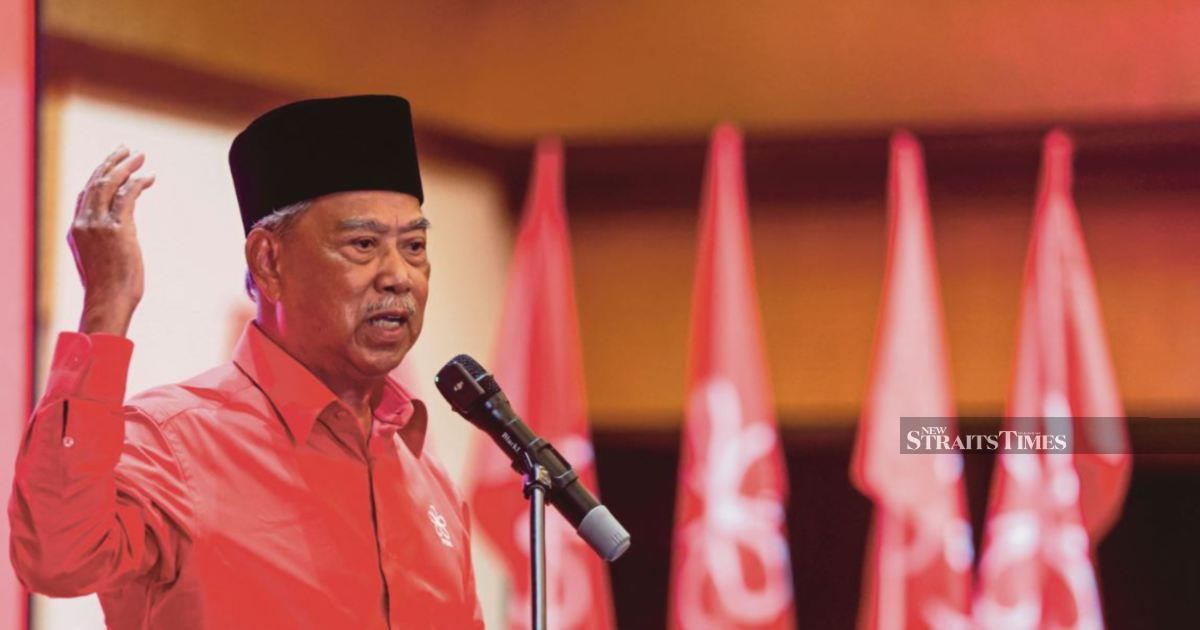
Bersatu has declared its ambition to field candidates across 24 seats in the forthcoming Negri Sembilan state election, signalling a significant electoral presence in the state assembly contest. The move reflects the party's determination to strengthen its foothold in the peninsular state, where it currently holds a modest delegation in the 36-member Negri Sembilan state assembly. By contesting more than two-thirds of available seats, Bersatu aims to establish itself as a formidable force in the political landscape, even as it remains part of the larger Perikatan Nasional coalition at the federal level.
What makes Bersatu's strategy particularly noteworthy is the internal dynamic it creates within Perikatan Nasional itself. Eight of the seats where Bersatu intends to campaign will pit it directly against PAS and Wawasan, both of which are also coalition partners in the federal government. This scenario exemplifies the complexity of Malaysian coalition politics, where national alliances do not necessarily translate into unified state-level electoral contests. The fragmentation reflects underlying tensions about seat allocation and regional influence within the broader Perikatan framework, a recurring pattern in Malaysian elections where coalition unity often masks competitive ambitions.
PAS, which has established a substantial presence in Malaysian politics following its strong performance in the 2022 general election, will view the eight-seat overlap as a critical battleground to defend its ground in Negri Sembilan. The Islamic party has been gradually consolidating its position in Peninsular Malaysia and will be keen to prevent Bersatu from eroding its base. Similarly, Wawasan, though a smaller component of Perikatan Nasional, will seek to protect the seats where it has chosen to stand, as these contests carry implications for the party's relevance and negotiating power within the coalition.
For Bersatu, the decision to contest such a broad swathe of seats represents a calculated gamble. Led by Muhyiddin Yassin, who previously served as Prime Minister and remains a polarising figure in Malaysian politics, the party faces the challenge of distinguishing itself from other coalition partners while maintaining the broader alliance. Contesting 24 seats allows Bersatu to demonstrate electoral ambition and expand its representation, yet it simultaneously raises questions about whether the party has the organisational capacity and grassroots machinery to mount effective campaigns across so many constituencies.
Negri Sembilan, as a moderately-sized state with significant Malay-Muslim demographics, has traditionally been a competitive political arena where both Barisan Nasional and Perikatan have contested vigorously. The state's diverse economy, spanning mining heritage, agriculture, and small-scale manufacturing, gives it distinct electoral characteristics. Rural constituencies tend to favour traditional Malay-based parties, while urban areas in Seremban and Nilai have shown greater volatility. Bersatu's strategy of contesting nearly all available seats suggests confidence that it can appeal across this demographic spectrum.
The implications for Barisan Nasional are also significant. The Malaysian government's dominant coalition will need to calibrate its own campaign in Negri Sembilan, where it typically commands strong support among traditional UMNO voters and has historical administrative experience. A multi-cornered contest within Perikatan Nasional could fragment the opposition vote, inadvertently benefiting Barisan Nasional, or conversely, it could energise voter turnout among Perikatan supporters who view internal competition as a sign of democratic vitality within their coalition.
The timing of Bersatu's announcement reflects broader calculations about the political landscape following the 2023 Selangor and Terengganu elections. Those contests revealed nuanced voter preferences and exposed cracks within both the Barisan Nasional and Perikatan Nasional frameworks. Bersatu's aggressive positioning in Negri Sembilan may be an attempt to reclaim political momentum after Muhyiddin's party faced internal dissent and public criticism over various policy decisions and governance issues.
From a Malaysian political perspective, the Negri Sembilan election represents a microcosm of the broader challenge facing coalition governance in the country. When multiple parties must compete within the same alliance, tension inevitably emerges over seat allocation, campaign resources, and credit-claiming for electoral success. These internal dynamics often receive less media attention than inter-coalition competition, yet they profoundly shape electoral outcomes and party fortunes.
The eight-seat overlap between Bersatu and PAS, combined with Wawasan's involvement, creates a three-way split in those constituencies. This fragmentation could determine the outcome in marginal seats, making these eight battlegrounds disproportionately important to the election's overall result. If Bersatu performs strongly against its coalition partners, it may strengthen its negotiating position for future seat allocations at the federal level or in upcoming state elections. Conversely, a poor showing could undermine the party's credibility and weaken Muhyiddin's standing within Perikatan Nasional.
Election observers will be watching closely to see whether Bersatu's broad contesting strategy translates into electoral gains or whether internal coalition competition dilutes Perikatan Nasional's combined strength. The outcome in Negri Sembilan may provide valuable insights into how Malaysian coalitions navigate the tension between unity and competitive ambition, a tension that is likely to remain a defining feature of Malaysian electoral politics for years to come.

