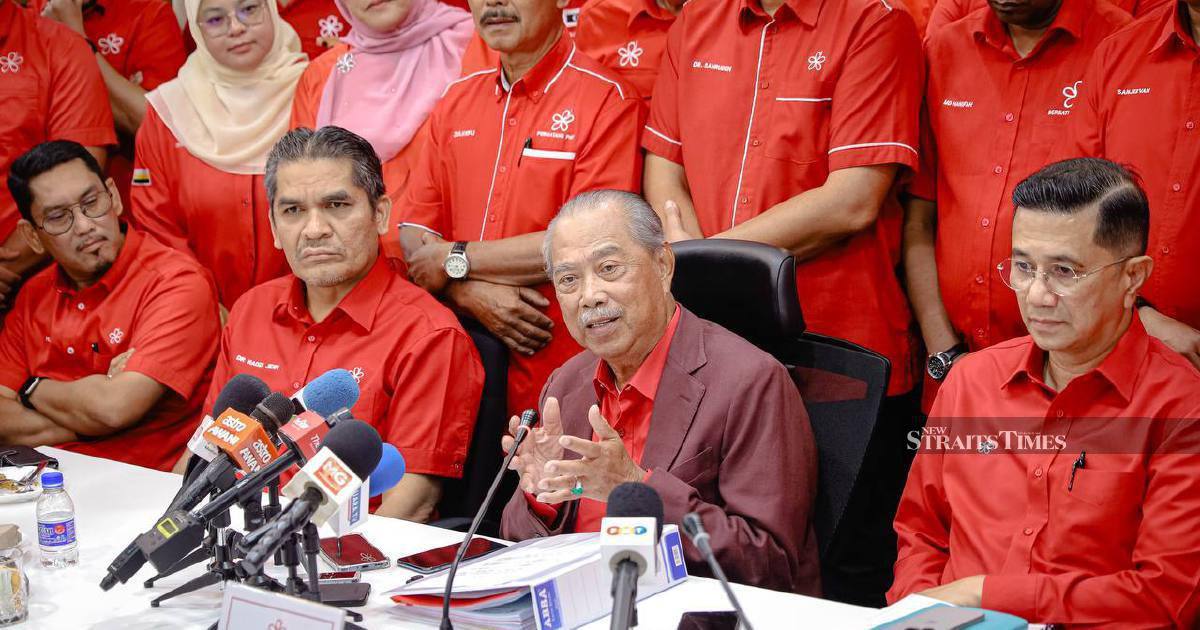
Parti Pribumi Bersatu Malaysia (Bersatu) has indicated readiness to confront Pas across contested constituencies in Johor's forthcoming elections, according to statements from party president Tan Sri Muhyiddin Yassin. The declaration underscores mounting tensions within Malaysia's coalition politics as parties jockey for electoral advantage in one of the country's most significant states.
Muhyiddin's remarks reveal the fragile nature of political partnerships that have characterised Malaysian governance in recent years. Despite nominal unity through larger coalitions, the reality of seat-by-seat competition frequently creates friction between nominally allied parties. Bersatu's signalled preparedness to compete directly with Pas represents a candid acknowledgement that electoral mathematics and local political realities often supersede formal coalition arrangements when critical contests approach.
Johor represents particularly high stakes for both organisations. The state has long served as a political bellwether for national trends, and control over its state assembly holds substantial implications for broader coalition positioning. For Bersatu, which has undergone significant recalibration since its earlier partnership with Mahathir Mohamad's administration, maintaining electoral presence in Johor is essential to demonstrating continued relevance at the national level.
Pas, meanwhile, has systematically expanded its organisational footprint throughout the peninsula over the past decade, and Johor represents a critical frontier for the party's ambitions. The Islamic party's growing electoral competitiveness has made it an increasingly assertive negotiator in coalition discussions, often resulting in escalating demands for seat allocations. This dynamic creates natural friction points when distribution negotiations prove unsatisfactory to either party.
The timing of Muhyiddin's statement appears strategic, potentially serving as a pre-emptive repositioning ahead of formal seat negotiations. By publicly signalling willingness to contest directly with Pas, Bersatu may be attempting to strengthen its bargaining position—demonstrating that concessions on seat allocation are necessary to prevent damaging intra-coalition conflicts that would benefit opposition parties. Such public posturing is characteristic of Malaysian coalition management, where threats and counter-threats often precede eventual compromises.
For Malaysian voters, particularly those in Johor, the implications are significant. Multi-cornered contests between coalition partners historically generate lower turnout and fragmented opposition votes, often advantaging larger parties or creating unexpected outcomes that no single faction fully anticipated. The prospect of Bersatu-Pas confrontation in multiple constituencies could reshape the competitive landscape significantly from what traditional two-coalition frameworks would suggest.
Regionally, this development reflects broader Southeast Asian patterns where catch-all coalitions struggle to maintain coherence during electoral cycles. Thailand, Indonesia, and the Philippines have all experienced similar dynamics where nominal partners become fierce competitors when election timing approaches. The Malaysian context is distinctive primarily in the intensity and frequency of coalition reconfiguration, but the underlying structural tensions are recognisably similar across the region.
Muhyiddin's position as Bersatu president places him at the intersection of these competing pressures. The party remains substantially dependent on coalition partnerships for electoral viability, yet must also demonstrate independence and strength to its own membership and supporters. His balancing act reflects the perpetual challenge facing mid-sized Malaysian political parties that lack the organisational dominance of larger formations but retain sufficient electoral clout to demand respect in coalition negotiations.
Historically, Bersatu has operated most effectively when positioned as a kingmaker rather than a primary contender. The party's origins as a splinter from the United Malays National Organisation give it particular appeal to certain voter demographics, yet its relatively limited grassroots machinery compared to either Pas or Umno constrains its independent electoral reach. This structural limitation makes seat negotiations with larger partners particularly consequential for the party's electoral fortunes.
The prospect of Bersatu-Pas competition also intersects with broader questions about Umno's positioning and the overall direction of Johor politics. Traditional Umno stronghold status has been complicated by recent years of political tumult, and multiple parties now perceive opportunities previously closed to them. Bersatu, as a relative newcomer to mainstream political competition, has particular interest in disrupting Umno's hegemony where possible—though such disruption must be calibrated to avoid splitting Malay votes in ways that advantage non-Malay-majority opposition blocs.
Looking forward, Muhyiddin's statements will likely influence subsequent negotiations regarding seat allocations both in Johor and potentially elsewhere. Parties engaged in coalition discussions will interpret his words as establishing parameters for compromise—essentially communicating that Bersatu will not accept unfavourable terms without demonstrating capacity to inflict electoral damage through direct competition.
The broader trajectory suggests Malaysian coalition politics will remain characterised by simultaneous cooperation and competition, with electoral timing acting as the critical variable determining whether nominal partners ultimately cooperate or confront. Johor's elections will provide important evidence regarding the durability of current coalition arrangements and the degree to which larger parties can manage internal tensions while maintaining sufficient unity to govern effectively should they prevail electorally.