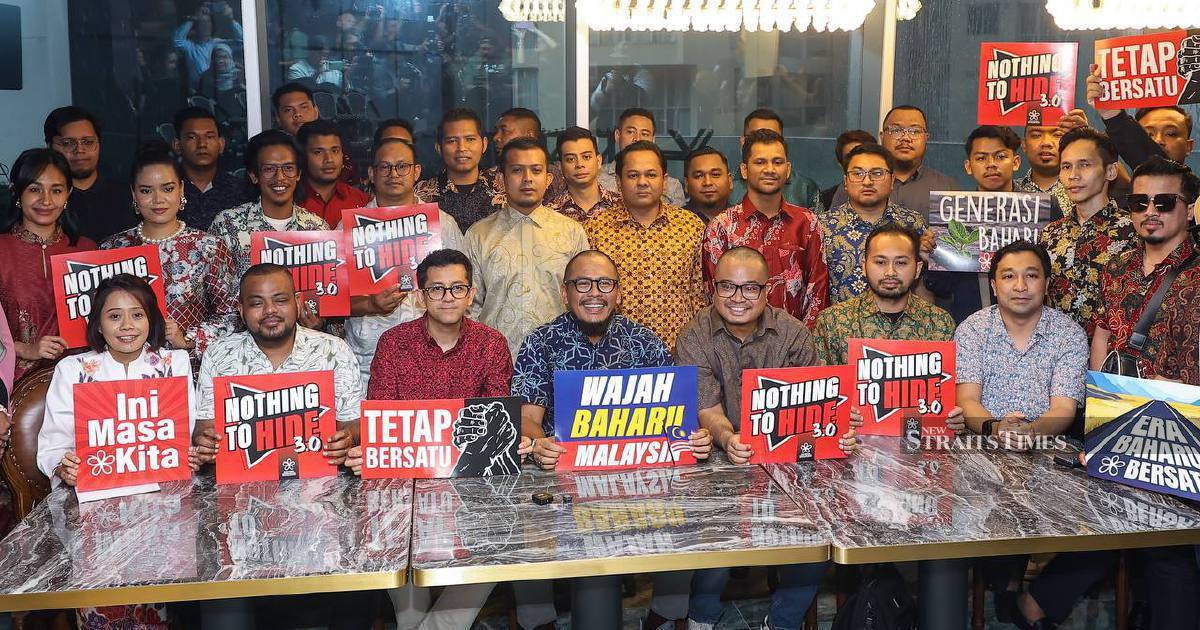
Relations between Pas and Bersatu, two major pillars of the Perikatan Nasional coalition, are headed for repair according to Kota Siputeh assemblyman Mohd Ashraf Mustaqim Abdul Munir, who struck an upbeat tone about resolving recent friction that had threatened the partnership's stability. Drawing on domestic metaphor to explain the political dynamics at play, the Bersatu representative suggested the tensions between the Islamic party and the Bumi-focused bloc resembled nothing more than a long-married couple cycling through disagreements while remaining committed to their shared household—a characterization intended to downplay the severity of recent strains.
The comment arrives amid a period of notable discord within PN, Malaysia's primary opposition coalition and a force that has consistently challenged the ruling Pakatan Harapan administration's grip on Putrajaya since 2022. Pas and Bersatu, despite their alignment within the broader PN framework alongside other component parties, have experienced mounting policy differences and competition for influence that had begun to unsettle observers tracking the coalition's cohesion. These tensions have implications not only for opposition politics but also for Malaysia's broader political architecture, as a fractured PN reduces the government's need to manage a strong unified alternative.
The Kota Siputeh representative's optimistic assessment suggests informal dialogue channels between the two parties have continued despite public posturing and occasional pointed statements. In Malaysian politics, such domestic metaphors often serve dual purposes: they reassure coalition members and supporters of stability while simultaneously acknowledging legitimate grievances that cannot be simply dismissed. Mohd Ashraf's framing thus permits both sides to move toward reconciliation without appearing to capitulate, a crucial face-saving mechanism in a political culture where symbolic positioning carries considerable weight alongside substantive policy.
Pas, as Malaysia's largest Islamic party with substantial grassroots organization and significant representation in several states including Terengganu and Kelantan, maintains considerable leverage within any coalition framework it joins. Bersatu, by contrast, positions itself as a moderate multiethnic alternative focused on Bumiputera economic empowerment and appeals particularly to Malay-Muslim swing voters in urban and semi-urban areas. Where these identity bases and policy emphases overlap, cooperation flows naturally; where they diverge—particularly on religious affairs governance and affirmative action implementation—friction emerges.
The recent tensions have roiled coalition management precisely because Pas and Bersatu together command enough parliamentary seats to materially affect legislative outcomes when aligned. Should they genuinely fracture, either could theoretically explore alternative alliances or negotiate enhanced concessions from Pakatan Harapan, fundamentally reshaping Malaysia's fragile political equilibrium. Neither party benefits from such instability, which likely explains why senior figures from both camps have engaged in quiet diplomacy rather than allowing grievances to fester into irreconcilable positions.
From a Southeast Asian perspective, Malaysian coalition politics illuminates broader regional patterns in which moderate Islamist parties and nationalist-oriented blocs constantly negotiate power-sharing arrangements while maintaining ideological distinctiveness. The Pas-Bersatu relationship mirrors similar dynamics seen in Indonesia between moderate Islamic organizations and nationalist movements, suggesting this represents a durable feature of multiethnic democracies where religious and ethnic identity remain salient political organizing principles. The ability of such coalitions to weather internal disagreement while preserving overall cohesion determines whether regions experience stable democratic governance or chronic political disruption.
Mohd Ashraf's comments also reflect awareness within Bersatu that public perception of PN's unity directly affects its electoral prospects and leverage in potential coalition negotiations. Should PN appear fractured ahead of either state elections or the next general election, individual component parties risk losing credibility as genuine governing alternatives. Conversely, demonstrating capacity for internal problem-solving while maintaining public unity signals maturity and organizational competence to wavering voters. The emphasis on reconciliation thus serves strategic communication goals alongside reflecting genuine efforts to patch genuine disagreements.
The timing of such reassurances deserves scrutiny, as they typically emerge when specific sources of friction have either been addressed through private negotiation or when party leadership has determined that continuing public airing of grievances yields diminishing returns. Whether Pas and Bersatu have genuinely resolved underlying differences or merely agreed to soften public rhetoric remains unclear from external observation, but the willingness to deploy conciliatory language suggests that window of acute crisis has passed. This de-escalation, however, does not necessarily imply that fundamental issues driving the tensions have been substantively resolved.
Looking forward, the stability of the Pas-Bersatu relationship will depend on whether party leadership can craft concrete arrangements addressing specific policy domains where their vision diverges. This might involve negotiated spheres of influence across state and federal portfolios, implicit understandings regarding religious authority matters, or structured consultation mechanisms preventing future disputes from spilling into public view. Such institutionalized cooperation patterns have historically enabled Malaysian coalitions to function despite ideological tensions, suggesting both Pas and Bersatu possess the experience and incentive to develop sustainable working arrangements.
For Malaysian observers and regional analysts monitoring opposition coalition dynamics, Mohd Ashraf's comments signal that despite genuine tensions, PN's fundamental architecture remains intact and probably recoverable. The metaphor of marital bickering under a shared roof captures an essential truth about Malaysian coalition politics: partners may frustrate one another substantially yet lack viable alternatives to continued cohabitation. Within this constrained environment, reconciliation becomes less a matter of dispelling disagreement and more about establishing protocols that permit effective governance despite persistent differences. The Pas-Bersatu relationship's trajectory will thus reveal whether PN has matured into a durable political institution capable of accommodating internal friction or remains vulnerable to unraveling under sustained pressure.

